
Going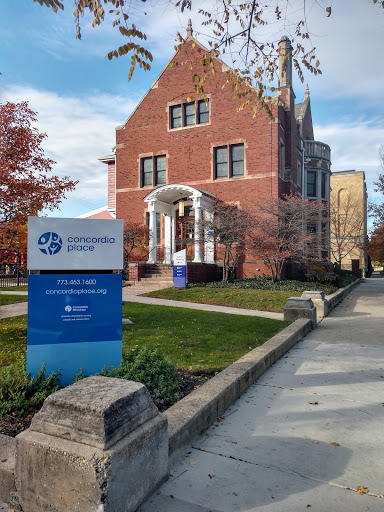 into my Caps experience, I knew my work would give me a valuable peek into the administrative side of nonprofits. I did not anticipate, however, how a goal of empowerment, growth, and economic opportunity requires a constant fixation on money. I knew that services need funding and most social problems stem from financial inequality, but I underestimated the amount of time and energy that goes into securing money to run the organization and deliver services. Essentially, I did not realize that nonprofits were allowed to be greedy.
Growing up comfortably, without needing to worry about paying for my basic needs, I learned to appreciate the world separate from “treasures on Earth”. I understood that money, while necessary to survive, should not be the focus of life. People who spend their time seeking money would find themselves with less than their neighbors. That reality helped me become a more empathetic and grounded person, but it also forced me to see wealth in a negative light. So when I learned about the intense fundraising efforts of nonprofits, I was both impressed and skeptical. It seemed wrong to tell myself money was the root of evil while simultaneously working hard to secure more and more money for this business.
However, the nonprofit I work with, Concordia Place, truly uses their profits with the wellbeing of their community in mind. Concordia Place serves around 800 people a year. They provide childcare, education, teen development programs, English language classes, and home visits for newly expecting mothers. The children, teens, and adults speak a total of 27 different languages. The organization prides itself on being a place of yes, a place where any person can come seeking assistance for themselves or their child and will receive what they need.
The mission of Concordia Place goes hand in hand with one of my most recent classes about the American welfare system. Essentially, in America, the government sets a limit on the amount of money someone can make or possess before they no longer qualify for public assistance. This means that someone making a few dollars over that limit is actually worse off than someone who makes a few dollars below the limit. Concordia Place recognizes that many families struggle to pay for childcare, but cannot receive the benefits granted to others due to governmental restrictions. They address this problem by offering sliding scale tuition, which allows families above the poverty line to apply for a reduced rate in whatever service they are seeking. They call this “funding the gap”; giving extra assistance to those too poor to afford the regular costs, but too wealthy to qualify for public assistance. Not only does Concordia Place provide instant relief for individuals through their programs, but the organization has a long term focus. By increasing the quality of childhood education and the opportunities parents have once they find a safe place for their children during the day, those same families have a higher chance of employment and, hopefully, the ability to generate generational wealth. Concordia Place battles systemic inequality with accessible services that allow for growth in both the child and the parent.
I fully support everything Concordia Place hopes to achieve and I hope I can do everything in my power to contribute to their mission. This being said, I will continue to examine the role of money in my life now that I understand that more wealth can also mean more good. The more funding Concordia Place secures, the more community members they can serve, the more lives they can impact. It seems unlike me to envision a life where I consume myself with the acquisition of money. When I thought about my future as an employee at a nonprofit, I saw myself doing administrative work but with the assumption that money would simply be there to run the organization. However, nonprofits have to fight just like everyone else to maintain enough funding to survive. A fixation on money is not counterproductive to the life-giving mission of a nonprofit, it is absolutely necessary. Through my experiences at this internship and college, I will strive to learn more about the world of fundraising and fund management. I feel grateful to have an experience at an organization like Concordia Place where I can see a true calling for social change in action alongside a mission of extensive fundraising.
Leading up to my first week at BallotReady, I felt concerned about being good enough. I have more soft skills than hard skills. I have a passion for politics, but I felt like an amateur. I quickly learned that there was no need to be so worried. In my first week, I met with my cohort of other interns, both data and engineering, and had meet-and-greets with the whole BallotReady staff. I instantly felt welcome despite the remote setting BallotReady is working in. It was a breath of fresh air to work with and be led by young people who are motivated by and interested in similar things.
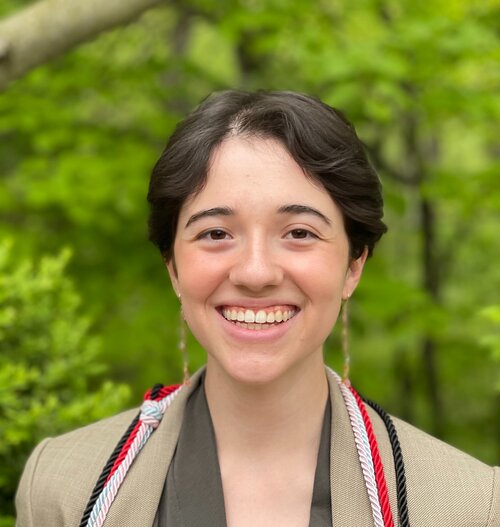
Thus far, as a data intern, I have primarily been aiding BallotReady’s Data Team in researching current officeholders across the U.S. as the organization seeks to expand their product to more of a year-round service, not just during election cycles. Data interns also get signed on to other projects like researching voter registration requirements in each state. It is really exciting to me to know that our work is contributing to informed voting for fellow citizens. I was so impressed with my supervisor who exemplified just how important this work is; she told us how she spent an hour exploring Google Maps to find accurate directions to and the address of a polling place in a trailer. It was used by ten voters who, without her directions and hard work, would not have found their polling station to vote. Starting next week, I will be taking up my intern minor project. I will be working with the Director of People and Operations to consolidate their HR information into a new database system. I look forward to continuing to expand my horizons, building my skill set, and furthering my relationships with my supervisors and peers.
In my fourth week on the team, I find myself becoming more confident in my hard skills and I now know that my involvement with civic engagement is what is important, not being an expert. I also truly value the diversity and inclusion practiced at BallotReady. I feel comfortable being myself with my coworkers, communicating and asking questions, and trying new things. One of my goals as a CAPS Fellow is to narrow down what it is that I want to do and what type of roles fit me best. For the past few years, as a Valpo student and Global Service major, I had always thought working at a nonprofit in some sort of capacity was the answer for me. However, with just four weeks as a graduate and BallotReady intern under my belt, I see that there is so much more out there for me. This may sound like the opposite of my aforementioned goal, but it has been extremely insightful to me.
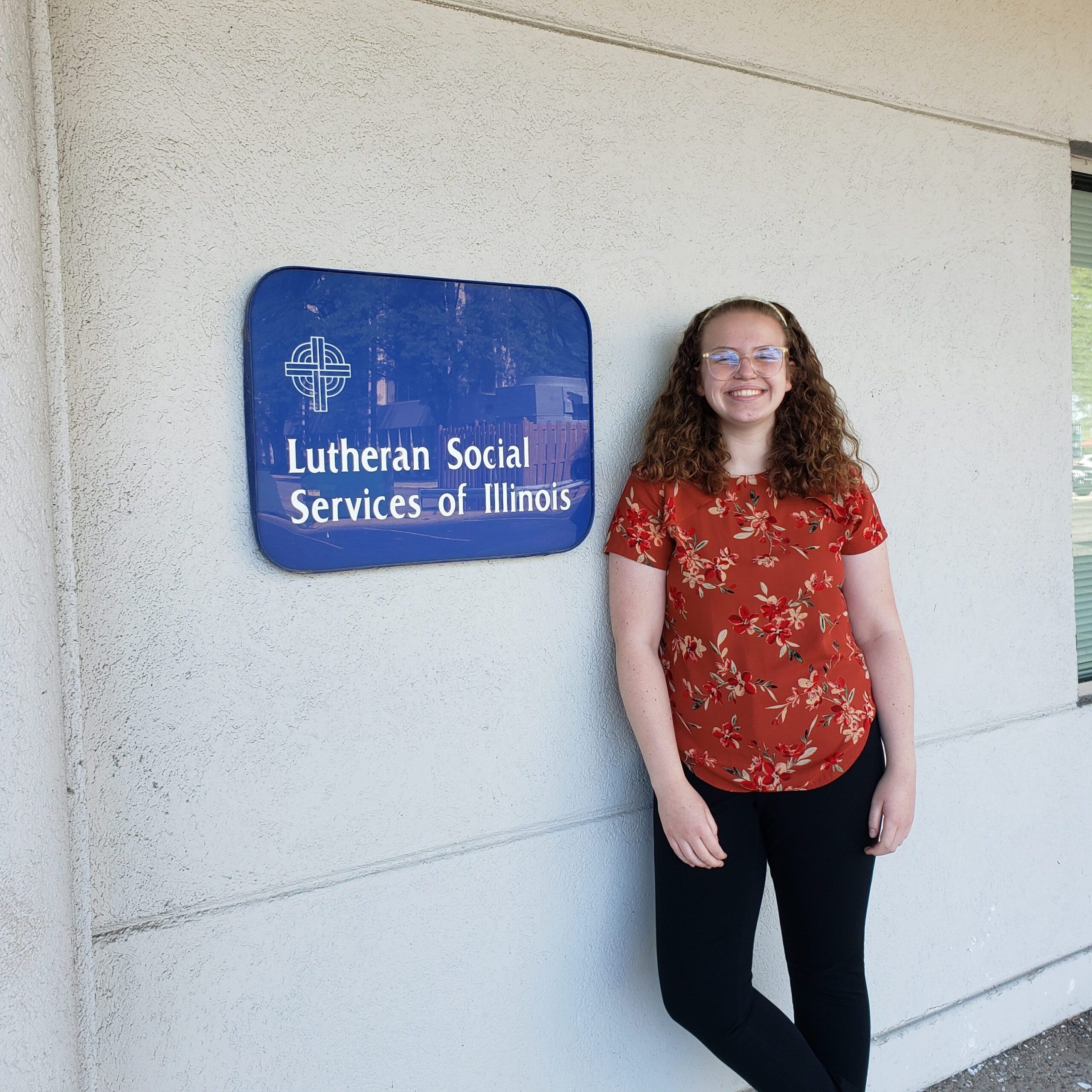
I was given a tour of a normal looking office building, with tall grey cubicles and sounds of fingers steadily typing in the distance. With the pandemic, only a handful of employees are actually in the office. My lovely supervisor brings me around, introducing me, and I try not to show my nervousness. Amongst the chaos of this year, this is the most new people I have met in a really long time. At one point, I say thank you to someone after introducing myself, and I think about it for the next few days hoping she doesn’t remember how awkward I was. I have to remind myself this is part of the process, and it is okay.
At this point in my experience, I have been with Lutheran Social Services of Illinois (LSSI) for three-ish full weeks, but it feels so much longer. I have the mission statement stuck in my head, and remember to consider it in everything that I do (hence the title). I have met everyone and no one at the same time. I have conducted interviews, written articles, and created flyers and social media posts that will be then sent to the rest of the company. I feel useful. I feel connected in what I’m doing. There are times where it’s difficult to feel like I’m a part of something bigger, working half at home and half in the office. But as soon as I hear a “they really liked what you did” or being mentioned in a staff meeting, I realize how worth it it is. Everyone I have met at LSSI so far has only admiration for their place within the organization and their fellow employees. It’s inspiring. It’s a great work environment to be a part of. We have weekly coffee chats in the morning, my preferred choice of drink is apple juice, and it’s an informal way to get information out to the team. This has been especially important during remote working, and it has been a great way for me to put some names to faces over emails.
Last week I visited one of the facilities that they are shooting a Youtube virtual tour of, and it was great. After talking with our tour guide, I recognized what sacrifices non-profit organizations have to make in order to do their job well, consistently well. My supervisor took note of some things that need fixing, hoping to bring it to her people and get a donor who could contribute. I loved seeing that initiative take place. Constantly thinking of others and potential solutions.
With COVID-19, facilities are a little more hesitant to offer tours or meet and greets. Working with the communication and advancement team is exciting because I get to talk to lots of different people across the organizations, taking the time to learn about many different programs, as opposed to being in one branch. Throughout this experience, I’m recognizing how much I like being backstage to the operation, versus being completely hands-on. There’s potential for opportunities where I could be a little more hands-on and compare, that I’m looking forward to. I’m very grateful for the social media and graphics experience I am receiving, because it lets me explore my creative side in a productive way.
There is so much potential to be had and I can only gain new and exciting learning experiences from here.
I began my internship with the Heartland Alliance last Wednesday, 5/26/21, and have been met with a number of logistical challenges right off the bat. The Monday before my orientation I took the time to attempt to log in to the necessary online portals I would be frequenting as my internship is remote however I was met with screen after screen of dead links. It wasn’t until Thursday that I learned that the Alliance’s IT department was having major outages across several of their servers. Because of this I have thus far been unable to begin many of the tasks of my internship such as reaching out to clients and writing and logging case notes. All communications and video calls with my team have also had to transition from my Heartland Alliance email to my school email that I have access to. Needless to say this has been quite the source of frustration as I was so eager to dive into the world of social work.
Another source of surprise has come from the content of my work thus far which has largely been in the form of reading large quantities of legal documents related to the US refugee system and Heartland’s own policies surrounding their programs. While much of this has been important to understand, and I have learned a great deal from it, it certainly is a deviation from my desire to help the clients in the system; but that will come with time. On the first day of my internship, I met with my supervisor for a brief orientation session where we discussed the importance of the work we do. I was presented with some rather harrowing statistics about the global refugee crisis and watched some videos interviewing refugees to understand their personal experiences through resettlement. According to the UN, there are approximately 80 million forcibly displaced peoples in the world today. Most of these individuals take refuge in UN Refugee camps, which although good in theory ends up looking like tent cities with few resources available for medical or psychological care. Less than half of a percent of these people will successfully resettle in a new home after a rigorous screening process that can take anywhere from 5-20 years.
The knowledge of these struggles has kept me humbled and level-headed throughout the process. I often remember the words of the early 1900s radio host Orson Welles:
“We must each day earn what we own. A healthy man owes to the sick all that he can do for them. An educated man owes to the ignorant all that he can do for them. A free man owes to the world’s slaves all that he can do for them” (1943)
Such has been my reason to pursue this internship and my motivation to see past the comparatively insignificant ailments of the first world. Of course, there is a fine line to walk between humility and delegitimizing one’s personal emotional struggles; however, the fact of the matter is that I can certainly persevere through IT troubles or remote learning environments for the betterment of others. After all, the existence of such problems is evidence of my own privilege in life; and what good is my privilege if it is not used for the betterment of others.
It was a hot May day when I moved into my Chicago bungalow, two mornings prior to my first day at LINC Ministries Int’l Inc. LINC Ministries is a nonprofit organization that provides nontraditional church ministry to urban areas. This nonprofit finds ministry leaders and church partners to equip in serving others. They focus on spiritual community, personal development, ministry development, organizational support, and resource networks in order to establish well suited leaders for those in need. LINC Ministries has seven different locations in the nation– Chicago being the newest addition. I am the first intern at the Chicago location, all thanks to the CAPS Fellows Program. Upon hearing that I would be working at LINC, I was filled with passion, excitement, and nervousness, as this would be my first experience working for a nonprofit organization, let alone, a formal job. My previous work experience was as a camp counselor: I was used to wearing a tie dye shirt with camp logos and having screaming kids surrounding me, but on that Monday, I was putting on a business dress and grabbing my briefcase as I walked out the door. While the new wardrobe is still something to which I’m adjusting, I can confidently say that I have now been working for LINC Ministries for two weeks. I have learned so much through my encounters with Lutheran churches, ministry leaders, the incorporation of my academic learning and my job, and the logistics of a nonprofit organization (each of which I will detail in turn).
I have loved being able to meet with Lutheran churches in the Chicagoland area. I have been able to hear their mission and vision behind partnering with a nonprofit organization like LINC. Churches like these create a firm foundation of spiritual support and a community of like-minded individuals for LINC. They also provide resources and connections for continuing ministry outside of their walls. Although these churches differentiate in staff, organization, and communication, they all still come together as the body of Christ.
I have also had the privilege of meeting with many ministry leaders in the Chicagoland area due to LINC’s connections. These ministry leaders have had a calling from God to serve a specific people group in the city. The leaders vary in age, gender, and background, but they all collectively have a purpose for God’s work. These callings target different groups of people, specifically immigrants, human trafficked victims, the homeless, and at-risk youth. Ministry leaders meet with my boss and me weekly in order to continue their vision framing process and find their purpose for why they serve. These weekly meetings further their planning and challenge them to go above and beyond in serving.
Within my two weeks at LINC, I have noticed so many beautiful aspects of nonprofit work. I have already begun to see the beginnings of how churches are started (a term called “church plants”), Christ-centered recovery homes, bilingual ministries in immigrant communities, tangible hope in tent cities, and discipleship, healing, and restoration for the at-risk youth. Being able to see people become the hands and feet of Jesus and pour into the city of Chicago has been inspirational.
I have also been able to incorporate my academic learning into my work as well. As the Diversity, Equity, and Inclusion chair of my sorority, I have been able to reference back to my workshops about identity and racism for future use at LINC. I have also been able to use my knowledge of 990 forms and profiling of nonprofits through my college classes in my work. Lastly, learning the logistics of nonprofit work has been intriguing. I have gained a better understanding of “asks” from donors, budgeting, fiscal agencies, and more. Starting an internship through the CAPS Fellows Program has been a true honor and something that I will not take lightly. I am excited to share that my time at LINC Ministries has furthered my perspective of nonprofit work and has solidified my desire to take this career path in the future.
The process of a fresh and clearly set start can be paralyzing. The CAPS Fellowship is no exception as I, among many other fellows, attempt to settle into our respective placements and make an unique impact. A quote from Buddha tells us “There are two mistakes one can make along the road to truth… not going all the way, and not starting.” My main worry when beginning my fellowship was being unable to get out of my shell as a person. Being viewed as somebody who is untrustworthy or incompetent for my inability to get comfortable within my space felt like my greatest fear. While starting well may be difficult for myself personally, along with many others, I am proud to state that I have been doing well to show my full self to Kheprw throughout my first two weeks.
For a short synopsis, I spent my first week bouncing between many meetings, exchanging names with individuals from varying committees within Kheprw. My coworkers at Kheprw were extremely welcoming and excited to pause their busy schedules to explain the important role of their various committees. Along with, multiple check-in meetings with mentors who constantly asked me about where my current wants, passions, and needs are for my fellowship. Their impact on my confidence and attitude towards my current objectives can’t be understated. Currently, I have been assigned about three personal projects which encompass three committees within Kheprw while still being allowed to join any meeting to satiate my own curiosity. Even though my work on these projects has been short, I can already see the different ways of thinking which will be demanded of me and how differently I will have to act in comparison to any classroom setting.
One aspect of the CAPS Fellowship I have appreciated within my own viewpoint of reflection is the opportunity to meet many great wells of wisdom to draw upon. At the beginning of my time with Kheprw, I was told, in my own rough paraphrase, that I would need to be prepared to clash with big voices and have my ideas challenged within the Kheprw space. I didn’t realize just how much I would enjoy that previously described environment. Within my check-in meetings, I am not only forced to think in a much less concrete, cookie-cutter way about achieving my goals; but also, what I want to accomplish and how I should accomplish my goal. At first, it felt difficult to work on finding my passions or solutions to questions within Kheprw with little specific information. However, upon reflection, I realized two essential points: this isn’t a classroom, so I can’t ask for a syllabus and there is no right answer to the questions I am being posed. It felt paralyzing when asked open-ended questions about “what I had noticed within Kheprw’s different spaces” until I realized that my input was perceived as equally valuable in comparison to others’ in my mentor’s point of view. I realized, in relation to my own purpose, that these people had gotten to where they are because of their humbleness. Amidst their own success, their ability to treat everyone they meet like an expert in “something” was admirable. Being relied upon and viewed as a trustworthy coworker has done wonders for my own personal confidence and passion for the projects I have undergone.
From looking back on my past two weeks, I was reminded of a quote from Henry Thoreau “The mass of people live lives of quiet desperation.” I realized that despite my shortcomings or personal doubts, the last quality I want to be attached to me is “quiet” and I will not be afraid to leap before I look. I look forward to the rest of my time with Kheprw and wish my “fellow” CAPS Fellows all the best on their own unique paths in their placements.
Sincerely,
Michael Olson
It has been two weeks since I finished my internship with Heartland Alliance on the case management team. Another case management intern, Marie Dix, wrote the blog post, “Unfinished,” and her words beautifully captured some of the thoughts currently racing through my mind: the positive staff culture I’ll miss, the systemic injustices refugees face, and the connections to families I now have to let go. With my final blog post, I want to leave a message to future CAPS Fellows:
I am not sure how I will capture everything I want to say, but I suppose the easiest place to start is at the beginning. The application process for the CAPS Fellowship is not a hard process, but, just like the internship itself, you get out what you put in. It definitely makes you take a moment to close your eyes and envision the future you want. I, like many other Fellows I have talked with, saw myself using the privilege I have as a white, middle-class male with a college degree to positively impact the lives of those less fortunate than me. I encourage you to take the application time to start reflecting on your time at Valpo and how you want to use your future degree, and not just write your personal statement how you think the ILS would like it. Your personal statement is also something interesting to look back at throughout the internship and see how it might have changed based on your experience.
I am guessing you have probably made it through the application/interview process if you are reading this and want to know tips for the internship itself. From the very start, you will be thrown a lot of new information (people, places, acronyms, offices, tasks, meetings dates and times, etc.) and will probably feel like you are being baptized with fire. It may sound cliché, but this will all get easier with time, and you can speed up the process by writing it all down somewhere. Marie and I created a shared Google Doc with all the acronyms we were given and were able to get familiar with them relatively quickly. Realizing you can finally understand and speak the language of the organization is a really nice feeling. This leads to my next tip – you were chosen for the internship and placed with the organization for a reason. Yes, the “fake it ‘til you make it” mindset can get you through the internship, but you have more skills than you might realize and might not actually need to fake it. Be confident in yourself. On the flipside, it is also important to know your limitations and when to ask questions. Asking a question does not show weakness; it shows strength and maturity.
The biggest tip I have for you is to celebrate the small victories and brush away (but learn) from the small losses. Thinking back to the personal statement, a lot of the goals you might have for your future are lofty and fall along the lines of “changing the world” or “solving all the world’s problems.” These are great aspirations, but they are probably not super realistic for a summer internship. You may get discouraged doing what seems like busy work or a small task that does not impact too many people, but it is all helping the organization or the people they serve in some way. For instance, I spent a lot of time on hold with insurance companies, scheduling medical appointments, or just checking in with the refugees. None of this was revolutionary or changed the world, but it all was helping the people Heartland Alliance serves. It changed their world. The refugees I did those mundane tasks for have very little understanding of English and would not have been able to get the medical attention they needed without my help. Sometimes an insurance company would not be able to cover all the medical charges or a transportation company would be difficult to work with, and delivering news like that to someone may seem like a let-down and not ideal, but the refugees would always say how thankful they were and how much they appreciated my work. This goes back to the celebrating the small victories. In cases like those, I was still able to get some of their medical bills covered or help them change the time of their medical appointment to better fit the constraints of the transportation company. Those were still wins for the refugees. I just had to change my mindset.
Lastly, you will have the support of the ILS, current and past CAPS Fellows, and your placement supervisor throughout the entire summer. If you get overwhelmed or need any help, remember that you have plenty of resources. The resources are only helpful if you reach out, though. Taking the time reflect on your experiences and decompress on your own will also help you stay motivated, energized, and protect your mental health. I encourage you to journal, dig deep into the blog posts you will be writing, or even just talk to yourself before bed to process what you go through.
This past summer was definitely not what I imagined when I applied for CAPS. Putting the restrictions from COVID-19 aside, things were still very different than what I was envisioning, but I am so thankful for CAPS. I know that I have grown as a person and developed a deeper sense of what it means to serve, what it means to be human, and what it means to truly live your values.
I wish you the best of luck.
As I reflect on my time at Heartland Alliance, many thoughts and emotions come to mind; the most prominent being gratitude. I came into this internship seeking clarity. Whether it be clarity regarding the path I want to pursue or a deeper understanding of what I do not enjoy, I was hoping to find meaning in this experience. This feeling of gratitude that I mentioned is for the gift of clarity that Heartland Alliance has blessed me with. I came into my internship confident and still am certain that I have found my home in the field of Social Work. However, in a vast field, I had struggled to pinpoint my passions within the field.
Working with refugees at Heartland Alliance is something I thought I would enjoy, but I had no idea how much I would come to love it. There is something special about working with people from around the world. It is truly a gift to have the opportunity to learn about different cultures and traditions from places so far away. Each day that I interned, I had the opportunity to get to know many different individuals and learn about their experiences, stories, and culture… what a gift.
Here I am two months later grateful for the clarity that this experience has given me. I have discovered and confirmed the passion I have for working with a diverse group of individuals, listening and learning about their experiences, and walking alongside them as they strive to accomplish their goals. I look forward to seeing how this passion of mine unfolds as I take my next steps in both my academic and professional careers.
The CAPS fellowship has encouraged me to lean into my uncertainties. It has reminded me that the unknown aspects of life are not necessarily bad. Uncertainty can lead to discernment and discernment has led me to discover a passion and a purpose. The CAPS fellowship has helped me discover the young professional that I aspire to be.
At my job, I’ve been doing a lot of sanitizing and temperature taking. Part of my uniform includes a smock, face shield, face mask, and rubber gloves. If we didn’t have these precautions, I would not have been able to work in-person at The Bridge Teen Center. COVID-19 has made us rethink how we host student programs. Prior to the pandemic, The Bridge offered drop-in hours for students and hosted signature events that could have accommodated hundreds of students. Now students must pre-register for events which have limited capacity. They are required to wear masks, wash their hands before entering the building, get their temperature taken, and answer a few questions about their health. In the program, students must sit six feet apart from each other and cannot share materials. At first, it was an adjustment. Not only did students have to learn a new routine, but they also had to navigate social situations under these conditions. It’s hard to hear people and see their facial expressions when others are wearing a mask, so it’s easy to minimize conversation. With time, we all learned to adapt to this new environment. Considering these extra precautions, I’m still able to create connections between students. Everything feels as normal as it can be during this time.
In one of the CAPS Reflect-Ins, we read the poem, “A Bed for the Night” by Bertolt Brecht. It was about a man that collected beds for the homeless on the snowy streets of New York. While he was doing a charitable deed, the poem reiterated that his actions wouldn’t change the world. This poem made me think of the concept of “intern work.” Classically, people imagine the intern as the person that gets coffee for the office. It’s the kind of work that anybody can do, but nobody wants to do it. Adjectives to describe “intern work” could be boring, unimportant, or tedious. Why is there such a negative stereotype?
We all have moments where we have to do something that’s less than glamorous. Let’s use taking out the trash as an example. I’m not “above” taking out the trash, but it’s not the most exciting thing in the world. Nevertheless, it must be done. If nobody does it, the place won’t be clean. As someone that likes to work in a clean office, I’ll do whatever it takes to contribute to that cause. If that requires taking out the trash, then I am happy to do it!
Even though I have a positive attitude about taking out the trash, I can still admit that it’s not going to fulfill my soul. It’s not a sign of ingratitude to acknowledge that a task does not fuel your passion nor help you discover something new about yourself. You’re just being honest about your feelings. It can be hard to look at the big picture when we can’t see the fruits of our labor in real time, but I have to remind myself that these small tasks, like cleaning the facility, will create a space for those larger opportunities that make me feel fulfilled.
I think part of our identity is wrapped up in our job and our self-esteem is heavily tied to our merits. If we think our work is boring, we imagine ourselves as boring. If we perceive our work as impactful and meaningful, we envision ourselves that way, too. When we see other people doing impressive and grandiose things, it can be easy to question ourselves than to celebrate others.
Value can be found in the smallest of jobs. At work, we often joke that the person taking temperatures is the “sanitization specialist.” The job sounds a lot cooler when you give it a fancy title, but does that change the nature of the task? Not necessarily. So how can we rethink the narrative of intern work? First, recognize the chain reaction that comes with doing a small task. If someone doesn’t do X, this could prevent someone from doing Y. Second, identify how you can develop long term skills from a task. Our director Katie gave the great example that getting coffee is an opportunity to network with employees. Finally, do some self-reflection whenever these feelings arise. Complaining about work does not mean you’re being ungrateful, but it is still important to figure out what’s going on inside. If your ego is tied to your merits or you catch yourself comparing yourself to someone else, remind yourself that work is not the only place where you can derive your sense of self-worth.
This is the last of my 11 weeks with the refugee case management team at Heartland Alliance. I admit there is much about this remote work that I won’t miss: being on hold for 15 minutes with an insurance company, realizing that the reason my coworkers were ignoring me was because I was muted, and the frustration of being “it” in games of four way telephone tag between clients, interpreters, and other offices. There’s even more that I will miss though: my coworkers (and the gifs they send in our Microsoft Teams chat), the families I’ve come to know, and the opportunities to learn about the world without leaving my bedroom.
My sphere of awareness grew beyond the four walls of my cozy suburban house to encompass the ongoing genocides in Myanmar/Burma, the torture and murder of LGBTQ people in many African nations and the harsh realities of rebuilding a life in a country with endless freedom yet endlessly complicated bureaucracy. My prayer is that I will not sink into the feelings of apathy and helplessness that tempt us to shrink our world once again in order to avoid the pain and responsibility of our global reality.
After I’ve met people who’ve faced (and overcome) challenges like war, torture, starvation and homelessness, how will I respond to discomfort and suffering in my own life? How will I respond to the struggle of my friends, my family, strangers? How will I think differently about what I hear in the news and see on the streets? How will it change my conversations? How will I let this work change me?
It feels weird to stop when so much is incomplete. I have a list of “loose ends” I hope to tie up before Friday (it’s 14 items long), but that doesn’t include all of the ends I’m forced to leave loose. Some applications I worked on will sit pending for nine months. Some people won’t return my calls before I go. I’ve made referrals I can’t follow up on, and appointments I can’t send reminders for. I will never meet the babies whose mothers we’ve been equipping with supplies and childbirth education. Honestly, it’s possible I won’t even see my coworkers from the shoulders down.
But I suppose that’s how it goes, the line of interns keeps moving and I must trust that the people I care for will be taken care of.