
This first week has been a whirlwind of change for me. Moving into an apartment for the first time in my life, saying good bye to my family who I am so used to living with every summer, and starting work at a non-profit organization for the first time. This last weekend and beginning of this week has certainly worked as an open door to a seemingly endless flow of change for myself, as I embark on this summer of adventure in this big city full of bright lights.
The apartment living is one that is entirely new to me, but I am enjoying it thus far. I am used to living in a family sized house, with a yard, neighbors, and with all my younger siblings running around providing an endless supply of distractions and laughter. However, I am now finding myself in a two room apartment with a new roommate. My neighbors are the rest of my cohort who live in the building over, and instead of a yard we have a river and canal to explore. This is a great change for me, but one that I am excited about, nonetheless. On Sunday we all got brunch with a former CAPS fellow in the city at a place called “Wild Eggs,” which creates amazing breakfast food ranging from breakfast burritos to French toast. We went to a fun store called “Silver in the City” which sells things ranging from environmental books, sterling silver jewelry, and the most ridiculous looking socks in the world (that everyone seems to want). I am used to summer activities with my family such as beach day, walks in the neighborhood, and grilling out. However, these activities I have embarked on so far show that a large portion of my summer will be spent exploring the city, trying new places to eat, and finding stores that sell weird socks. All alongside my Indy Cohort. This range of activities that we will and have already embarked on, show how different this summer will be for me. Make no mistake, however, I am very excited for this change and new adventure that is right in front of me.
I also began work with a non-profit for the first time this week. The Kheprw Institute works with low income communities with things ranging from cooking skills, education on social capital, to assisting other non-profits to carry out their missions more effectively. Traveling to this institute displayed (quite quickly) that this city can transition almost instantly to from a beautiful, well-trimmed college campus with shopping and modern looking buildings to a neighborhood crammed to the brim with small houses in overgrown yards; in strong need of assistance. This showed me that the areas where our skills are needed are not always in the inner city, across borders state borders, or across the sea. They can actually be a 13 minute car ride from your home. This institute (thus far) has shown me that there are many different ways we can assist our communities, and they can be much closer than we may think at first.
Flowers. Flowers all around me. Shades of pink and lavender. Little did I know these were the petals of milkweed: the native plant to Indianapolis that provides monarch butterflies with a sanctuary in Indianapolis, Indiana. It was golden hour. I felt the warm, gritty surface of the bench upon which I rested as I gazed at the luscious greenery surrounding me.
Before I sat down to catch my breath, I had spent one hour driving around Kroger searching for parking — desperately trying to navigate my way through the one-way streets. I struggled to decide what groceries to buy. “What will I cook for dinner tonight?” I thought. “What will I cook for dinner the rest of the week?” I was exhausted, and I was overwhelmed. I had just finished my first day of interning in the city.
As exciting as change can be, it can also be quite daunting. I have spent nine days in Indianapolis, living on IUPUI’s campus and working at the Harrison Center, and I feel much more confident now. The first few days were pretty challenging. While an internship experience is about growing as a professional, it is also about learning to stand on your own two feet. Grocery shopping, cooking, and commuting to work play a big role, of course. Self-discipline, hurdling obstacles, and feeling comfortable with uncertainty, though, are 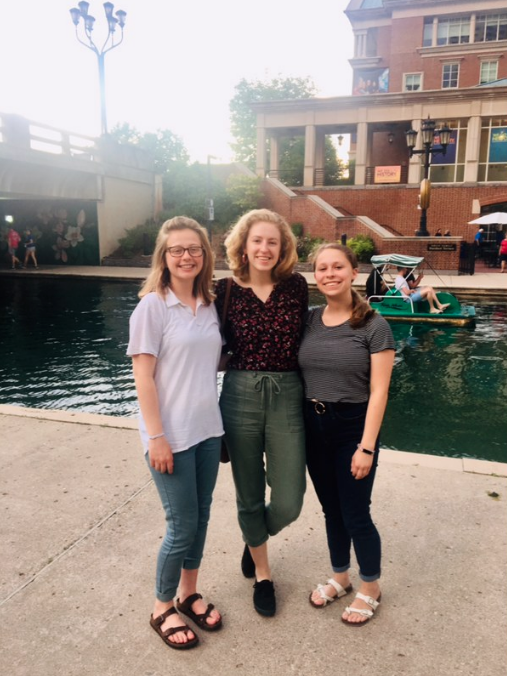 parts of the story, too. With the support from my roommates and a little (okay, a LOT) of perseverance, I have successfully survived my first week in a new city.
And I could not be happier. This summer I am a Creative Placemaking Intern at the Harrison Center, which is a non-profit organization “for the arts” and “for the city.” The Center focuses on renewal, anti-gentrification, and building healthy communities in Indianapolis through “cultural solutions: art, music, education, and grassroots activism.” It has been amazing to see firsthand all of the incredible work the staff and resident artists are doing here, and it is even more thrilling to be a part of it. Here is a video that might give you a better idea of the work we do: https://vimeo.com/299053006
As a Creative Placemaking Intern, I will contribute to and lead art projects that are based in concepts of place, which means the history and culture of long-term neighbors and neighborhoods on Indianapolis’ North Side. Through these projects, we hope to preserve 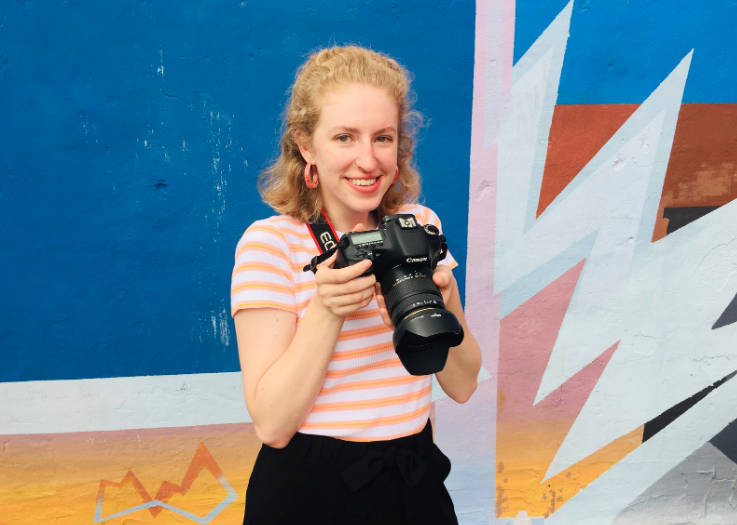 their traditions and bring new Indy neighbors into their stories instead of erasing them. I am looking forward to writing blogs, making photographs and storytelling, organizing events, and building community with the wonderful neighbors in Indianapolis.
Just as the monarch butterfly starts its life journey as a curious caterpillar, it always finds its way to becoming the beautiful creature it is meant to be. I, myself, feel much like the monarch — in search of sanctuary, nourishment, and growth, as I prepare my wings for flight. And Indianapolis seems to be the perfect place.
Coming to Chicago, my life felt utterly different. Growing up in a rural town in Ohio, all I have known is cornfields, pastures, and knowing every neighbor. While those things definitely have their advantages and disadvantages, pulling up to my apartment was exciting. I honestly felt as if I didn’t deserve to be getting the treatment of living in the Loop. This was just the beginning of my getting acclimated to the city. Part of my excitement soon turned into frustration as the first place I went to buy milk charged $5.00 a gallon. Nevertheless, I knew once I established a routine (and found a reasonably priced grocery store) I would begin to feel more at home.
The second day in Chicago was a day preparing me to navigate the city. I practiced my route to work, taking the brown line to and from Heartland Alliance. Heartland Alliance is an organization where many CAPS fellows have worked before. Their tagline “Ending Poverty” illustrates the broad range of services the non-profit offers. The refugee and immigrant community services (RICS) office, which I am working in for the summer, helps 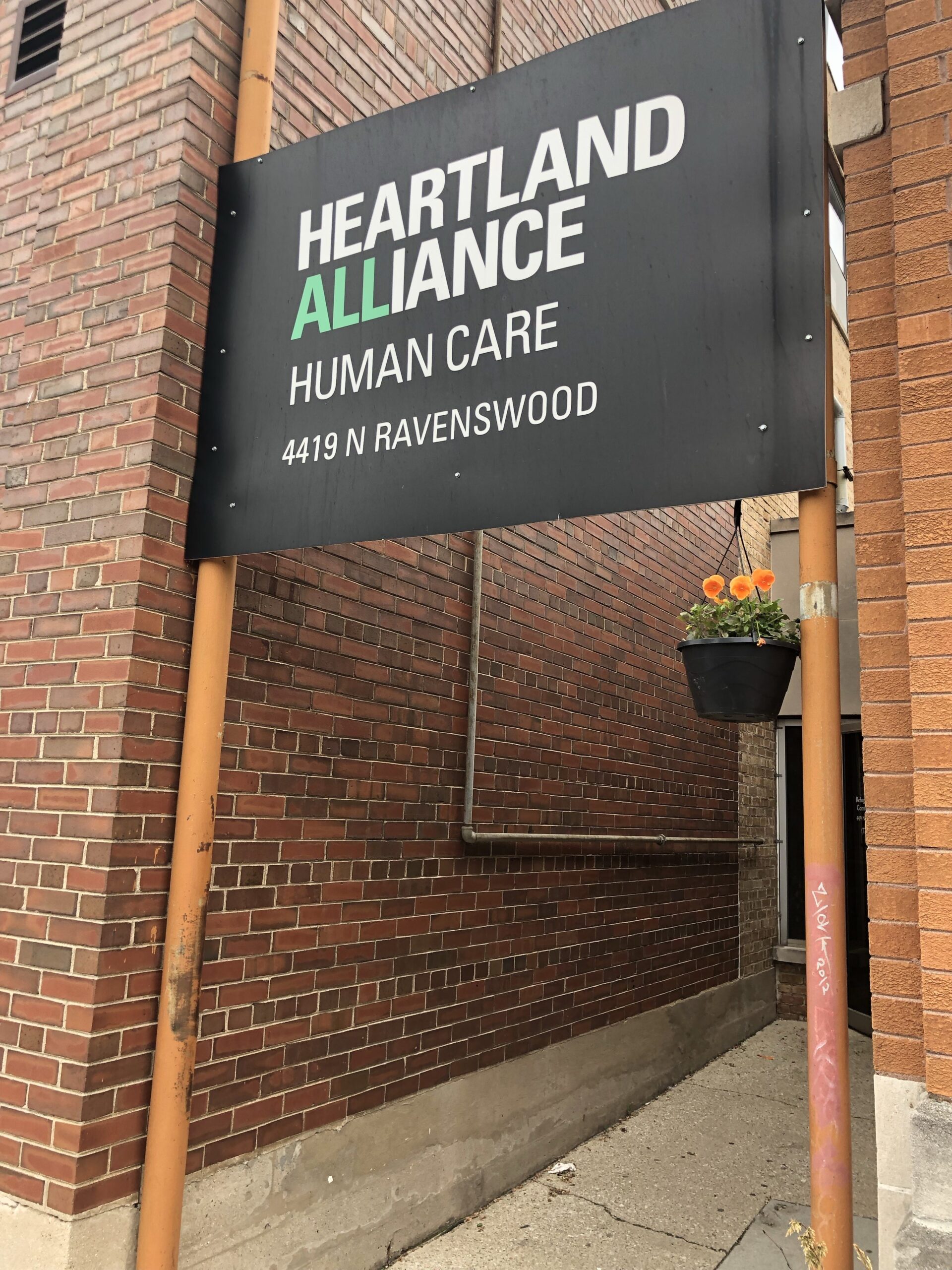 refugees, immigrants, and asylees integrate in the United States. As a public health major, helping program participants access all of these services is vitally important to promote health amongst the population.
Arriving at my first day of work, about 20 participants sat in the lobby waiting to go on an employment trip, looking to get their first job in the United States. It became clear that this would not be an average internship, but an opportunity unparalleled. As with most placements, the first day consisted of getting accustomed to the office and doing necessary paperwork to ensure I’m not a felon. My co-workers were wonderfully accommodating. They invited me to lunch and gave me a complete rundown of all of the best deals in the neighborhood. As the afternoon came around, my work began to slow. This was not because there was little to be done, but the opposite. My boss and co-workers were extremely busy and did not have long chunks of time to dedicate to training an intern.
As the week has gone on, I have started to pick up on quite a bit. I have had the chance to help out the organization by creating case files, going on home visits, traveling with a family to pick up prescriptions, amongst many other activities. For someone who has only been to Chicago twice before and never using public transportation, I now feel as if I have been doing so for years. Looking forward, I am excited to see where the next nine weeks take me. Acting as an assistant case manager, I will have the opportunity to work with numerous families and learn about the rigorous, and at times defeating, process people go through for a better life in the United States.
My life feels dramatically different than a week ago in my hometown. Living on my own for the first time, in the third biggest city in the country, with no pressing matters outside of work, I’m undeniably gaining a new perspective on the world. This inspirational work will be guiding me this summer. Although there is no guarantee that this is the workplace, lifestyle, or city I want to end up in, I nonetheless know I am humbled by the work I will be doing this summer. By the end I hope to see in a new light.
-Ty Snarr, Heartland Alliance
In my last blog, I was feeling a lot of stress. I was struggling with one of my biggest weaknesses: anxiety. Although my internship always keeps me on my toes, I eventually got into the rhythm of things. Psychologically, I think it helped that there were interns that started after me who I guided. For example, I taught them about different trips and what documents to bring (such documents to apply for a social security card). I gained confidence because that proved to me that I was retaining reliable knowledge while at RICS. As gained more confidence in my actions, I was able to relax more, better reflect on my experiences, and enjoy my time with the participants* and my coworkers.
When I was first here, I thought about whether or not moving to the US was worth it for some of the participants. It seemed so dismal at the time, coming to a new place where you don’t know the language or culture. I was blessed when I went abroad that I had such a big support system, composed of people who were not only familiar with the culture but loved and cared for me, wishing the best for me. And I had them with me every day, available for whenever I needed them. Yet, I still struggled. To come here and not have that kind of support seemed incredibly difficult. To also have a language barrier seemed impossible. To call this strange place your new home seemed a recipe for depression.
From my limited observations, I think that the first few weeks are the worst. After that, the participants seem to start forming lasting relationships with other participants and staff members and learn more English. After a few months, they eligible to apply for a job, the key to their independence. Although they may go through a lot of pain, the participants can and do overcome. This is very admirable, but I came to realize that these participants are not extraordinary. They are determined, strong, and smart. They are determined to make the best of their life, simply trying every day for themselves and their families. Their strength helps them endure the challenges they continuously face. And they are smart because they allow and strive to learn more on a daily basis. And they are not unique.
I am not trying to minimize their situation or even ignore the fact that they are the 1% of refugees that are actually resettled, but I do want to recognize that the determination, strength, and knowledge that they use in their day to day life is something found in human behavior. Something amazing about human beings is our resilience. To clarify, I’m not saying that there aren’t people whose success is attributed to uncontrolled privileges, chance, or miracles. In fact, I think that all aspects of life are affected by circumstances that an individual can’t control. This is also not meant to glorify struggles brought by injustice and inhumane treatment. I am saying we are capable of amazing things. You may think to yourself, “I don’t know how she/he can do it; I could never do it.” These people didn’t accept their circumstances as a challenge, it was forced on them. Survival is partially choice, but it’s also a reflex.
In particular, I think about a family that I meant in the first few weeks of me being at RICS and their first time being in the U. S. I remembered how scared they look. I had no idea what was going on in their minds. Did they feel regret, overwhelmed, fearful? As time went by I was able to witness a change. They became more confident in where they were going and what they were doing. They learned more English and were happy to have a conversation with me, even if there were misunderstandings. Time went by so fast that I didn’t even realize how much they were progressing each day. It seemed like all of a sudden they were in high spirits, progressing and learning more. Even when things went wrong (which they often did with me frequently guiding them to a place I’ve never been to), they didn’t show anger or frustration.
But I’m not ignorant of the people that aren’t as happy as them. It’s not to say that those participants are failing, their path is just different. They’re adapting to their situation in a different way. This blog seems to be the result of me recognizing the struggles of other, but not pitying them or not giving them the credit they deserve. I think that realizing how “privileged” people are, can mistake our lives as being better than others. What is a successful life, anyways? However, we should still recognize poverty as a global, human being issue and strive for equality and opportunity for all, as Heartland Alliance does. Honestly, I’m not sure if I’m making any sense here. This is just something that has been on my mind. I’m trying to figure it out and articulate my thought process, but I’m not sure if I’m losing you along the way. I’m sure someone more experienced than me could look at this and point out my ignorance.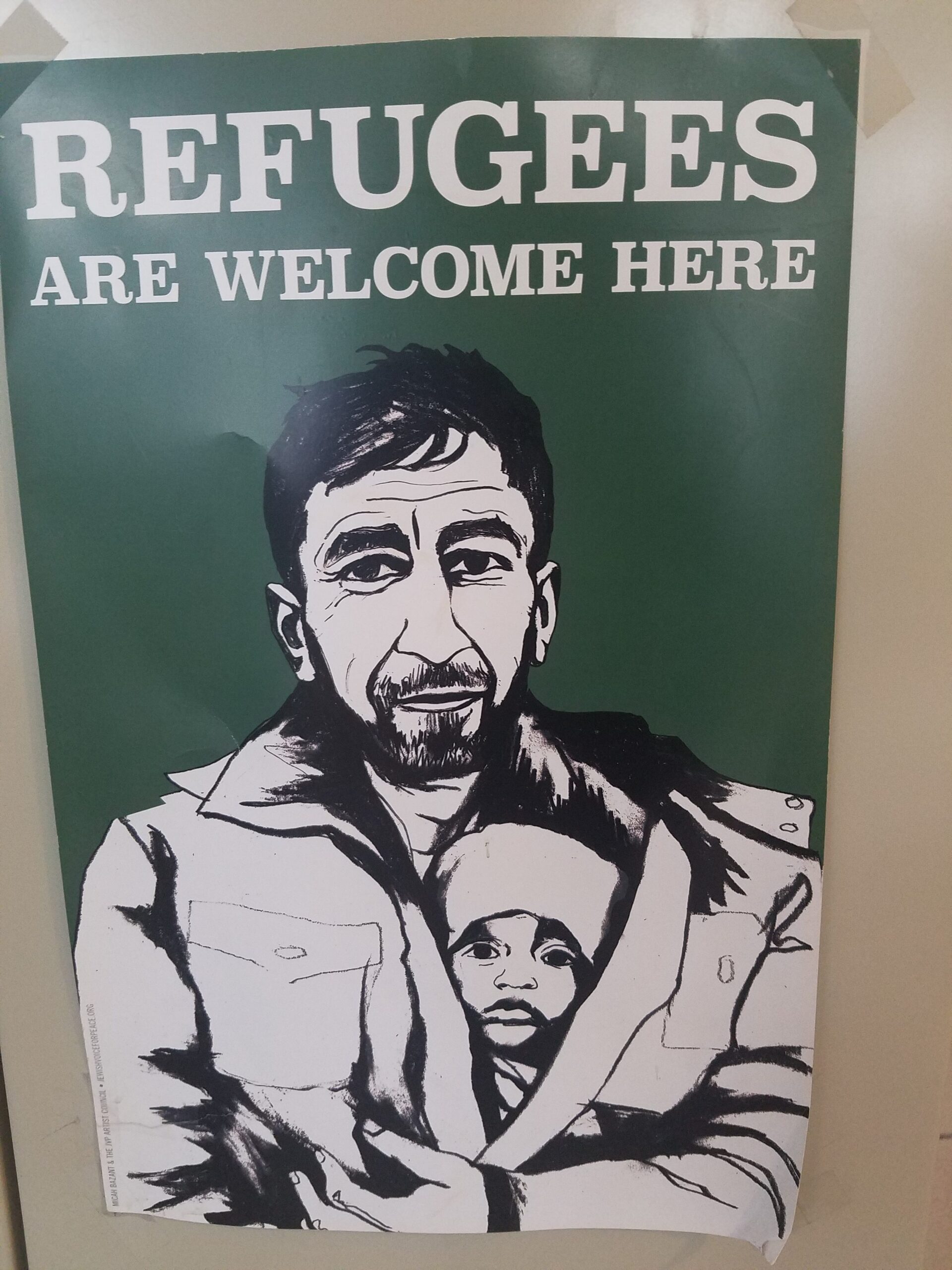
I’ve been home from Chicago for about two weeks now, trying to organize my life post-internship and preparing for stepping back into my role as a student after two long months of playing a professional adult role. Its an interesting regression, as I think I was finally getting the hang of adulthood and now I can choose to let go of that persona for another year before the permanence of adulthood kicks in. Although I’ve found some aspects of adulting enjoyable, I’m relieved that I still have some time before I have to adult to that extent again.
The beauty of the CAPS fellowship is exactly that. You get a taste of a career path or field and how you need to function within that field, but nothing is permanent. At the end of the summer, you get to say your goodbyes and step away from that experience, and have time to evaluate it all. What you liked, what you didn’t like, if it’s the path you want to pursue. In such a pivotal time in one’s life, it’s a great resource for helping to decide what steps to take next.
I knew coming into this summer that I might not end it with clarity about what I want to do. It might provide me instead with some clarity about what I don’t want to do, or help me to grow or shorten my list of potential career options. While this is a frustrating concept for someone who is surrounded by people in their life who graduated from college and immediately found that fit for them, whether that be nursing, engineering, or any other number of professions that has a more linear path, it is something that we liberal arts majors are just going to have to live with.
My education at Valpo, through Christ College, leadership positions, and studying sociology and political science, has equipped me with a wide and unique set of skills. That being said, these skills are applicable to a multitude of fields and careers. I have a lot of options post graduation, and I’ve felt the weight of that since very early on in my college career. It often feels like an impossible task to decide on one career or path. And now I realize that I don’t have to.
One of the things I’ve tried to make a priority while working at Concordia Place is to ask my coworkers their “story”. I have been collecting the stories of how they ended up working at this nonprofit in Chicago, and have learned that the answer is exactly what I suspected (and kind of feared) to be true: trial and error. They all come from different schools around the country, whether it be Tennessee, Colorado, Illinois, New York, etc. And they all have worked in several different fields, and different positions within those fields. They learned what their strengths were as they progressed through each position, and some of them are still trying to figure that out now, at Concordia Place. Some went immediately to graduate school after college, some waited a few years after working a few different types of jobs so that they could be more sure of what they want to go into even more debt studying.
As a “planner”, it can be disheartening to hear to that I can’t fully plan out my future in a linear way. I know that it should excite me that there are endless possibilities, but it’s not the easiest idea to get used to. No one prepares you for that, especially in a society that expects you to have an idea of what you want to do with your life when you graduate high school at a mere 18 years old.
One beautiful Friday morning, I went to a nonprofit panel geared towards interns. I plugged the address my boss gave me into Google Maps and started walking. I was pretty surprised when I ended up in front of the Sears/Willis Tower (I’ve gotten a lot of crap for calling it either, so pick your poison). I got to listen to career advice while looking out at Lake Michigan, and it was an experience that will stick out when I think back on this summer. The most important piece of advice was that you can’t plan out your whole career path now, and you shouldn’t even try. Hindsight is 20/20, and only when you’re looking back does your career path make any sense, according to the knowledgeable and highly qualified panelists. Seeing how far the panelists had come in their careers, despite their paths being completely different than what they had anticipated at my age, is a comfort. I’m working on learning to let go of my obsession with planning and instead, let life do its thing.
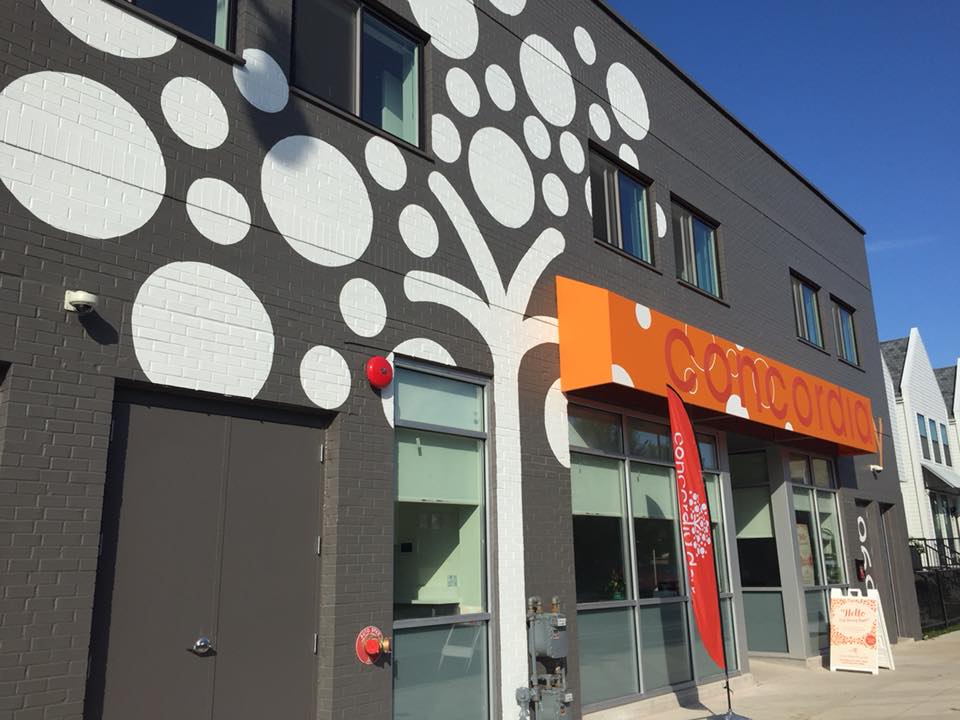
Concordia Day on Milwaukee, which we finally cut the ribbon and opened on August 1st!
On one of my first commutes to work I had left my headphones at my apartment. This is a big deal to someone riding the CTA, because headphones provide a welcomed distraction to the chaos of life in the city. This train ride felt really long and I tried to ignore the awkwardness I was feeling. As I stood to exit the train, an older man also stood so we made eye contact and shared a small grin. We stepped off, and as we hit the platform he started chatting to me about his day. We walked for about five minutes together before our routes took a shift as I went to walk into work and he was to continue down the sidewalk. Before we parted ways, he asked for my name and we shook hands as we shared a more genuine, friend-like smile.
I have reflected on this moment a lot during my summer. Perhaps the hardest part about the city to me is that human interactions are reserved for those at work or our known friends… rarely are conversations with strangers welcomed or encouraged. So then I started to think about why this is. Is it because people are somehow more dangerous in the city? Is it the fear that someone will ask something from us and it’ll feel awkward to deny? And I honestly couldn’t come up with an answer that made me feel content. I realize that there are major issues in the city that create for a dangerous environment and that crime rates are high. I realize that being a woman, I should be more mindful of the places I travel and what I do, in order to be safe. But these things still didn’t explain why humans couldn’t just love each other enough to engage in a simple conversation on the train. So the first step I took to experiment with this debate was to promise to never again wear headphones in a public place. With this one decision came many more interactions with strangers. I was asked multiple times for spare change, was complimented on my hair, and most often of all was asked, “Hey, how you doin?” in a non-Joey-from-Friends way but more of a thank-you-for-acknowledging-my-presence way. How crazy it was, that my removing my headphones, I automatically became a conscious member of society instead of a life-avoider. This of course made me start acting differently. I envisioned the people asking me for spare change as a version of myself in very different circumstances. Because of this empathy, I could no longer ignore them and make up excuses about why I couldn’t treat them as a member of society, so instead I would ask to pet their dog and talk to them about the pet. Or if they didn’t have a pet, I would just ask them how their day was going or have another form of conversation to initiate. Sometimes I had money and other times I didn’t, but in any case, I would never walk by without saying something.
I think this is what the CAPS Fellows Program meant to me. It’s exhausting to constantly be focused on MY purpose and MY career and MY achievements, especially when I don’t know what the heck my calling is. But what I do know, is that no matter what environment I am in or what day I am having, I need to be a conscious, loving member of society. I know that my purpose is to approach any situation in truth and in love. As I practice these two things more and more, I believe my calling will become more and more evident, and I can bless others while feeling content about my place in this world. And to those who are having trouble finding their calling also, I just wanna say… it starts with taking out our headphones.
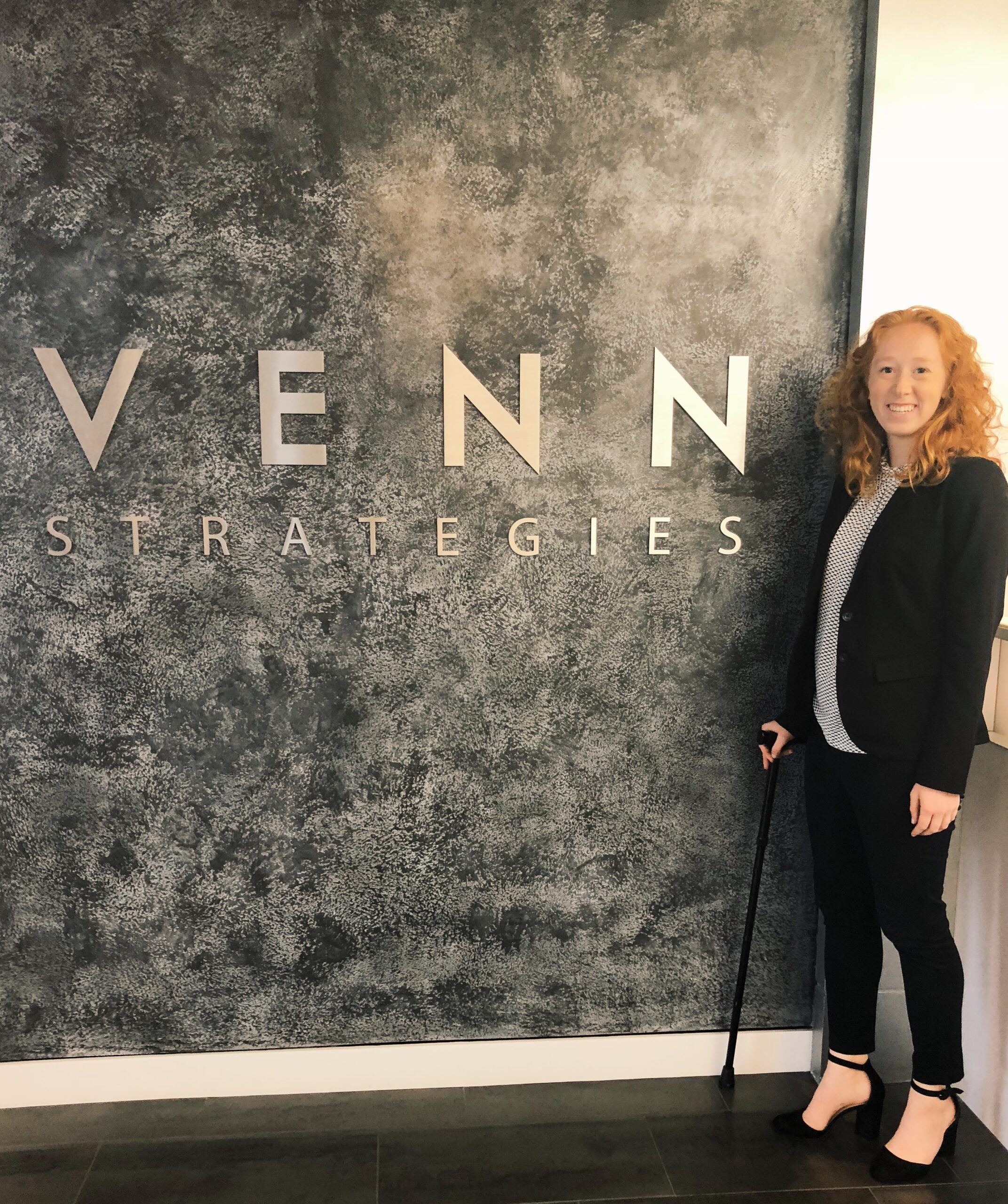
I’m incredibly grateful to Venn Strategies and all I learned there this summer!
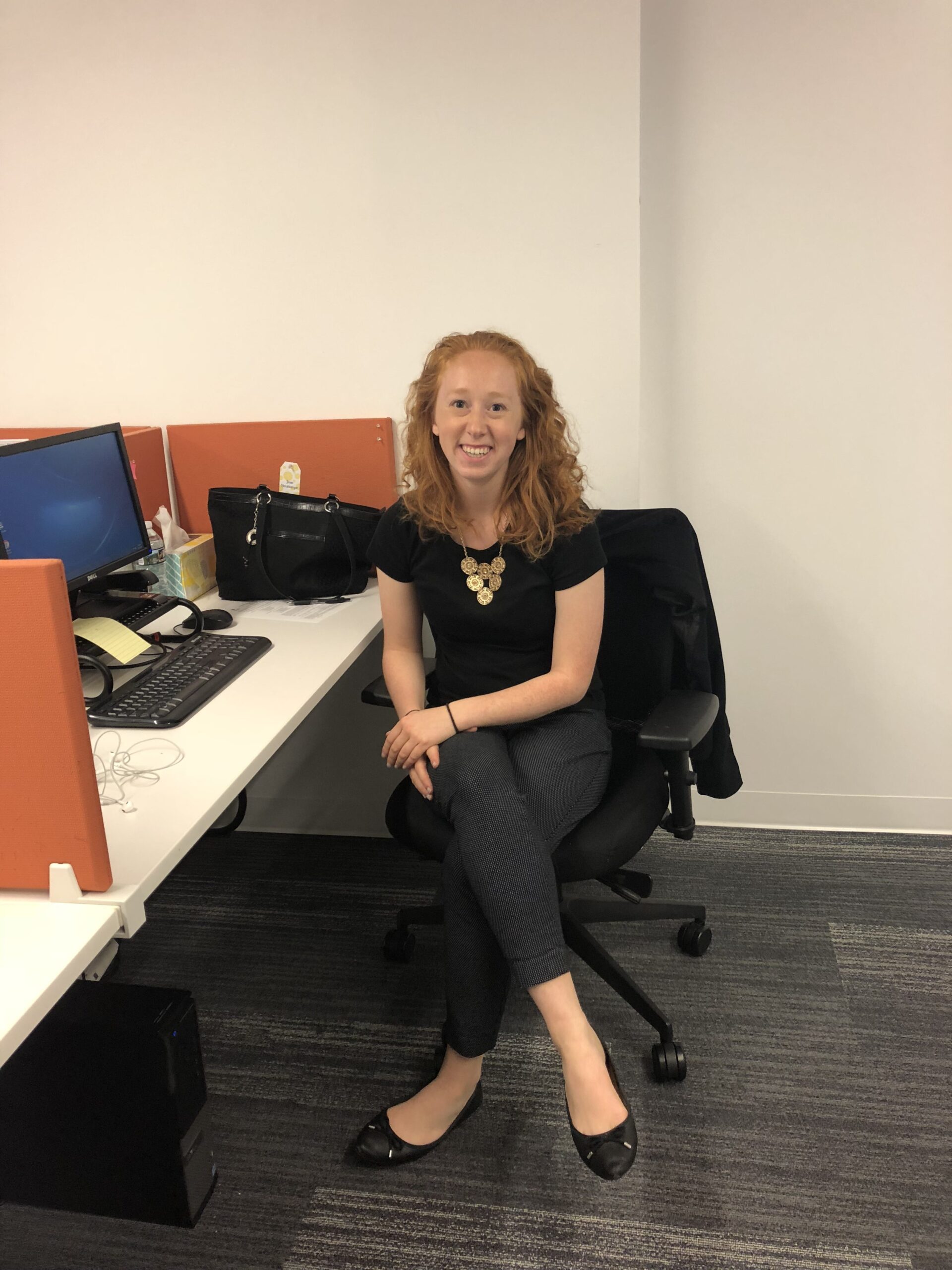
Sitting at my desk on my last day at Venn
Finishing up my time as a CAPS Fellow has been a blur. I finished up my last day, packed up my apartment, and caught a 7am flight to Boston to meet my family. Now I’m back home in Wisconsin for a lengthy six days before blasting off to study abroad in Costa Rica for the semester. All that being said, time to reflect has been scarce. I’m still coming to terms with everything I learned throughout my CAPS experience but I’ve definitely seen myself grow as a person, both personally and in my career aspirations.
When I started at Venn, I knew I felt like I was in way over my head. I didn’t have a firm grip on what I was doing and at times I was drowning trying to learn everything at once. I felt incredibly unprepared about the work I was doing and thought everyone around me had it all together. After all, I was the intern and this was their actual job. I was turning in memos on topics I knew nothing about (ever heard of the Railway Securities Alliance? Neither had I until I started at Venn). I felt like a fraud—like at any moment my boss would come over and ask me what I was doing there. I adopted a sort of “fake it ‘til you make it’ attitude and it actually worked. After a few weeks I started to understand the rhythm of the company and started working on some projects I really enjoyed. I even made a work friend—something I thought only existed on sitcoms (Shout out to Nina—I miss our lunch break Sephora runs ☺). As I got more comfortable with my position my work also improved. I was able to step out of my comfort zone by participating in client meetings and offering feedback. My confidence grew and I felt more and more comfortable with the work I was doing and proud of the projects I finished.
Over the course of the summer I also learned a lot about the ins and outs of lobbying—it’s really not what it looks like on Scandal. It is more focused on building relationships and having ongoing conversations, finding people in government and showing them why they should care about the issue you are bringing forth. The work moves both extremely slow and extremely quickly. The bureaucracy of government means it can take years to get bills passed but client demands sometimes mean working around the clock to get results. Overall, lobbying is about making a difference. It’s about changing current policies to make them better for constituents and interest groups. I definitely came into the summer a little jaded about what the work would look like. Instead, I met clients passionate about policies that had a huge impact on themselves, their businesses, and their customers. The job of a lobbyist—or anyone working in policy really—is to make sure that people can have their voices heard.
That isn’t to say it all became easy—it isn’t. I didn’t always agree with the policies clients wanted change and I didn’t always agree with the means used to achieve it. When I started to get frustrated, I did my best to take a step back and focus on the larger vision of what I was doing. I was helping support a group that wanted to make their ideas and goals known to their elected officials. And that, I think, is pretty fulfilling.
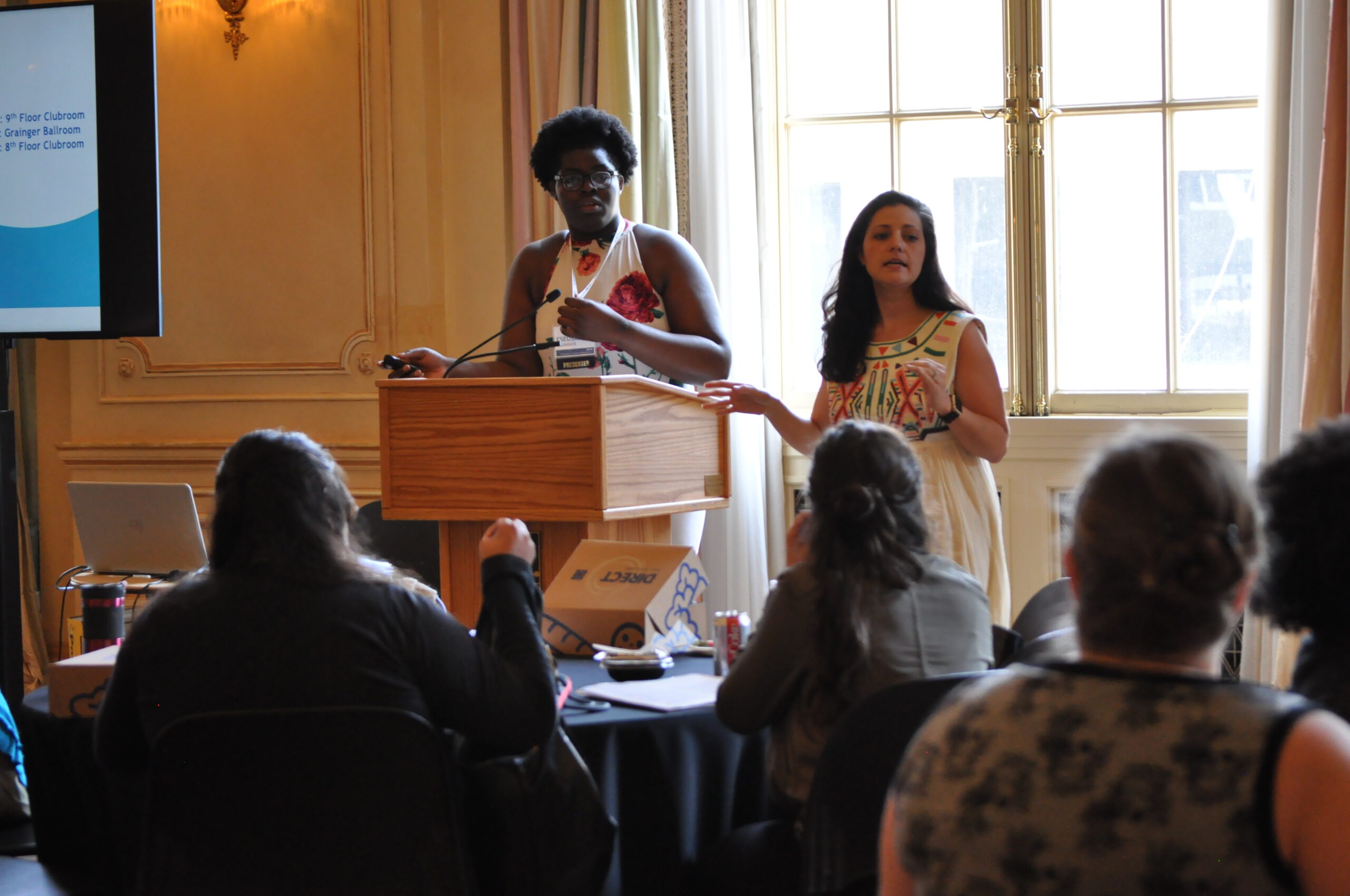
What is quality? This is a question that Ingenuity seeks to answers in terms of arts education. However, this is a question I sought to answer in terms of an internship experience. Being a college student, we are told that an intern experience is a quality one because we need to build our resumes. So often, students spend their summers making copies and getting coffee for the sake of building their resume. But is this truly a quality internship? By the end of the summer, students only know how to use the printer, order coffee, and, if they were lucky, sit in on a couple of meetings to take notes. My definition of a quality internship is one where I can grow professionally by doing meaningful work. Luckily for me, Ingenuity feels the same way.
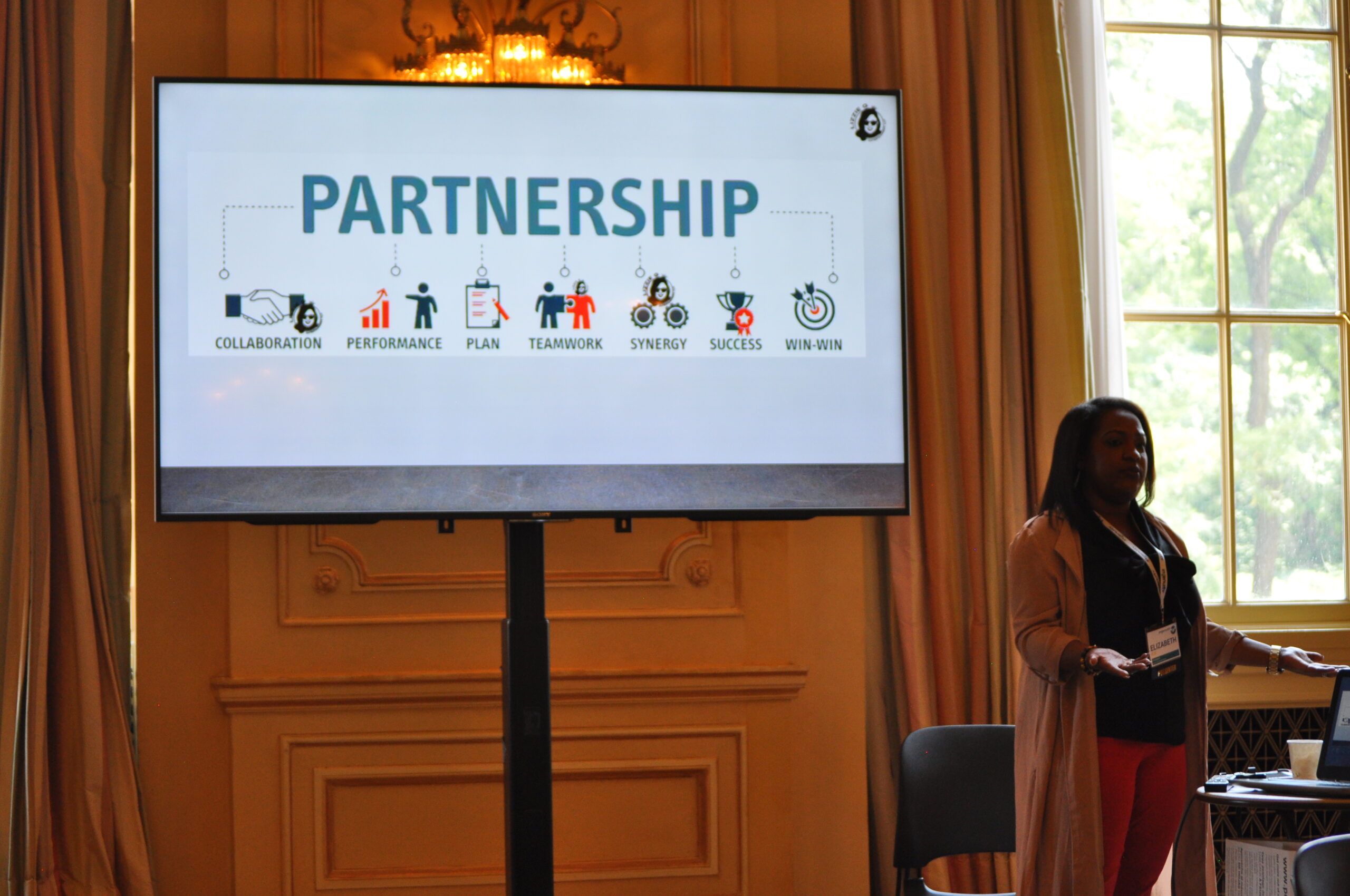
The advantage of working at a nonprofit organization is being surrounded by people who are passionate about their mission. I can always feel the passion for quality arts education for all CPS students in each team member at Ingenuity from the moment I started working here. When I was tasked with the Partner Starter Institute, I was excited to have a project that was integral to the programming of the Partnerships and Professional Learning team. Being in charge of the Partner Starter gave me the opportunity to exercise my networking, facilitation, and event planning skills. I was given the freedom to design the content of the entire day from the venue, agenda, and even the catering.
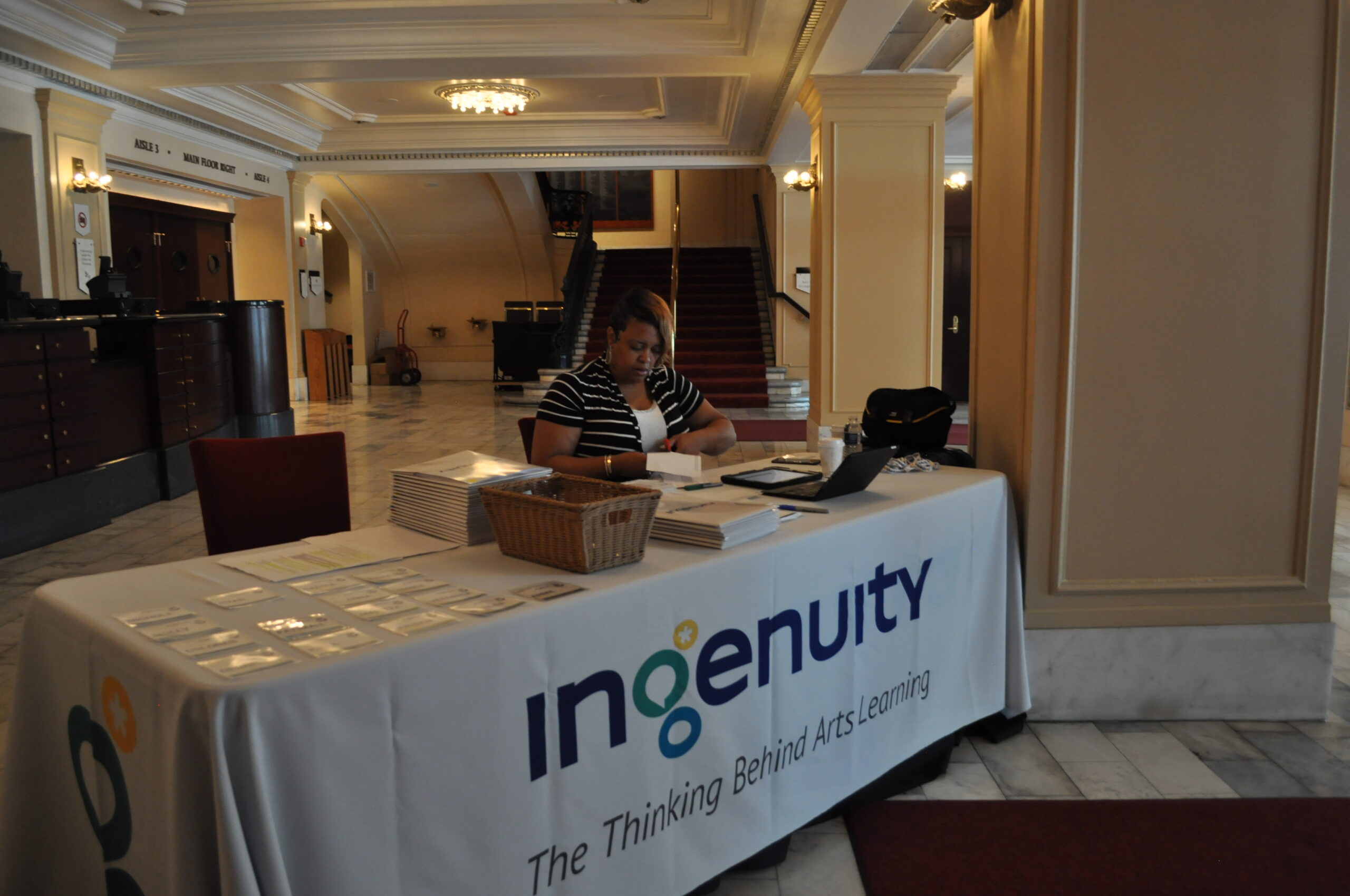
Ingenuity puts a lot of faith into their interns. We are treated as equal members of the team. We are invited to staff meetings where our input is encouraged and valued. As a member of the Partnerships and Professional Learning team, I have the opportunity to help run professional development events and attend a meeting to foster arts partnerships. My time at Ingenuity has taught me the importance of partnership and collaboration. No person is an island and we need to work with others if we want to accomplish anything.
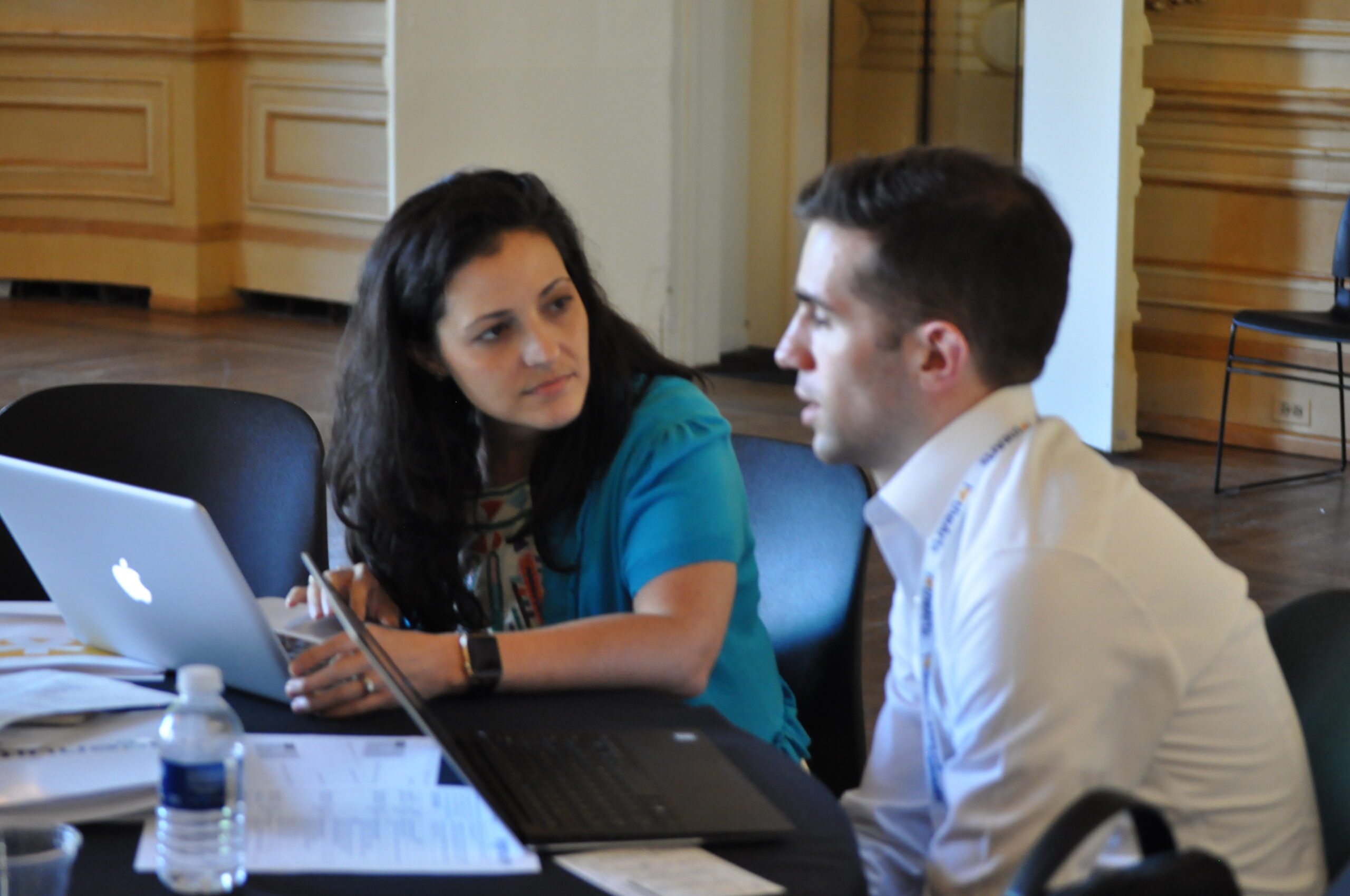
Each day was a different adventure working at Ingenuity. This experience allowed me to think about what kind of work environment I should look for when seeking future employment. The work culture at Ingenuity is very inviting. Each staff member seeks feedback from others to ensure that their work is being done efficiently. It is inspiring that each team member models that it is encouraged to work together on projects.
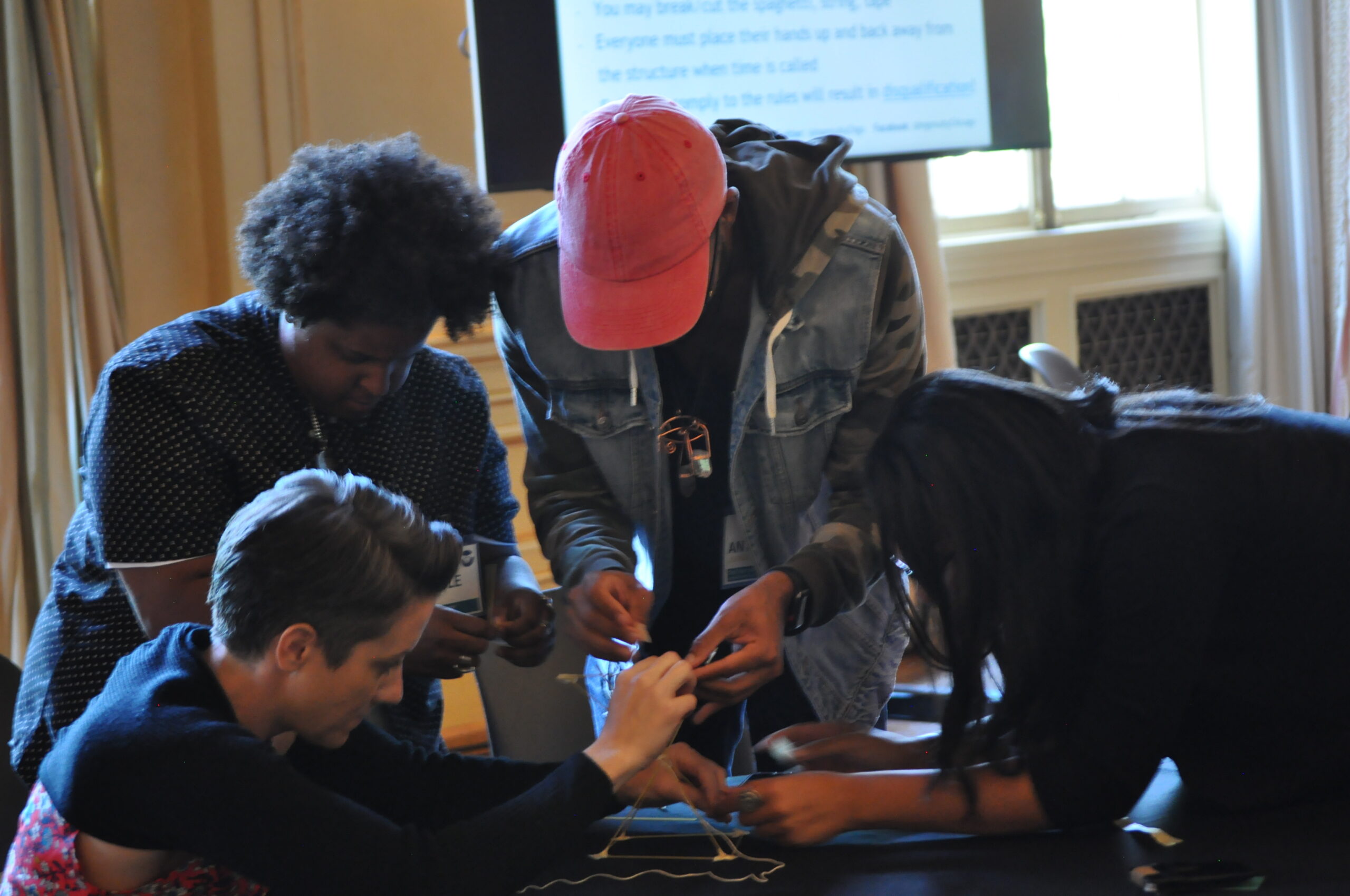
If you asked me what a quality internship is, I would tell you Ingenuity without hesitation. Ingenuity provided me the opportunity to grow professionally by tasking me with the Partner Starter Institute, assisting with professional development events, and fostering arts partnerships. I know that every task I was given at Ingenuity served a purpose that aligns with their mission of ensuring all CPS students have access to arts education. I will miss working with an organization that is passionate about the work they do and take the time to nurture a student’s professional development.
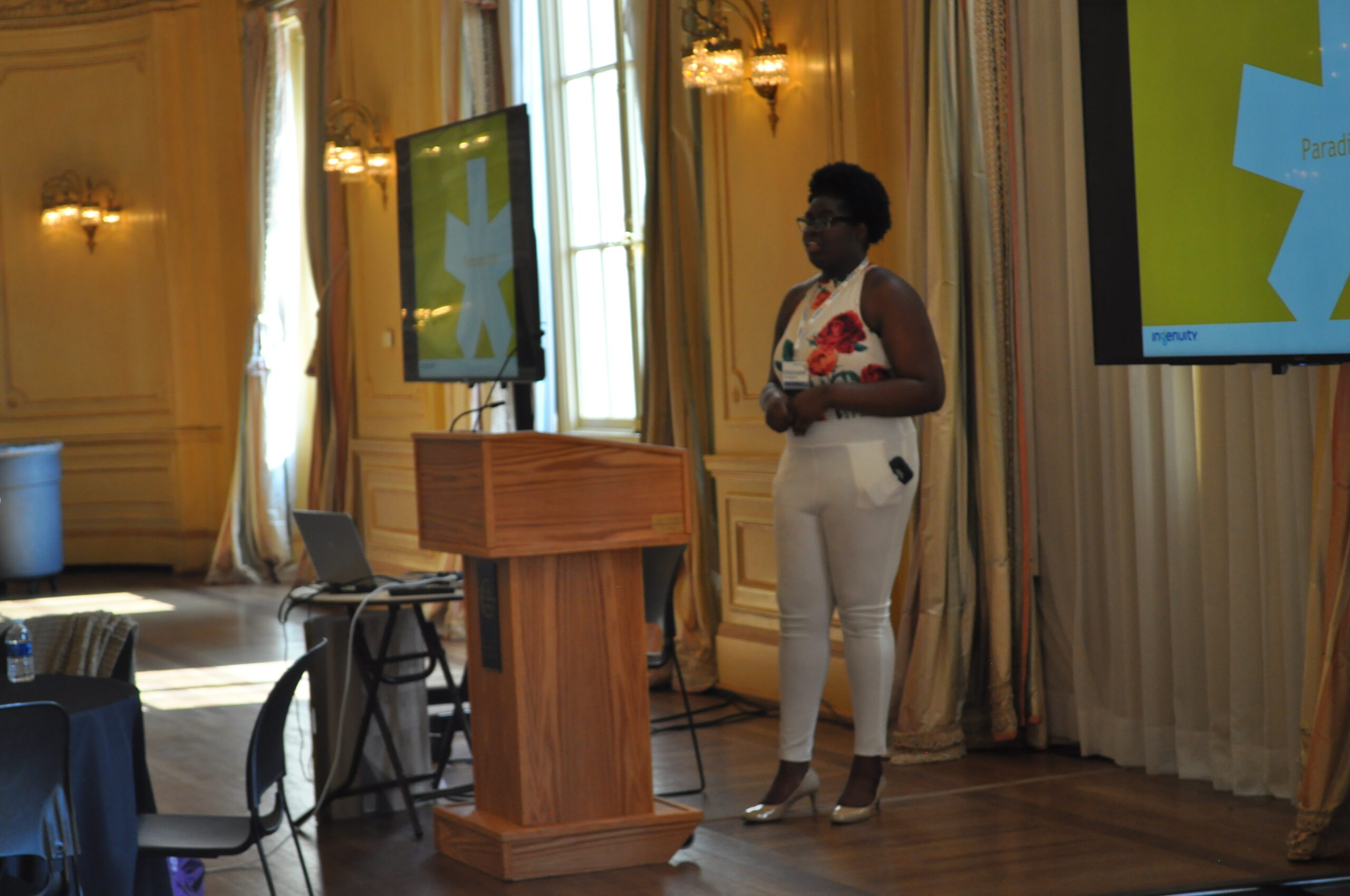
It’s difficult to believe that I am coming to the end of my time at Erie House. In the few weeks I have been here, I have learned a multitude of skills, listened to new perspectives on life, and saw the service sector function through a different organization. Each day was another day to learn, to grow, to challenge myself. Yet, some days brought lessons that were seemingly more profound than others and introduced me to a new way of viewing relationship-building, and life in general.
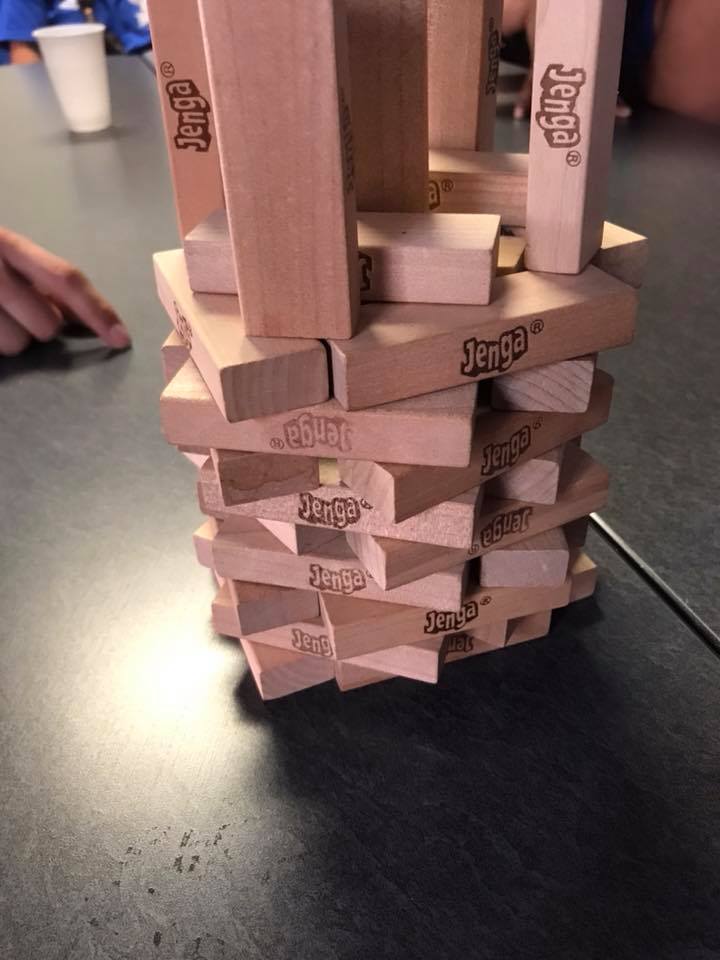
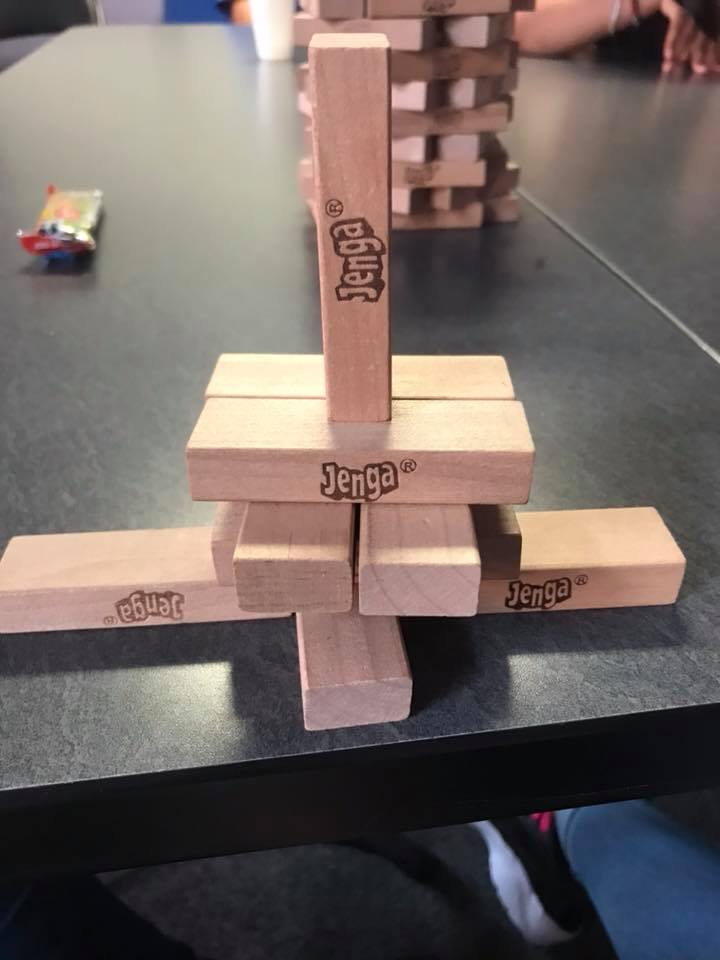
Since ninety-eight percent of my work has been with elementary-age or middle-school age kids, I’ve definitely become more apt at playing sports as well as a variety of board games that I had either not touched since my own childhood or have never seen in general. However, Jenga was one of the games that I was quite familiar with (as there was the “giant version” Jenga in the game room at Valpo). One night at one of the youth programming events, we played Jenga—but with a twist.
In this game, Solomon, the man in charge of the youth programming (youth being anyone from 7th-10th grade) at Erie House, gave us eight blocks each. With those eight blocks, we were supposed to build whatever we wanted. Not understanding the ulterior motive (there always is one—or so I believed), I began constructing a tower that would be quite stable if a block were removed (I tried to anticipate what he could possibly be doing and figured it would be safe to go with a short and stable tower). But what came next surprised me. He had his own eight blocks but he didn’t build anything. Instead, he asked me if he could put a block on my tower. I looked suspiciously at him but added a ninth piece to my already amazing-eight-piece tower. But I wasn’t the only one. He went around to each youth and asked to put a block on their tower. Some decided to take it, others did not.
At the end, we had to share why we built the tower the way we did. Some youth explained that they wanted to build the tallest tower, and so they had paired up with one of the staff members or each other to create a taller tower. Others made shapes, like a duck, and said they did it for fun. It was neat to see the level of creativity and the amusing replies they gave. But then Solomon then asked if any of us had any idea what the point of the game was. We all went around and shared our thoughts. Some people believed it was about teamwork since many of them decided to put their blocks together to make something bigger, others believed it to be about individual creativity.
Solomon stood up and pointed at each tower and asked if we could identify which blocks were ours if we had joined our blocks together. Some said yes. Others no. Then it became clearer as he explained.
“This whole exercise was about creating a narrative. We all have our own stories, but sometimes we don’t know what story we want to tell, so we hop on someone else’s and create a narrative that way.
Do you remember that I asked each one of you if I could add a block to your tower? Some of you said ‘yes’, and others of you didn’t. That was me asking to be a part of your story, of your narrative. It’s okay if you said no. Sometimes you see something you really want to be a part of and sometimes you’ll get turned away. But it’s okay, because there might be openings other places to insert yourself and be a part of that story. With each tower, you created a story, a narrative—by yourself or with others. But in the end, this is about understanding how we all relate to each other, and the ability to accept or decline people to be a part of our story and making it our own.”
It was amazing how something so simple like Jenga could become so profound. This extends past just talking about youth programming. It’s about life. We are all building Jenga block towers, so precariously stacked and with only so many pieces, but we don’t always have to build it alone. We can if we want to and that’s acceptable. We can also allow others to help us create what is our own story and account of our lives, actions, and character.
This metaphor isn’t just for the youth at Erie House, but for each person who is telling his/her/their story in life. As I move forward, soon to end my time at Erie House, I’ll know that my metaphorical Jenga tower is even broader because of all the blocks I allowed to be added to my narrative. I hope that I was also able to take some of my Jenga blocks and add them to the youth and staff I worked with in the short time I was there. However, as I continue on to Spain where I’ll be teaching next year, I hope to use this metaphor, this story and its meaning, to better form relationships and deeply reflect and think about what it means to be an individual and collective in creating personal stories.
Satu, dua, tiga…
This past Friday was our final day of Refugee Youth Summer Program here at Heartland Alliance- a day filled with many emotions, from exuberant pride at the growth and confidence of our kids, to humbling gratitude at the opportunity to work with them each day, and finally the acute sadness that accompanies difficult goodbyes.
For the last six weeks, I’ve waited in front of the Howard Jewel-Osco in Rogers Park for our youth to come out to summer program, based this year around the theme “Every Voice Matters” (“camp” is not used by Heartland due to its potentially retraumatizing connotations). Kids between 5-15 years old from countries such as Syria, Eritrea, Burma, and Central African Republic- many of whom are relatively recent arrivals to the United States- are invited to summer program as an opportunity to build relationships, promote familiarization with their greater Chicago community, assist with English language acquisition, and provide a trauma-informed space to process experiences in a safe and supportive environment. Each day, myself and fellow Heartland staff hop on public transit with our “Howard Crew” kids to go meet up with the rest of our 40+ person summer program group- rotating daily between engaging in planned activities, heading to the beach, facilitating support groups, playing soccer with other refugee resettlement agencies, and participating in field trips in the Chicago area.
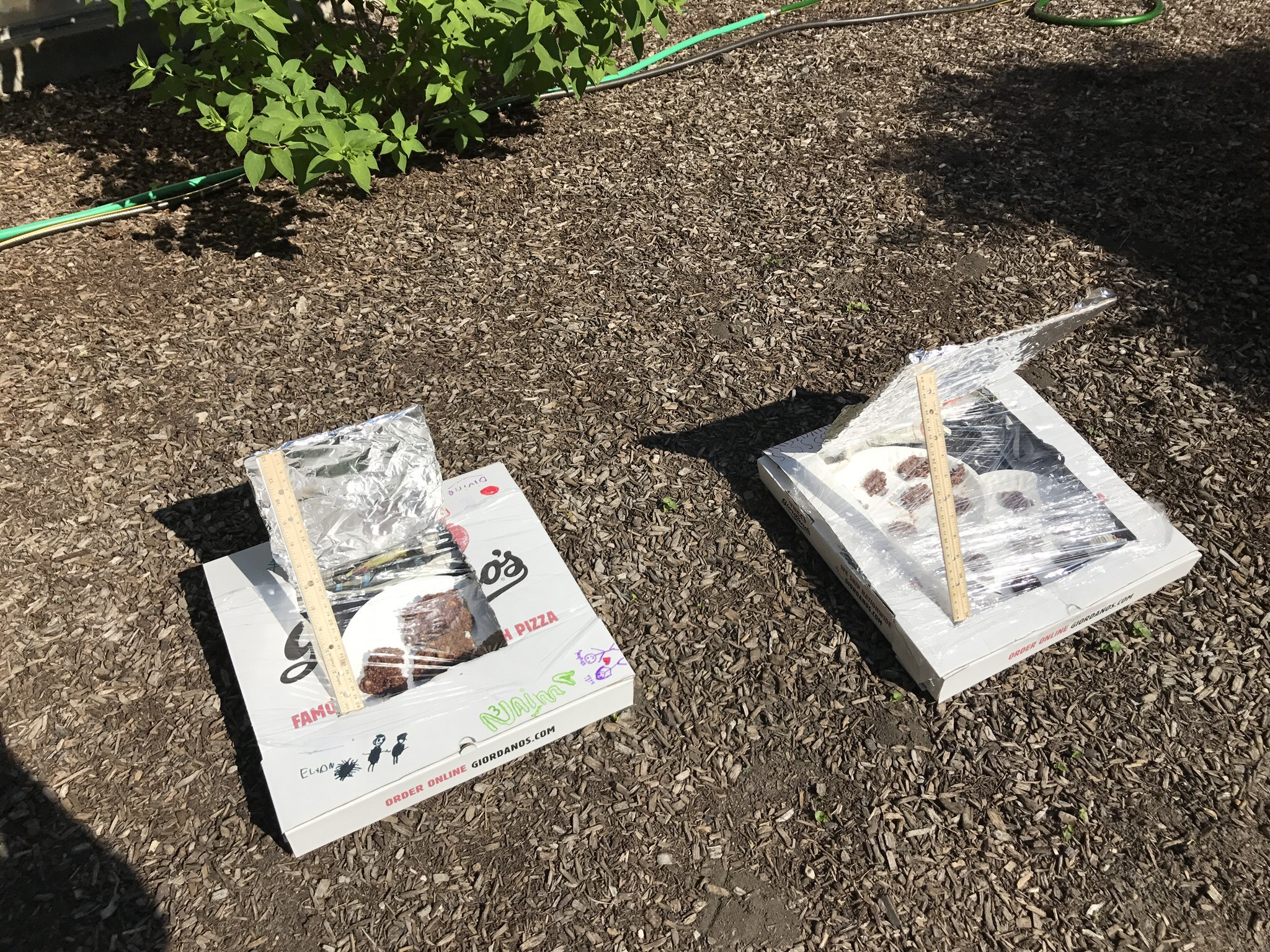
Baking cookies in pizza box solar ovens for “science day,” which I had the opportunity to coordinate and lead. Our word of the day was “experiment;” we also made DIY lava lamps and slime!
Throughout the summer, I often found myself counting to three (as done in Malay at the beginning of this post). Sometimes this was done silently to myself, accompanied by a deep breath on a jam-packed rush hour bus with 20+ tired out children in tow who “are sitting down, we promise!” (as they stand in the middle of the bus aisle); during others, it was yelled with enthusiasm when leading a group game of four corners. I‘ve used it to de-escalate conflict, navigate passionate outbursts of emotion, and learn new languages from our participants. As I prepare to head to Malaysia come January, I’ve been especially privileged to be able to start learning Malay from some of our Rohingya girls, and turned these numbers into a game with one participant- for every new number or phrase she taught me in Malay, I would teach her one in English. Whenever something happened that made her sad, I’d start counting as fast I could in Malay (always messing up), which usually provoked a laugh or smile even on difficult days.
It’s fairly intimidating to show up to work everyday knowing that you’re engaging with kids who are braver, kinder, and more intelligent than you’ll probably ever be. The youth that I’ve had the privilege of growing close with this summer are quite literally some of the strongest kids in the entire world- coming from backgrounds of persecution and oppression only to enter a country that continues to place their identities under attack. A country where they are given next to nothing (and are actually forced to undertake debt just to arrive here- refugee families take out loans to cover their own airfare) but must integrate into a society that overall rejects their unique cultures, languages, and religious backgrounds as “unamerican” and further marginalizes based on skin color. A country who only provides around $1000 per family member to start an entirely new life (think about how this compares to cost of living in the city of Chicago) with an administration that is actively cutting funding for needed social services, ironically requiring many families to move to areas of heightened violence; oftentimes the very thing they seek to escape. Our participants come into a nation that overall does not value the skills and educational backgrounds of the refugees who enter it and incorrectly equates intelligence with english language proficiency, prompting refugees to work multiple low paying jobs at once to make ends meet, all while stigmatizing these individuals as a “threat” (even though it takes years and countless screenings to legally obtain refugee status) and victim-blaming these same individuals for “burdening” one of the wealthiest nations in the world (even though refugees have no personal say in where they are resettled and actually pay more money back in taxes than they will ever receive from the federal government).
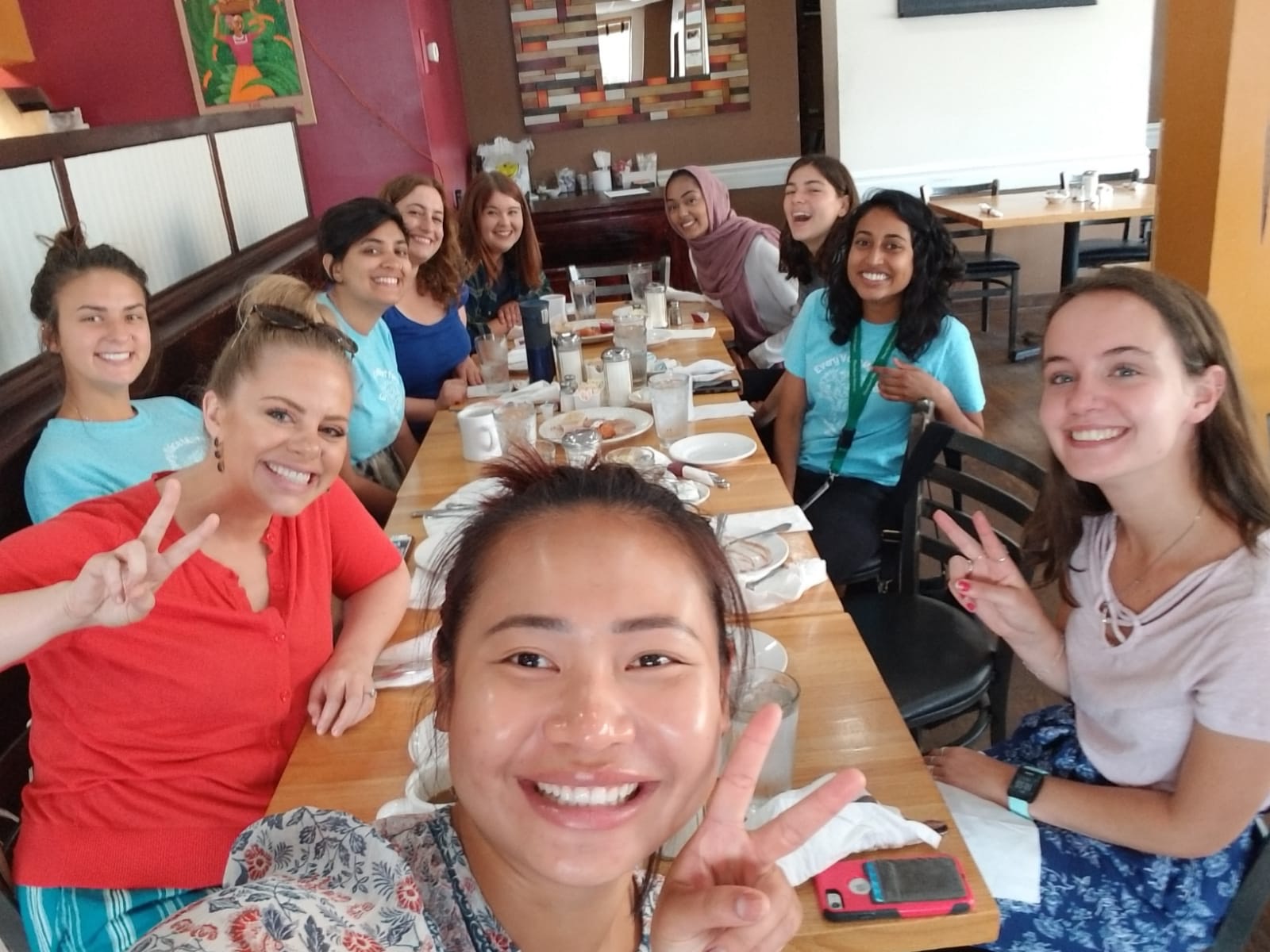
Our phenomenal Youth and Family Services team, who are constantly lifting one another up with their wisdom, support, and of course food
And yet, despite all this and so much more, our kids arrive each day with the ability to laugh genuinely, advocate for one another, care deeply for those around them, and ask critical questions of the world in which they live. It’s quite frankly a resilience unlike any other, and I look up to each of them immensely. Given all that I’ve learned from these individuals, I was kidding myself when I thought that I could do tearless goodbyes. And when it was time to leave (and the presumed adult teacher version of Miss Emily was trying hard, but unsuccessfully, not to lose it), it was my turn to hear a “satu, dua, tiga…” coming from my ten-year-old friend.