

“We are called to be the hope for the hopeless…We are called to act with justice, we are called to love tenderly; we are called to serve one another” -We Are Called, David Haas
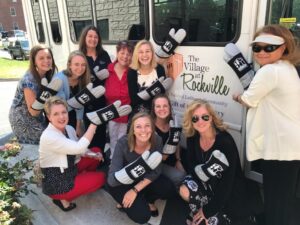
Leadership Summit with some of my wonderful co-workers
My first blog was after 3 weeks at National Lutheran Communities and Services (NLCS) and now I finish next week. It will be hard to describe all I have learned and thank all the people that have supported me in a few paragraphs. These last couple weeks have been some of the busiest between board meetings and trying to finish up everything at work while squeezing in more sightseeing. There’s no denying I’ve learned a lot about not only about elder care but also about myself. It can be difficult to put into words, but I have improved my ability to understand myself. I have been using more time for myself to read or take walks. As a future social worker, a career with high burnout rates, figuring out how to practice self-care is essential.
Many of my reflections have been about what type of life I want for

Dress rehearsal for A Capitol Fourth concert hosted by John Stamos
myself in the future. I had a limited idea of what my future or even this summer would look like. Now I can look to my co-workers as examples. They are passionate and hard-working people who manage to make the workplace enjoyable despite the constant struggle to create quality work under time constraints. They are helping me envision the type of person I want to be while building on my own individual strengths. I am still trying to figure out how to become this person and make a meaningful difference in the world. It can be frustrating getting caught up in the day to day busyness or strict regulations but the important reminder is the people. The people you are working with are the core motivation at the end of the day and they drive your efforts. I look forward to a future where I can work with older adults every day to better their lives. Now I have more experience and specific examples to mold me into the best version of myself.
One of many adventures with my roommates, Maddie and Katie
I am so blessed for this opportunity from Valpo’s Institute for Leadership and Service to work with such a diverse group of people who have been nothing but helpful and kind. My co-workers at NLCS have trusted me with the opportunity to learn from their expertise and develop an individual project as well. Words cannot express how grateful I am to each and every person who has been a part of my journey, including my support system of my family and friends. My wonderful cottagemates, Katie and Maddie, have put up with me 24/7 for almost two months straight, being there for every meeting and adventure along the way. Jason, Cyndi, Emily, and the rest of the team have put so much trust in us. They have been there to answer every question and aid in our growth process. Marcia, Cathy, Karen, Kathryn, Hannah, Mike, Larry, and numerous others have offered advice and taken time out of their day to let me learn from them. A huge thank you to the Institute, NLCS, and the residents who have welcomed us with open arms and without whom I would not have had an amazing summer experience that challenged me in the best ways.
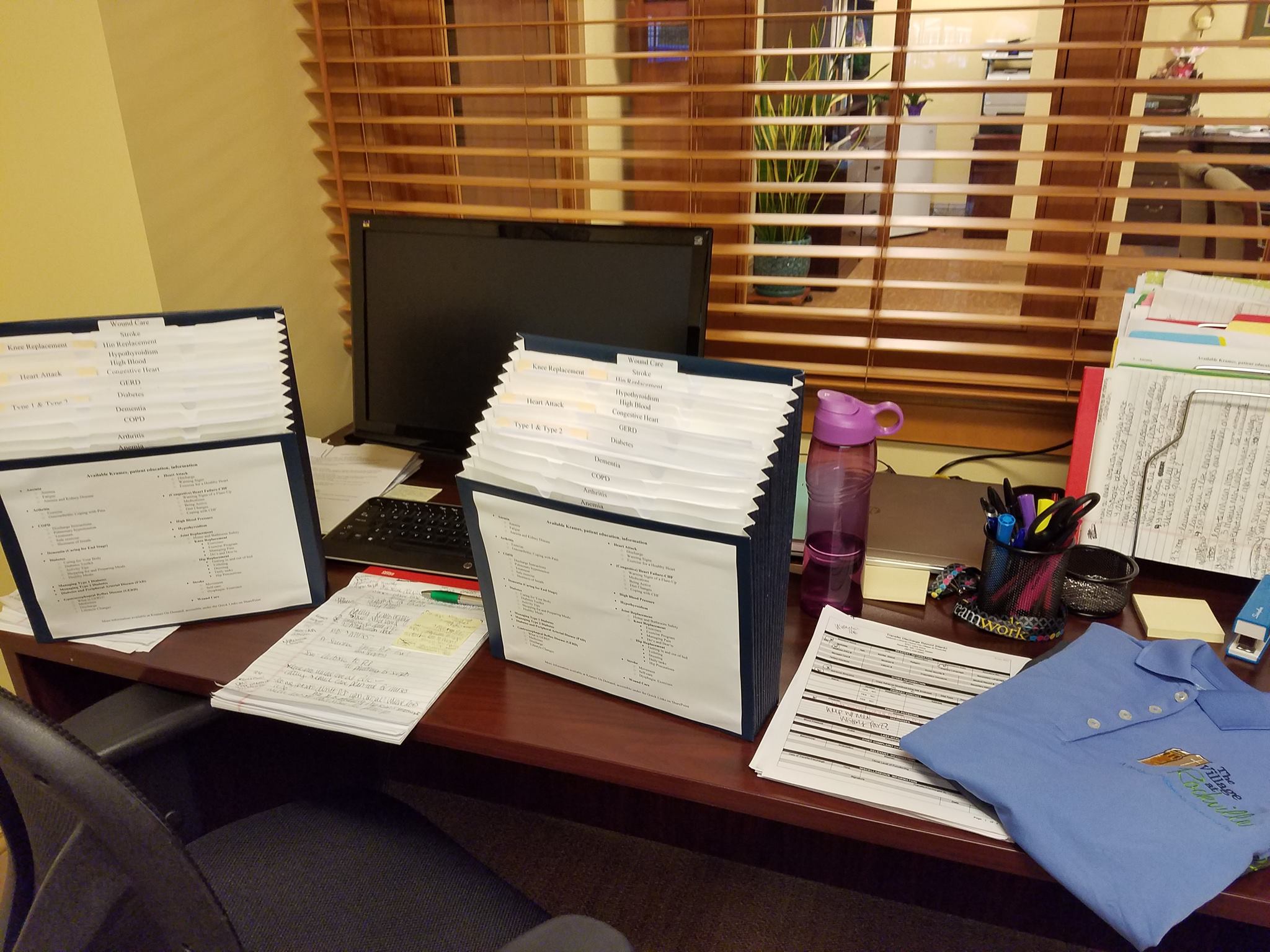
A part of my project
The biggest question I am left with regarding my project and myself is where does it go from here? The patient education tool I have been formatting is ready to use, but the responsibility of implementing the new discharge summary will fall on other people. It’s hard knowing I will have to walk away from something I have worked on for months. Overall, I cannot say I have fulfilled my purpose since it is an ongoing journey. As this part ends and I continue on, I am grateful for all I have learned. I am blessed to not only have support but also examples to aspire towards. It’s hard to know where my journey goes from here but I will try and be open to the new opportunities and lessons that await me. Time to wrap up my projects, say many sad good-byes, and start a new list of firsts as I am called to the next step in my journey.
 Wow, I can’t believe it’s already my last week at Heartland and in the Chicago area. I’m purposely refraining from reading my first blog post so that I can read both side by side and see how much I’ve grown.
Because yes, I truly feel like I’ve grown. I remembered being intimidated and even a little terrified my first few weeks: there were so many heavy tasks I was thrown into with little to no instruction, so many language and culture barriers, so many weights I didn’t feel strong enough not to get crushed under. But now, I feel completely transformed. I’m proud to say that I’ve developed the skill of communicating effectively with non-English speakers to a level in which I consider it one of my strengths. I feel comfortable coming into the office each day instead of a little apprehensive. Both the newer interns and the refugees come to me to ask questions when the case managers aren’t around. I’ve even been sitting in the case managers’ desk area (because we have more interns than computers in the “intern cave” now, which is a great problem to have!), and the case managers talk to me like a co-worker. All of these have made me feel more a part of the team than ever, and it’s very empowering.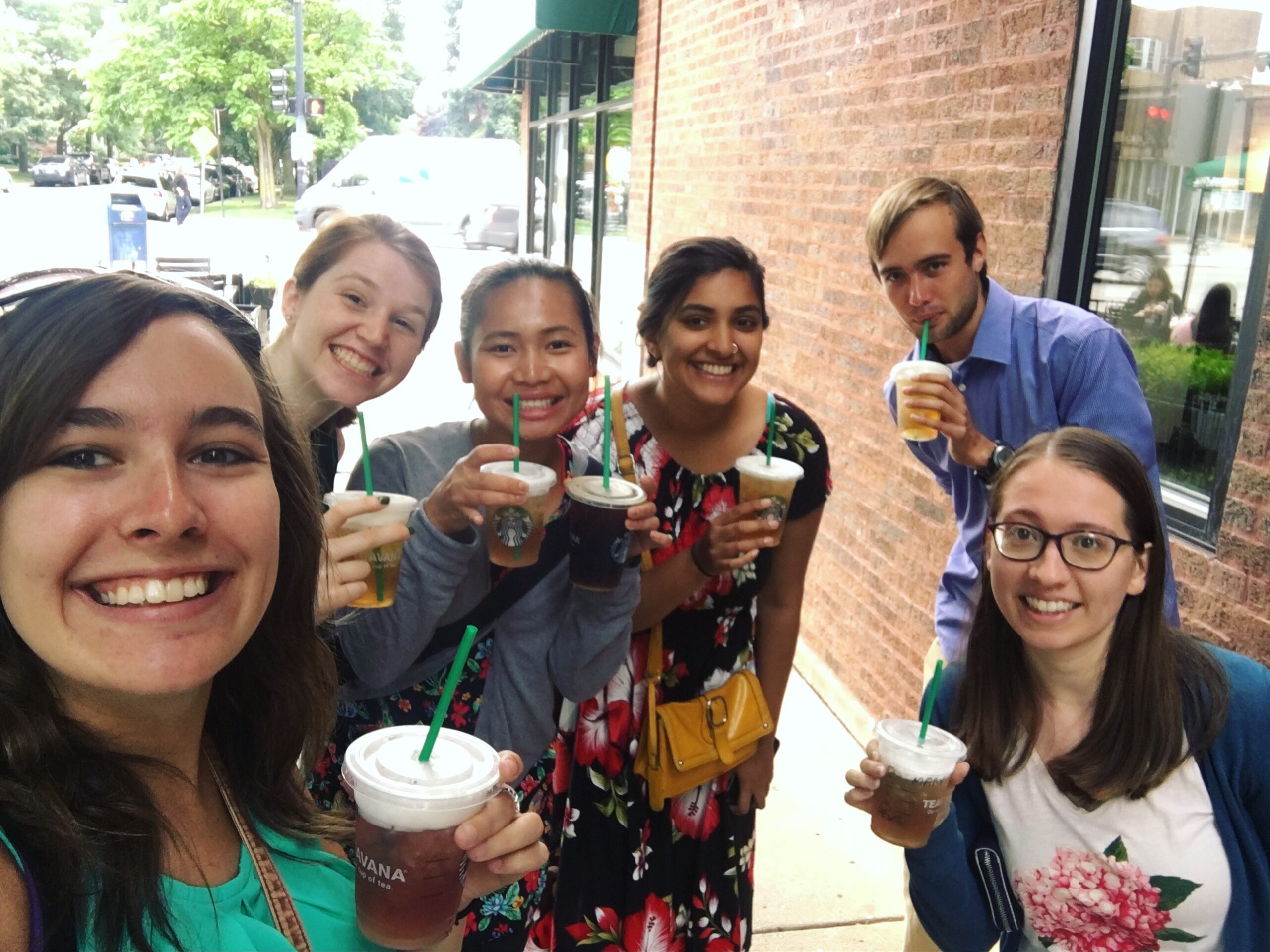
Not only have I experienced that sense of the empowerment myself, but I’ve had the joy of witnessing it among the refugees, too. I’ve been here long enough now to be able to see their growth over their first month or two here. For example, one of my jobs is to conduct home visits both their first 24 hours in the country and after their first 30 days. During the 24 hour visits, the refugees are often exhausted from travel, culture shocked, and afraid. They feel like a foreigner, a guest in our United States. During the 30 Day visits, however, I typically see a huge transformation. The refugees are happy, confident, and assertive. They consider me a friend. They open their homes to me, usually with great food and as much jovial conversation as they can manage at their English level. Now I am a guest in their home, their Chicago, their United States. They become free and autonomous, and while the road for them is anything but easy, they are able to taste their dream of living in a place where they are safe, loved, and accepted – a dream that we as lifelong US citizens so often take for granted.
 All of this will go with me even after I leave the office for the last time on Friday. My CAPS experience is occurring in the middle of my greatest life transition yet: In May, I graduated college, and said goodbye to Valpo as well as my friends, mentors, commitments and activities – really my whole way of life – there. In two weeks I leave the 60-mile radius of the Midwest I’ve lived in my entire life move to Denver, Colorado, a place where I’ve only spent about 36 hours total and know virtually no one. As of last week, my family officially completed their relocation to Charlotte, North Carolina, where my dad was transferred for work, so I also said goodbye to my childhood home, my hometown, and my old friends and neighbors. While navigating this huge life change in the midst of an experience where I must reflect on my calling and purpose in society, I have had another question thrown into the mix: who am I? When all of your roots are pulled from the ground – all of the places and activities that up until this point in your life made you who you are – what is your identity? I wish I had the answer for you. I do, however, have one valuable insight I want to share:
The experience of your life may be unique to you, but it is shared. It is shared with everyone you smile at on the street, everyone you commute with on the subway, everyone you dedicate your time to the same cause with. Every time you interact with someone, you are bearing witness to their story, and they yours. Community, I believe, is the essence of our existence as human beings. To love in all its forms is our calling, and to use our strengths to give, receive, and perpetuate that love in the biggest or smallest of ways is our purpose. My CAPS Fellowship – and my entire experience at Valpo, honestly – has helped teach me this.
I suppose the idea of CAPS is to figure out how you specifically fit into that grand idea of love and life. I don’t know if working with refugees is my entire life’s calling (if I even have an entire-lifelong calling), but it was this summer. God brought me here to do good work, and I did. Now, He sends me to Denver to do even more. I’ve started to turn away from the idea that we have one specific calling and one specific purpose. Last spring, my calling was to apply for CAPS. This summer, my purpose was to help resettle refugees. My current calling is to go to Denver and complete a Master’s program in International Disaster Psychology, and my purpose there will be revealed to me in due time. For now, I am endlessly thankful for my CAPS experience, and I’m beyond excited to take my new skills, experiences, and growth into my next chapter of life.
One of the most exciting things about moving Chicago is being able to say that I live in Illinois! It may only be temporary, but for someone who has spent the last 18 years of her life living in Valparaiso, IN (minus a semester in Costa Rica), spending two months in the big city is a pretty big deal. One of my favorite parts about living in the city is listening to people speak in their many native tongues. When I’m at the train station, I can hear a pair of students conversing in Arabic. While I’m walking through Millennium Park, I can understand the parents talking to their children in Spanish. When I walk down the street, I recognize one of the very few German words I know as a man talks on the phone. During the time I spent at my internship over the last two months, I have heard conversations in French, Arabic, Rohingya, Burmese, Tigrinya, Somali, Mon, Farsi, and a plethora of other languages that I don’t know a single word of.
As a self-declared lover of languages, hearing so many languages in such a small space is exciting. As an intern at Heartland Alliance and as a language teacher, listening to their voices is inspiring. This is what the whole world will probably be like in a few more decades, and I for one can’t wait to be part of it!
Unfortunately, not everyone shares my love of languages, and even more unfortunately, not everyone recognizes the value of living in a community as diverse as Chicago. Once the United States accepts 50,000 refugees this year, no more will be welcomed in unless they have a close family tie here. Thousands of people who have been waiting in refugee camps for years will be denied access to the place they want to call home.
Instead of sparking political debate, I want to use the remainder of this blog post to praise the efforts of people who are working to welcome people into our country. Last week, my family and I had the opportunity to attend Chicago’s celebration of World Refugee Day. The day was one of protest, but the time was mostly designated for celebration and fun! It was a wonderful opportunity to interact with coworkers and participants outside of the work environment, but more importantly, it showed them that they are valued in the larger Chicago community. We gathered together as people from all over the globe to participate in a march, eat international food, watch the “Refugee World Cup,” and dance to international music. One of the songs they played there was also the song that the English students sang loud and proud at their graduation from the last quarter of classes, and I can’t think of a better way to sum up what the refugee experience in the United States should be like:
“This land is your land, this land is my land,
From California, to the New York Island.
From the Redwood Forrest, to the Gulf stream waters.
This land was made for you and me.”
I’ve been working at Water to Thrive for over a month now, and the time has flown by. My main project is a marketing plan that W2T can use to reach out to their Christian audience. Although W2T is a faith-based organization with roots in a Lutheran church, they don’t currently have any marketing strategies to reach one of their biggest donor bases – churches. That’s where I come in.
Like with any project I’ve done for school, I started with research. This included looking up Christian publications, nearby churches, and best practices for nonprofit marketing. I also needed to know everything I could about Water to Thrive, an organization I had never heard of before I worked here. I also had to go through all their currently marketing, especially social media and print collateral to see how I could tweak it to appeal to a Christian audience. My favorite part has been creating sample social media posts, when I get to channel my creativity and minimal graphic design skills.
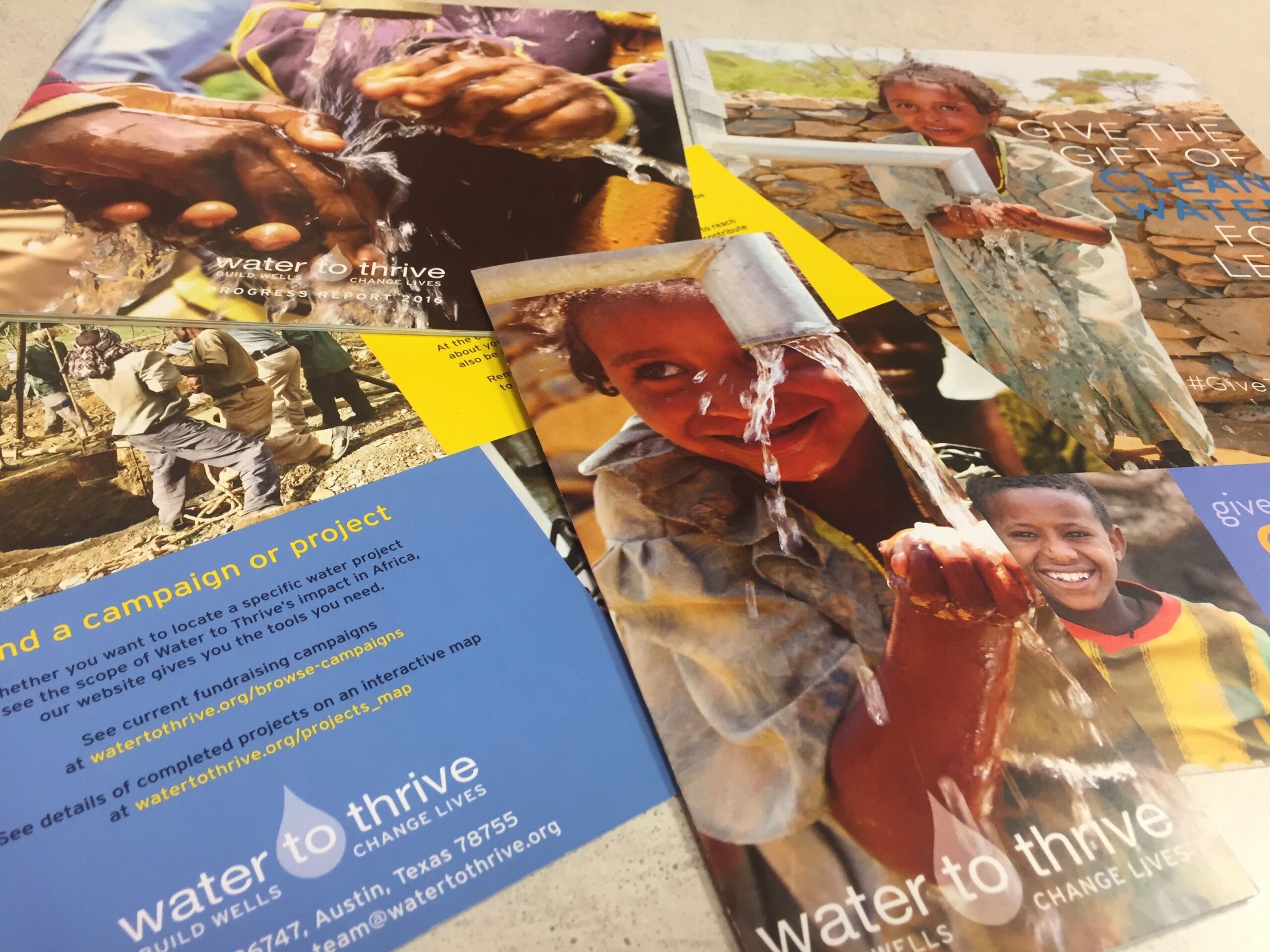
Current W2T marketing materials
I’ve learned that creating a marketing plan is a really good way to get to know an organization. I’ve had to include statistics, such as how W2T has funded over 750 wells since 2008, which have affected over 400,000 people. I’ve looked at their recent campaigns, which have come from churches, universities, and weddings. I’ve poured over their annual progress reports and learned about how the organization has touched lives on both sides of the Atlantic.
The motto of W2T is “Build Wells, Change Lives.” As I work, I’m constantly amazed at how deeply lives are actually changed. Clean and accessible water is something that we constantly take for granted. We can have it everywhere – in our houses, in our schools, in our churches, in almost every building in the country. But that’s obviously not the case in rural Africa. Women and children walk for miles to get water, which is often dirty and contaminated. But a single accessible well can flip their lives upside down. The children can go to school because they don’t have to spend hours walking for water. Women have more time to care for their family and cook better meals. There is less disease from waterborne bacteria. The well becomes a place of communal pride for the whole village. While some in developing countries may believe that drinking water is just a “fad”, for many around the world, water is life.
But the lives being changed don’t stop in the African villages. Here in the States, people are continuously being affected by the work of W2T. Wells are funded through campaigns, where a group or individual raises $5,000 to sponsor a well. There have been campaigns by churches, university groups, elementary schools, even couples sponsoring wells in lieu of receiving wedding gifts. In the grand scheme of things, $5,000 isn’t that much to change the lives of hundreds of people. I love that there are people here that are so willing to donate just a few dollars to a campaign in order to change the lives of Ethiopian villagers halfway around the world. They’re willing to host small fundraisers, attend W2T’s annual events, and educate others about the African water crisis. The dedication of W2T supporters around the country is unbelievable and it inspires me to do all I can to spread the message of this organization. Although my work isn’t immediately affecting anyone in Africa, I can do my best to make sure that it does influence churches, who can take the steps to launch their own well-building campaign and change lives.
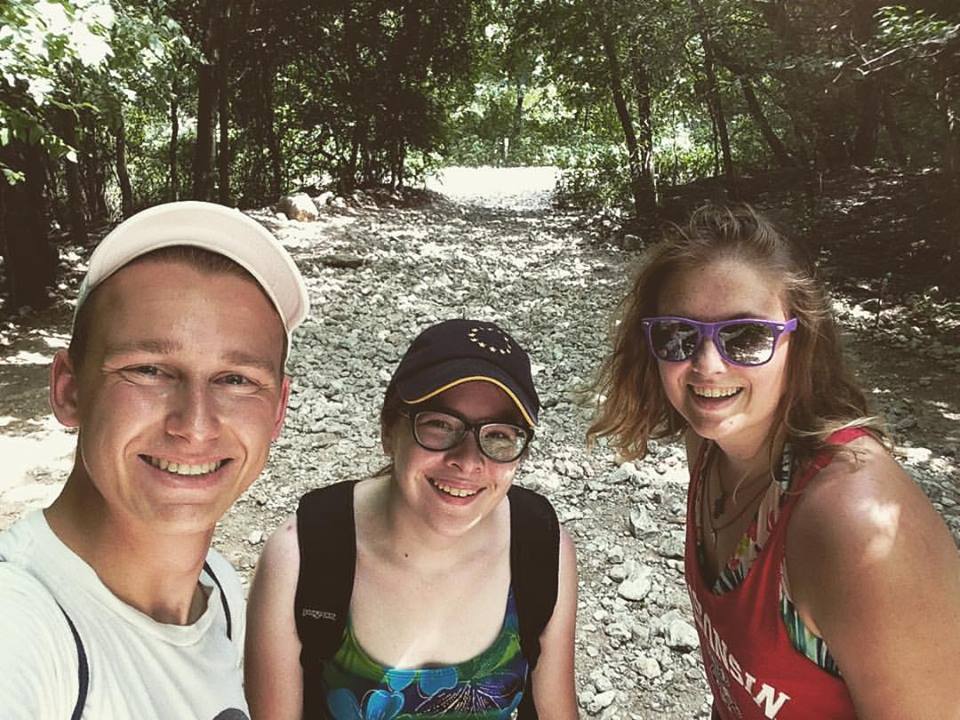
Three generations of W2T CAPS Fellows: Lars, Louisa (me), and Krista
As someone who was born and raised in the Midwest, life in Texas was certainly an adjustment. I studied abroad in England last semester, yet I experienced more culture shock during my first few days here than months in Europe. The most obvious difference is the heat. The locals laughed when I complained when it was in the mid-90s. They said it would just get hotter. And it sure has, much to my chagrin. There’s prickly pear cacti and aloe plants along the street and in front yards. And people do actually say “y’all” all the time. But besides the heat and birds that occasionally try to attack me (grackles are the worst), Austin is a really fun city. There’s always something to do, whether it’s hiking, live music, free movies, taco festivals, exploring museums, or hanging out with former W2T CAPS Fellows (shout-out to Lars and Krista). And I could write a whole other blog post about how great the food is here. But I’ll save that for another time.
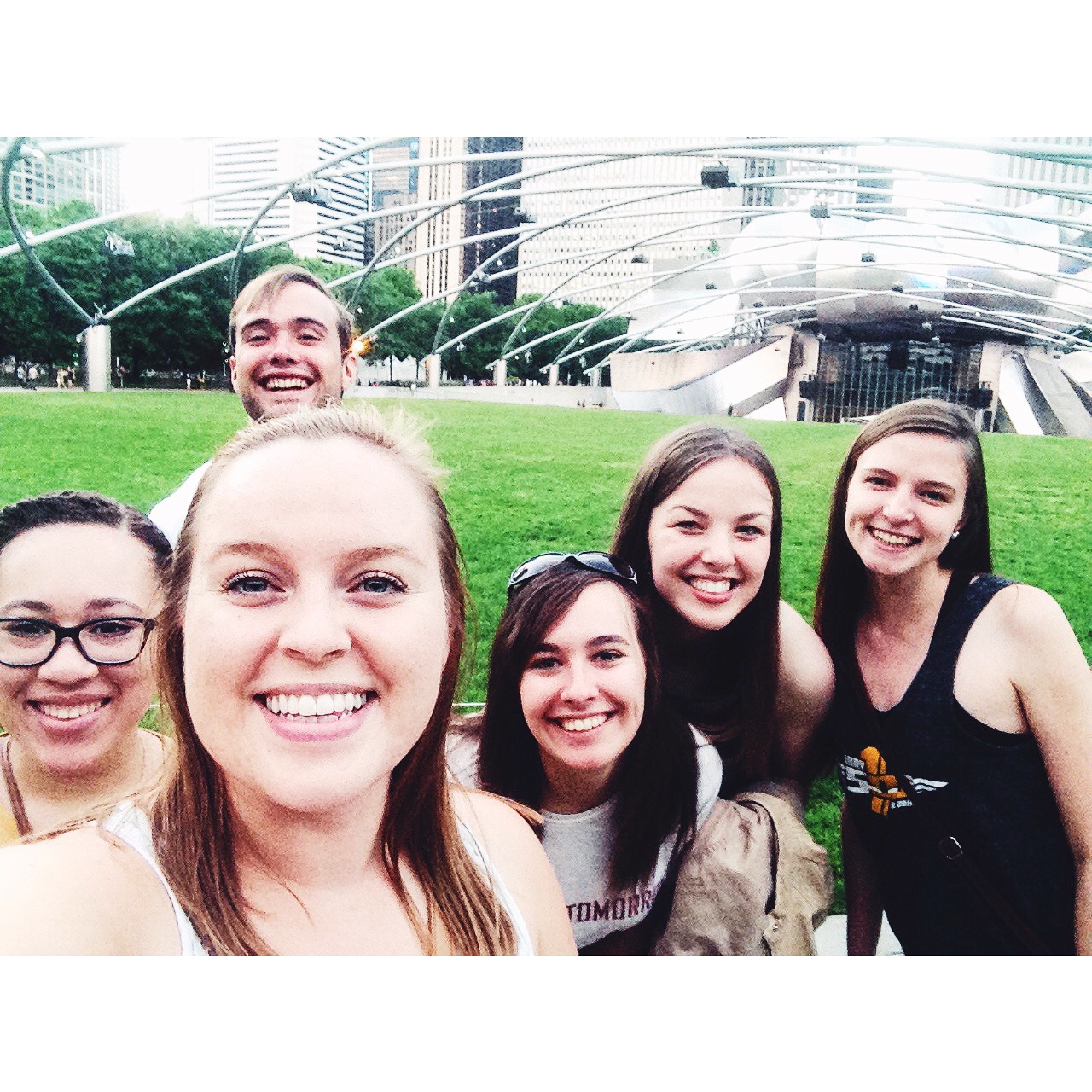 The train hums me awake in the morning as it zooms under my window each day. It used to be something that jolted me awake, but now it is a part of my morning routine. In the always moving city, I have become used to the sounds, crowds, and lights. Each day as I head to work with my backpack, work shoes in hand, tennis shoes on, I am constantly surprised that in one of the largest cities, how many people I repeatably see each day, on the train and on the street.
The pace in the office of Ingenuity, like the city, is fast. Printers are printing. Meetings are in session. People are talking. I have worked at Ingenuity, the leading arts non-profit that works with getting quality arts education into every Chicago Public School for every student, for about four weeks now, as the Partnerships and Professional Learning Intern. I have already learned so much. With this position, I am tasked primarily with managing, facilitating, and implementing one of Ingenuity’s institutes called The Partner Starter. This institute is designed as a “how to” for new arts partners to Chicago Public Schools. At this event, they will learn the tools of how to form a “shared language” with Chicago Public Schools. Forming that language requires many conversations, and understandings about what it means to work within the school. This requires a multitude of conversations and voices on different levels, between teachers, school administrators, arts partners and teaching artists, arts administrators, and arts liaisons. I have learned how important listening to these different voices are to the work that Ingenuity does and the teamwork between the community, arts organizations, and surrounding schools.
It is really an amazing feeling to see my previous experiences leading me and helping me figure out the ways around this new experience. I see the conversations that I have had in classes, and the skills I have learned from previous jobs help me with this internship. The threads of my own narrative—my own life—that did not always make sense to me at the time are now coming together in interesting ways—in ways I never expected. My eyes are opened to a whole new world beyond my almost four years at Valpo.
Sometimes as I leave work, I wonder what students in schools are getting to play an instrument for the first time, or getting the opportunity to step into the museum and see a whole new way of thinking. Being able to be part of the back-bone of arts partnerships has left me with good conversations, important questions, and different narratives that are all coming together in meaningful ways. I am excited to see how this experience continues to stretch me.
Millennium Park
Lastly, at the end of these four weeks I have reflected on many things, but also noticed some funny details. One, Millennium Park is not called Millennial Park even though a lot of us millennials go there. Two, it is important to always be ready for surprises like running into your co-workers at a random coffee shop in the middle of this very large city. Finally, and most importantly, I have realized that home can be many different places, people, and moments. Right now, Chicago, with all its sounds, crowds, and lights, seems like a good home to be at with other CAPS Fellows to share the experience with as we grow together this summer.
Whenever a teacher or professor announced, “for this assignment, you’ll be working in groups,” I would internally (or at times, externally) groan and lament the impending onslaught of scheduling via 600 emails, navigating group dynamics, and inevitably picking up others’ slack. As an English major, I much preferred writing essays on my own time, in my own way, and with my own quality of work standards.
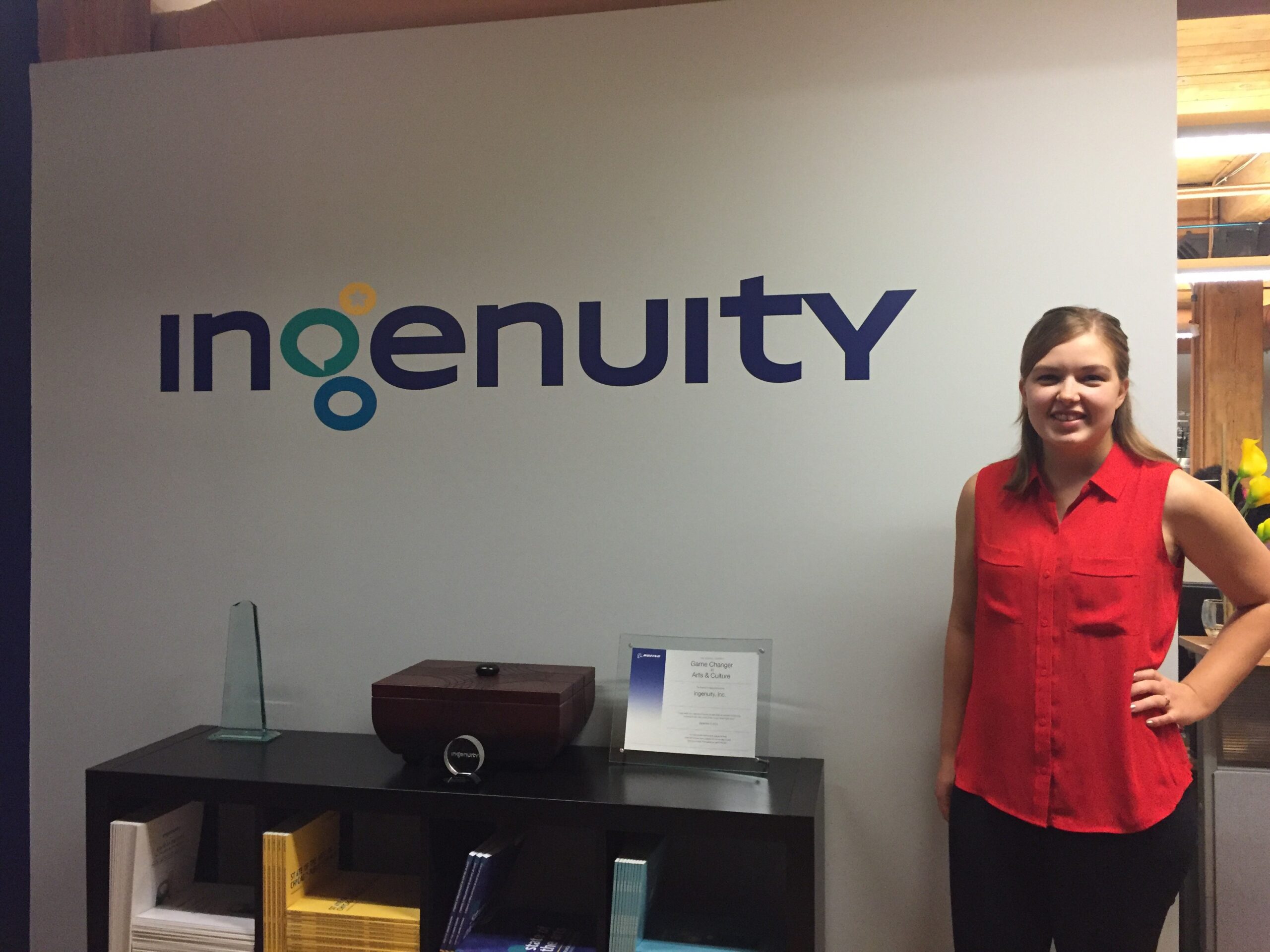
However, my internship with Ingenuity this summer has turned group work on its head for me. I am part of the Data and Research team, and our projects are way too big for one person to tackle on their own. Even though we are only a team of three, we bring professional contractors, advisory panel members, and art education stakeholders to join in on our work. Our giant projects all of the sudden feel manageable as everyone in the room brings valuable insight and technical skills. Projects are broken down into specific timelines, tasks are delegated, and progress is tracked. It’s amazing what can be accomplished with a room full of dedicated and talented people.
My own dedication to the Data and Research projects is not hard to muster, as I am passionate about the work Ingenuity does. As a non-profit, Ingenuity serves as a “backbone” organization for arts education in Chicago. We work as a hub for data, strategy, advocacy, and partnerships supporting more than 600 Chicago Public Schools and a similar number of community arts partners.
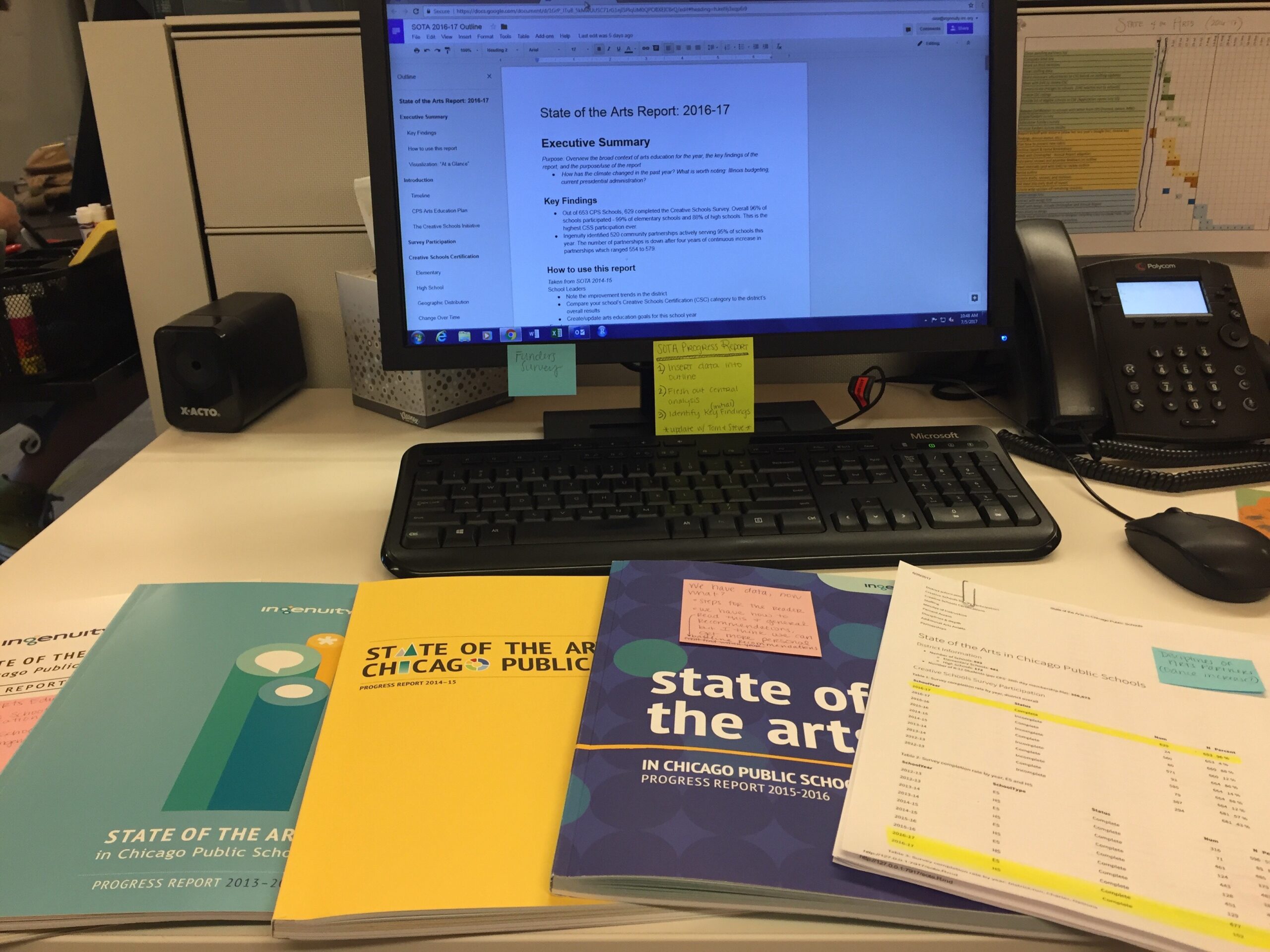
All of the past State of the Arts Reports and the beginnings of this years
One way we provide data to the Chicago arts education community is through the annual State of the Arts Report. My main task for the summer is to be the lead on this project. I spent hours my first week reading through the last four reports and internally geeking out that I get to have a hand on such an important document. However, my excitement was coupled with uncertainty. How was I, “just the summer intern,” supposed to analyze the numbers, establish a narrative arc to the data, write up the findings, and advise design decisions all in a couple months? Thankfully, this is a group project.
While I definitely have a lot of work on my plate, I’m not left to flounder on my own. My supervisor Steve initiated a contract with a design firm. My co-worker Tom aggregated all of our data. All three of us divided and conquered data collection and clean-up. Both of them are readily available to answer my questions and provide feedback. Our advisory panel will offer final reviews and recommendations. By the end of the summer, our report will be well on its way to publication due to our combined efforts.
Witnessing group projects in a professional setting is a whole new experience from college. Team members are here to work, (and thankfully are not bogged down with 18-credit course loads, five extracurriculars, and a part-time job). Seeing the dedication of the rest of the team encourages me to do my best. Besides, this definitely beats pulling an all-nighter to write a paper by myself.
Greetings!
My name is Katie Karstensen and this summer I have the opportunity to be working with ICDI, or the Interfaith Committee for Detained Immigrants. When people ask where ICDI is located it’s hard to give one central location because we are all over the Chicagoland area, and even outside of the state of Illinois in some of our ministries and work. To share what it has been like so far interning with ICDI and talking about all the different ministries we do, I thought it would be easiest to take you through my week and share some of the stories I have encountered.

Mondays
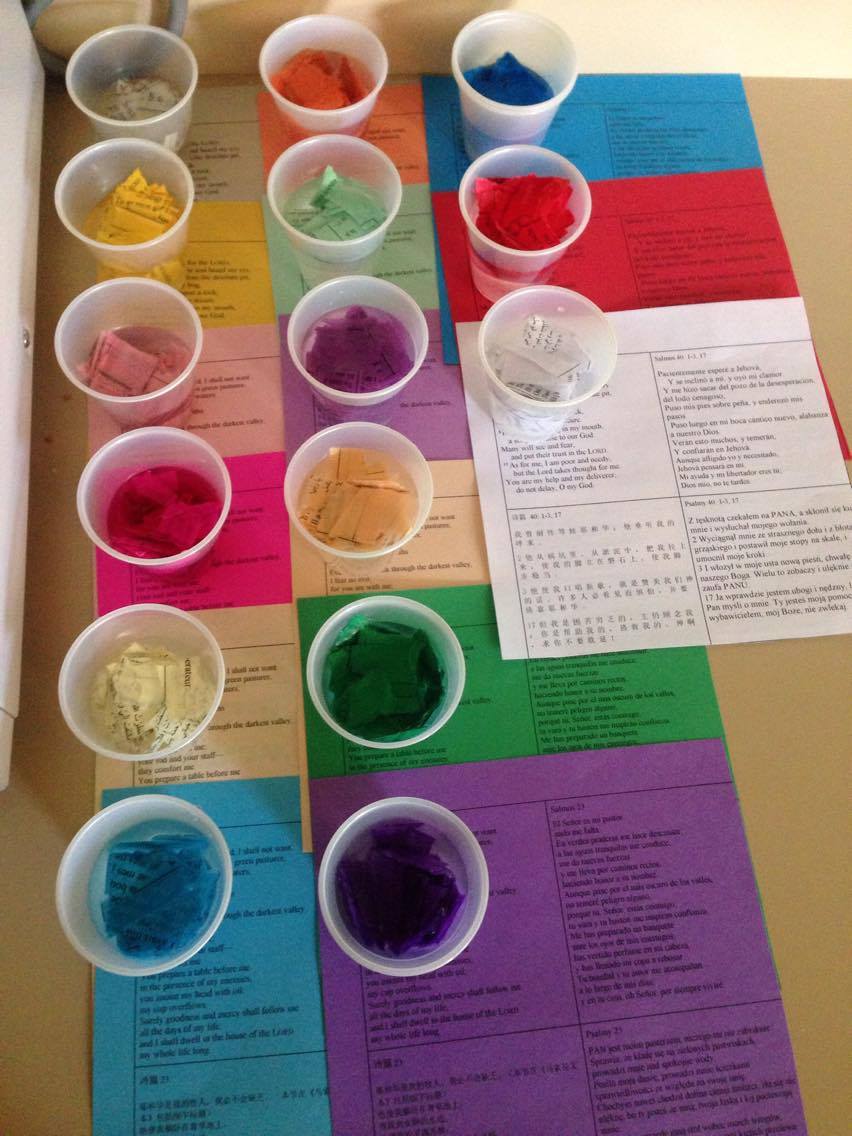
On Mondays you will find me near the South West suburbs of Chicago at our main office where our executive director, the two Sisters who have founded this organization, the fundraising team, and volunteers have their offices. I have done various tasks such as pull staples from religious materials so we may bring them into county jails, file different documents for immigrants we have helped over the years, alphabetize our donor files, and do an experiment of printing out prayers on different colored sheets of paper and testing which ones bleed color the most so that we may take the best ones into jails, where we have learned from conversations with detainees that they save the Sunday comics and separate prints into different colored ink paper, mix the paper with water, and use it to paint. Our goal is to give the prayer sheets they may be able to easily tear apart and mix with water to paint with, as paint is not available to them.
Tuesdays
On Tuesdays I am in a South suburb in Chicago working with one of our Post-Detention accompaniment ministries. ICDI offes short and long term support for immigrants who have been released from detention and have nowhere to live, and may be in the process of seeking asylum, or have been granted asylum and are waiting for other documents before being able to support themselves in this country. I get to work alongside with volunteers working to offer spiritual care, transportation, meals, clothing, and other necessities as needed. We have a house for men, a house for women and children, and a 24 hour on call service that will offer immediate services to those who have been released or are in need. My project at the women’s house this summer has been organizing all of the donations we receive, and I have been creating relationships with residents of the house and sharing stories and meals with one another.
Wednesdays
You will find me at the Kankakee County Jail on Wednesday mornings where we participate in pastoral care for those in detention. Detainees are allowed phone calls once a day they must pay for and allowed only one visit for no more than half an hour each week with family members or friends. Thanks to the hard work of the two sisters who founded this organization, and promoting that those in jail have the right to pastoral care, they have managed to get their way into jails so volunteers can visit face to face in the same room as detainees each week. ICDI visits detainees in Kenosha, McHenry, Dodge, and Kankakee County Jails, where we make 4,000 contact visits every year. I have met one on one with detainees from all over the world, some who were picked up by immigration upon entering the country, and those who have been in the country since they were a small child, have a career, multiple children, and are facing deportation and returning to country and culture they may know little to nothing about. This ministry is intense, but extremely necessary. Prisons are for long term sentences and normally have lots of programming, but county jails are for shorter terms and have little to no programming, but we have met with many people who have been in detention for months and months at a time. During our allotted thirty minutes to visit with detainees, we listen to their stories, speak of whatever they wish to talk about, offer a space for interfaith dialogue, and provide religious materials to them they are able to keep. An occurrence with someone at Kankakee that I have not been able to get out of my head and don’t know if I ever will was when one of the men I had finished talking to as he prepared to leave and I shook his hand and thanked him for coming to sit with me, said “Your group of volunteers that meet with us are the only human hands that touch us without wearing latex gloves.” Never had I thought about one simple handshake having the potential to mean so much to a person.
Thursdays
On this day I visit two different Immigration Courts in downtown Chicago where “court watchers” go into immigration cases and sit in the courtroom in solidarity and support of those who have hearings. Final hearings are usually the only hearings in which detainees physically come into the court, otherwise there is a television screen set up in the courtroom and that connects with detention centers via televideo. Everyone in the court can see the television, but the detainee on the other side can only see the judge, and hears all that is said by the judge, attorney, government representative, and translator through one microphone. And if the detainee speaks a different language than English or whatever languages the translator may be able to interpret, the judge calls an over the phone translation service and the phone translator is projected over a loudspeaker, which I cannot imagine from the detainees perspective is a very effective way of communication when dealing with such sensitive issues. And all that is interpreted are the words addressed back and forth between the judge and the detainee, not what the government or attorney have to say.
I have found my time in court to not offer much humanity for those who go through this court system, and am thankful ICDI encourages volunteers to enter court systems and offer some humanity on behalf of those waiting to hear about their immigration or asylum status.
Fridays
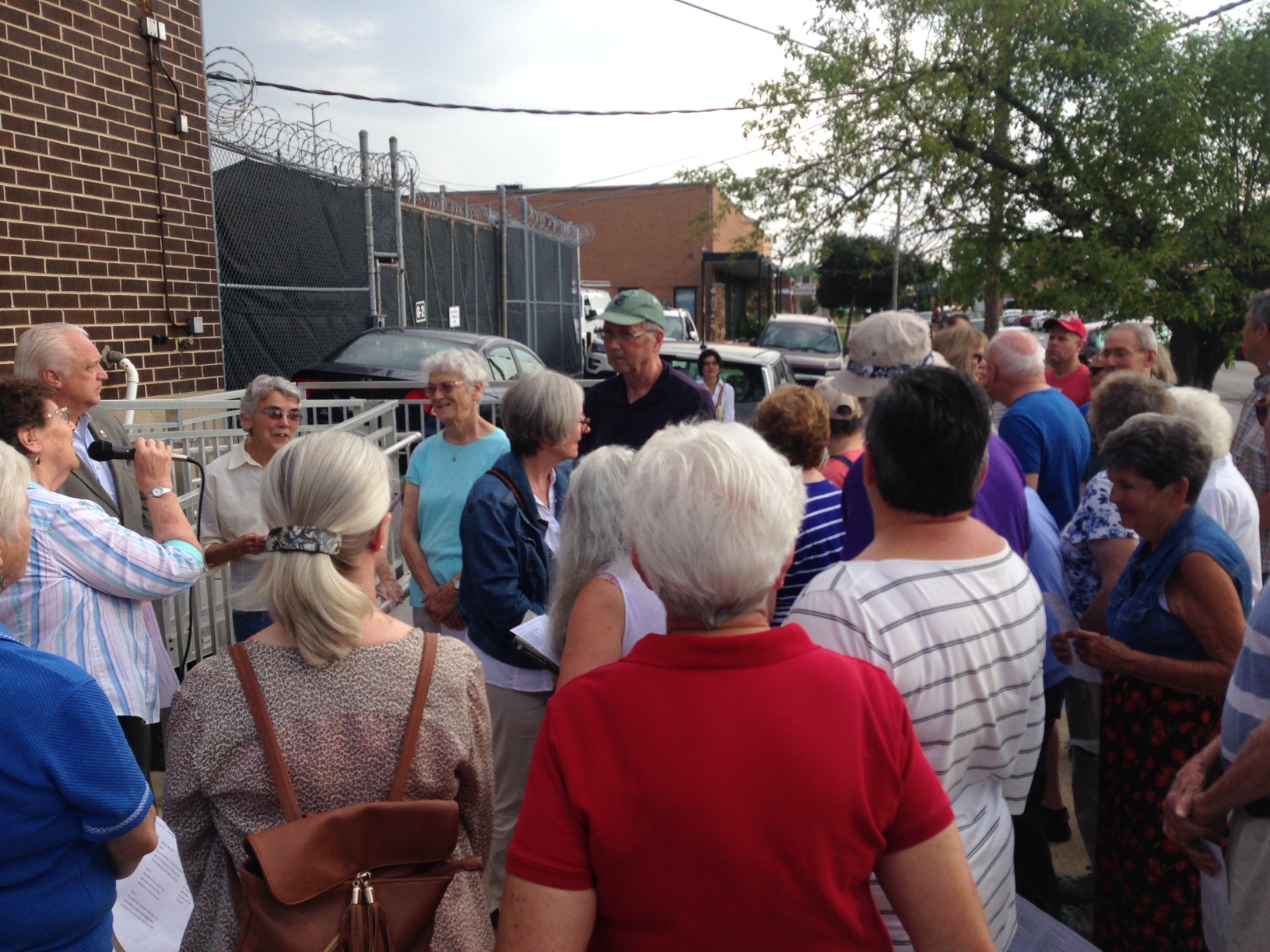
On Fridays you will find a group of passionate people holding a prayer vigil on the steps of the ICE Office in Broadview, Illinois. This is where all the ministry of ICDI began, when Sister Pat and Sister Jo Ann saw every Friday at 7am immigrants being put into busses to be taken to O’Hare and deported back to their countries of origin. Every Friday, rain or shine, summer and winter, all year round people gather in this place to pray and send good thoughts for those being deported. The first Friday of every month we have an Interfaith prayer vigil where reflections of Christian, Jewish, Muslim, and Buddhist traditions are shared among one another, and the other Fridays of the month we pray the Catholic Rosary together. This week I was able to share the Christian reflection as a part of our Interfaith service:
https://youtu.be/fP8f4qKgrW8
Saturdays
Every other Saturday I volunteer with our Unaccompanied Children’s Interfaith Ministry, where we provide spiritual care to migrant children who are in this country without a parent or guardian. Many of these children are fleeing the most violent areas on earth. We meet with these children to provide spiritual accompaniment through prayer, songs, arts and crafts, other creative activities across many language barriers based on interfaith themes such as hope, thanksgiving, and strength for the journey they are on. In conversation with these children, it does not feel as if I am talking to a child, but rather someone much wiser and older, and who has lived through much more than I ever hope to go through or experience. These children have been through much, but they are resilient and they are strong.
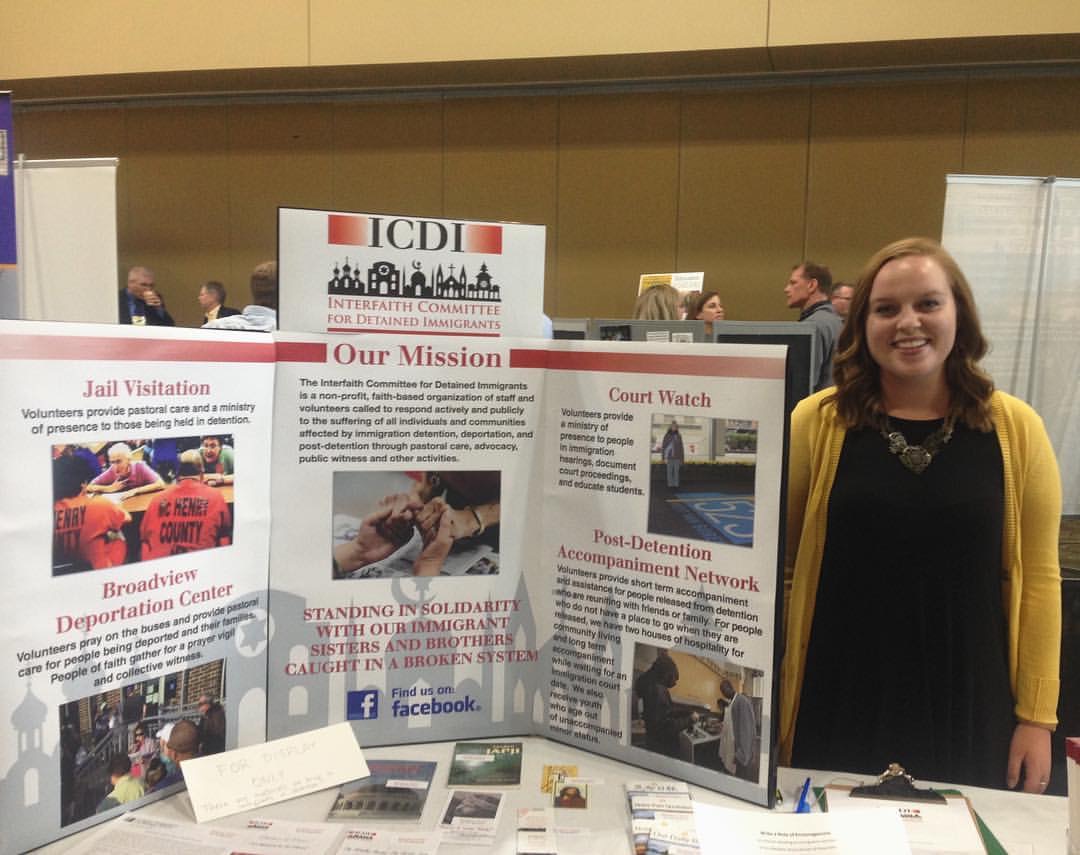
On a Saturday I was not visiting our unaccompanied children’s home I had the opportunity to represent ICDI at the Evangelical Lutheran Church of America’s convention in Tinley Park where I was able to share our ministry with the wider church.
Going into this internship I admit I did not have a large amount of knowledge about the immigration system in the United States. After working with this wonderful organization for a month now I cannot believe how much I have learned, how much there still is to learn, and there are many steps to take until this is truly a humane system.
By this time, I have just completed my third week of interning, and to say it has been a constant learning experience would be an understatement. This summer I am working at Ingenuity, an organization that not only raises awareness about the importance of a good quality arts education in the Chicago public schools, but also, it works to make sure that arts education stays in the schools and that everyone is benefiting from it from the research and data they collect from over 600 schools and 1,000 arts partners. Sounds simple enough, right?
At Valparaiso University, I am a Criminology and Political Science double major (and a theatre minor, but most people forget about that when I tell them my majors). When I told everyone I planned to spend my summer working at an arts education organization, many people were confused. I got a lot of interesting thoughts on my decision, but the one that came up most frequently was “wow, your major and your internship are so different; why would you chose to do that with your summer?” To be honest, at first, I would just say I wanted a change of pace, but deep down I knew it was more than that. Recently, I have been working to get more involved in the theatre department at school, and the more involved I was the more it made me wonder if I wanted a career in the arts rather than the criminal justice field. As a result, I decided choosing an organization in the arts would help me decide.
At Ingenuity, I am the public affairs/advocacy/communications and media intern (they’re virtually the same thing, but I have been called all of them). With this task, I am not only in charge of helping with Ingenuity’s social media presence, but their public presence as well. In addition, I have been given the task of working to update their website this summer. This has been quite an adventure for me personally because I have never really done anything in either field. Nevertheless, I was eager to learn how to help the organization.
I am not going to lie, the first couple weeks were a little overwhelming. The Friday before I started, my supervisor called me to give me a basic run-down of what I would be doing in the office, but she also told me that the person who was set to be my supervisor had switched jobs and was no longer with the organization. Although she was incredibly kind in explaining to me how she was now going to become my supervisor and my tasks, I was terrified. Not only was I in a big city when I had pretty much spent my life in only suburbs, but now I wasn’t really quite sure where the summer would lead me. Luckily, my supervisor and the office I am working in was incredibly. Everyone has been welcoming and I could tell as soon as I walked in I had joined a really close group.
Everything in the office is very fast pace. Because the organization is ran by only seven full time employees and the population they serve is the third largest school district in the country, there is always something going on. I think that was one of the hardest things for me to adjust to—the other being working forty hours a week. When I started this internship, it had been about a month since I left my internship at the Federal Probation and Pretrial office. There I only worked five hours a day, three days a week, and for the most part, it was usually pretty relaxed. I would be given daily tasks, some I could finish that day, and others I couldn’t, but overall, it was pretty peaceful. Coming into a fast-paced office after having that tranquil experience was difficult at first, but I think I am finally getting the hang of it.
I will only be spending nine weeks with Ingenuity, and with the completion of my third week, I have completed one-third of my time. Since beginning, I have learned how to handle social media and how to organize the office to have a bigger social media presence. I have also learned how to edit the website and how to create the monthly newsletter. In addition, I have been working in the advocacy field and have been doing research on possible topics for the advocacy institute that will occur in October. While it is a little weird to think about all I have done and how much time has gone by (time is really flying by!), I am excited to see where the next six weeks take me. If I have been able to complete all that I have in the short amount of time, I am eager to see what I will accomplish by the end of it.
“My name is Aaron, and I work for a lobbying firm”
I have always cringed when I heard that word. My teachers, parents, CNN and basically everyone had resolved to decry a whole profession as “unethical” and “corrupt.”
Even now, as I rushed to tell family and friends about my new job in D.C., veiled smiles said “you’re one of them now.” Upon my arrival in our nation’s capital, I had resigned to embrace my new role: a puppet, ruled by special interest.
Only Venn Strategies isn’t like that. There are no smoke-filled, back room meetings. The office isn’t filled with power-hungry D.C. elites or slaves to special interest. We don’t work to control government, we work to understand it.
The federal government is an incredible complex machine with lots of moving parts. As a government affairs firm, our job at Venn is to keep tabs on what’s going on and report the results to our clients. Weekdays days consist of tracking legislation, attending and reporting on congressional hearings, and compiling research at our clients’ request. I’ve come to view our work as not only necessary, but fulfilling.
Venn’s clients are primarily based in the healthcare and finance sectors. I am currently working on the health team (a nice non-controversial topic), conducting research into the field of healthcare and producing memos for our clients. After a few days of research I came to a realization: I am so glad that there are people that do this work full time. Having met with congressional staffers, I’ve more often than not found myself face to face with an individual my age; somebody with nearly identical levels of education and experience. There’s a poorly kept secret in Washington: congressional staffers, while underpaid and overworked, run this town.
Single lines in 80 page bills have the capacity to affect the lives of millions of Americans. Among those millions are not only my family, friends and neighbors, but people I have never nor will ever meet. Having experienced what analyzing policy looks like, I am relieved that experts like the ones at Venn do the work that they do. Using a heavily researched argument, Venn exposes these staffers (again, the “real” rulers of D.C.) to the fact based stances that they would never have the resources or time to discover themselves. With legislation passing through the halls of congress on a daily basis, I find myself more and more confident that our policymakers are being exposed to well-researched arguments as diverse as the constituents they represent.
“My name is Aaron, and I am proud to work for a lobbying firm.”

Dusk at the Capitol
Never underestimate the power that the nine-to-five work day can exert upon your daily routine; this is one of the many lessons that I have learned over the course of my first three weeks in Washington D.C., the place where politics meet reality. It is a place where a small-town Midwesterner such as myself can easily fall victim to the overarching tones of rapidity and competitiveness. It is a place where one can find that there exists a clash of understandings. You see it everywhere; the Metro, the workplace, the restaurants, even the monuments. From the outsiders’ perspective, there exists a great divide between how people engage with the world that we share.
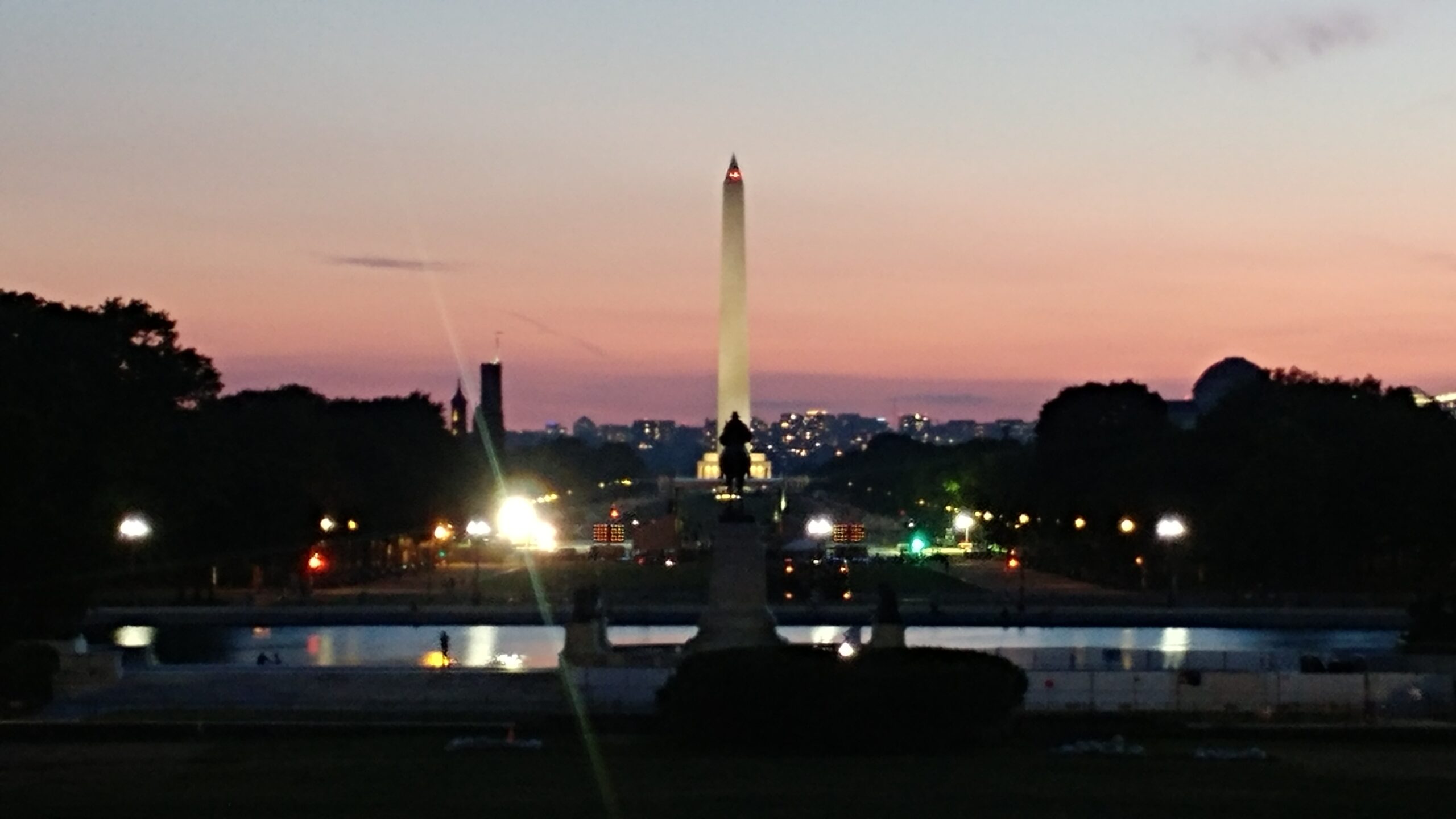
The Washington Monument against a purple sunset.
It starts as nuance, watching as some individuals rush down the left side of the escalator while others stand idly on the right, not daring to puncture the median threshold for fear of being rebuked by those in much more of a hurry. Those hurried folks then turn into paradoxical figures upon entering the Metro train cars, cramming in so that the car is far over optimal capacity to avoid running late, all while expressing clear body language that indicates a certain distress that comes with the impending burst of their personal bubbles. Yet, once the tranquil humming and shunting of the train begins, trance overtakes the awkwardness of proximity, and once you reach your stop, the mentality takes over again.
These observations are an attempt to place you at the core of my reflective process as I adapt to this perplexing and invigorating city. It would also be fair to admit that I have adapted to my surrounding environment; some of the very strategies that I initially found to be so odd have now become commonplace in my routine. Much of it is concerned with wanting to understand this “East Coast” mentality that I have only briefly grappled with in the past. This place is so different from home, but why? Why do people find it so odd to smile at one another while walking down the street? Why is starting a conversation with a stranger such a rarity here? With my inherent differences, where do I fit into this jigsaw? It leads me to wonder if the “East Coast” mentality is more of a culture centered around getting from point A to point B, whether those points be set in the short term or the long term. It seems odd that one can sense the hallmarks of cross-cultural immersion while within the confines of their country of origin.

James Madison, the “Father of the Constitution”
This clash of cultures that I am surveying, however, comes secondary to the true reason that I have taken up residence in District of Columbia. My niche here has been found within the ranks of the International Research and Exchange Board, also known by the catchy acronym, IREX. Here, I serve as a member of the Young African Leaders Initiative (YALI) team. Currently, all of my work has been to support the Operations department in organizing the 2017 Mandela Washington Fellowship, a program that has been conducted since 2014 and aims to bring 1000 young leaders from sub-Saharan Africa to experience a summer of coursework at American universities in specialized fields all pertaining to some facet of sustainable development. This is done in an attempt to empower the next generation of African leaders and promote economic and social development at a grassroots level.
As for my part, I had never realized how many moving parts exist in an international non-governmental organization. Our team alone is comprised of nearly twenty incredibly proficient individuals, and there is still an immense amount of work that must be done by each of us to manage 1000 Fellows. Considering that there are many other programs implemented by IREX, one can only imagine the complexity of such an organization and the synergy necessary to ensure that obligations are met and that programs are implemented smoothly. Perhaps it is the high-stakes nature of working with such important programs with such ambitious goals that assist in the formulation of the aforementioned culture that I have begun to adapt.

The core mission of IREX.
It goes without saying, but my time in Washington D.C. thus far has been incredibly fulfilling. Working with wonderful people certainly aids in process of acclamation. However, I have found that many of the small changes that I have made in my daily routine coalesce in the constant pursuit of happiness and the staving off of time. For example, riding a bike to work each day has therapeutic and physical benefits; access to museums and historic monuments opens up opportunities to acquire knowledge and understand history; living with impressive individuals doing equally important work is simply empowering; and proximity to politics affords chances to get involved and feel as if you are actually making a difference. Admittedly, I am still unsure of where my time here will lead me, yet the confidence and happiness that I find in a simple day is evidence enough to convince me that I am headed in the right direction, towards a life of leadership and service, underpinned by tenets of truth and justice. I anticipate a fulfilling summer with IREX and my fellow peers, and I can definitively say that it off to an amicable beginning.
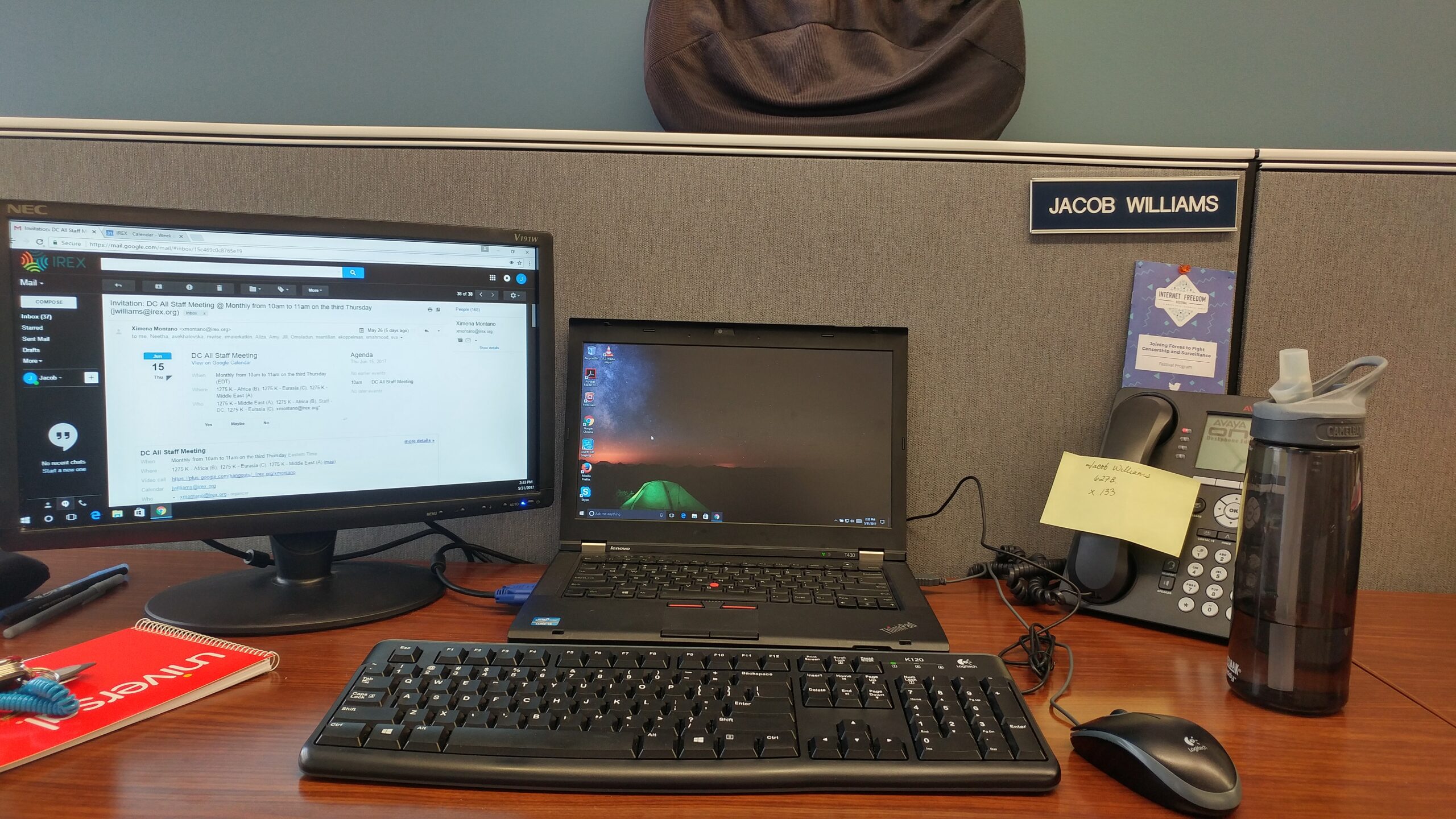
Look, I even have my own desk, complete with a name plate!