

By Kat Peters, Assistant Director of the Institute for Leadership and Service
Calling and Spiritual Life Newsletter, October 11, 2023
My friend Julio is a rapper in Costa Rica – he comes from a Nicaraguan immigrant family that lives in a precario (what we call in the English translation a “shantytown”). He raps about social issues that he sees in his community, an active place filled with the noise of life – music, conversations, construction, cooking, playing, vehicles, and more. In order to hear himself think and without having regular access to a recording studio, he regularly records in his car, where he can have some quiet. In both literal and artistic ways he’s trying to cut through the noise to help us listen to his message.
As a staff here at the Institute for Leadership and Service we have been talking a lot about listening this semester. ILAS thinks about leadership and service on campus as flowing from a sense of purpose and calling. As part of the Division of Calling and Spiritual Life, we recognize that our purpose and calling are genuine expressions of being in alignment with the work that is already going on in the world, work being done by God.
In his 1980 speech at Spelman College, Howard Thurman called this alignment with ongoing, true work the “sound of the genuine”. Thurman pointed out that we are all listening for the sound of the genuine in ourselves, and in other people.
What does it take to hear the sound of the genuine in ourselves in others, and to hear it well enough to come into alignment with it as we explore our purpose in life? It takes real listening, which requires attentiveness, quiet, and a willingness to engage with difference, something Sharon Daloz Parks calls “the power of constructive encounters with otherness.”
Valparaiso University Black Student Organization (BSO) President, Tékeidra Masters, expressed this idea in a recent interview with the Torch for We Matter Week: “We have to realize that in order to be a servant leader, you have to be willing to serve those in need… and 9 times out of 10… they’re going to have some kind of difference, because we’re human and we’re diverse… [We Matter Week] isn’t just a BSO thing. This is a community effort to uplift voices that are unheard, a community effort to listen, a community effort to learn, a community effort to celebrate, a community effort to pass on this information…”
As we listen, we are open to the reality that the stories people tell will be different from our own narratives, and each of our “narratives are shaped by the context in which we are embedded,” as Susan L. Maros points out in her book Calling in Context: Social Location and Vocational Formation, which we as an ILAS staff are working through this year. These contextual differences make careful listening, accompanied by thoughtful reflection, so important.
Maros argues that “storytelling is an essential part of how we articulate our understanding of the unique nature of our individual and communal responses to God’s calling” (p. 10). We discern the work that God is already doing and contemplate how we are being called to participate in that work, listening to spiritual stories, to our own inner voices, and to each other’s stories.
At ILAS we will soon be unveiling a new podcast called Listening For Purpose. Our student staff will be interviewing campus community members – students, faculty and staff – to listen to those stories and to come to a deeper understanding of our community, with all of the contexts and callings that make it up.
We invite you to listen.
Kat Peters is the Assistant Director of the Institute for Leadership and Service at Valparaiso University.
September 25, 2023
Kat Peters (on “How I Sabbath, or Try To”)
Text: Genesis 2:4-7
 How is your breathing today? When was the last time you took a deep breath?
Several people have already spoken about the story of Creation as a place for us to ground our thinking about the Sabbath. Today we return to Genesis to look for more clues on how our identity as creatures of God connects us to God’s life-giving self. God breathed into the first human’s nostrils the breath of life.
Breathing is something that we don’t often think about, at least not on a day-to-day basis. If you do yoga, you might remember that you are often asked to return to your breath as you deepen a stretch or a pose. People who are giving birth are coached to breathe as a way to focus through intense pain.
But on a day to day basis, many of us may fall victim to a now-studied phenomenon called “email apnea,” or “screen apnea.” When Linda Stone, a former Microsoft executive studied this, she found that 80 percent of people hold their breath or breathe shallowly while checking email.
During the pandemic, when I was confronted (not for the first time in my life) with the realities of anxiety, I came to understand that a lot of my anxiety can be mediated through physical practices. Getting enough sleep, exercising sufficiently, eating healthy food and drinking water, and yes, breathing, would help solve a large part of my anxiety.
As I focused on my breath, I experienced the strange sensation of questioning whether I deserved to take a deep breath. It was as if I was rushing from obligation to obligation, thought to thought, and that taking a deep breath was somehow wasting time, or being selfish.
Author James Nestor writes in his book “Breath: The New Science of a Lost Art” that deep breathing, especially through the nose, has many positive health effects. He writes about “how the nose filters heat and treats raw air…how it can trigger different hormones to flood into our bodies, how it can lower our blood pressure, how the stages of a woman’s menstrual cycle are correlated to different areas of the nose, how [the nose] monitors heart rate – on and on and on – even helps store memories.” The nose does that.
Nestor also found that deep breaths have calming effects, while fast breathing amps up energy, as a sort of fight or flight response. This is why we have email apnea – like how a cat that is waiting to pounce on prey takes shallow breaths, so we contemplate our next moves on email with bated breath. And then we end up exhausted, even if we were just sitting at our computers all day.
Our reading from Genesis reminds us that the breath into our nostrils that gave us life comes from God. Perhaps this can remind us how sacred our breath is.
When I have been able to give myself permission to take deep breaths, I find that I can slow my thoughts and get a better handle on whatever anxiety I might be experiencing. And cultivating a daily practice of deep breathing (a daily Sabbath practice, if you will) has helped to prevent anxiety from rearing its ugly head too often.
It turns out that this focus on the breath lends itself to prayer and worship. James Nestor found that many religious prayers and songs follow the framework of slow breaths – specifically a five-and-a-half second (or longer) exhale. For the past several weeks I have been noticing in Morning Prayer that many of our hymns and liturgical songs have this exact amount of breathing built in. This morning, I have asked our musicians to do a purposeful breath after each 4 bars of the hymn. I invite you to sing intentionally this way in the last 2 verses of the hymn.
I would like to close with a practice taught to me by the President of my Lutheran Deaconess community, Deaconess Deborah Graf. She encourages the board and the community to practice what is called a Trinitarian Breath Prayer. After I name each person of the Trinity, I invite you to take a long inhale, and a long exhale. It doesn’t much matter what you think about when you do so – the breath, the living breath that comes from God, will do its own work.
Creator God, we thank you for giving us the breath of life. We come to you as creatures in the name of the Father….. And of the Son…. and of the Holy Spirit…. Amen.
The start of the academic year invites us to new beginnings and renewed commitments. The welcomes and exhortations at Convocation in the crowded heat of our stunning Chapel. The crisp, clean syllabi passed out, signaling knowledge to explore and problems to solve. A new calendar or planner, awaiting the events, due dates, student org meetings, and group study sessions we will fill it with soon enough (if we haven’t already). It can feel heady and promising–ours to claim and relish as we dive in.
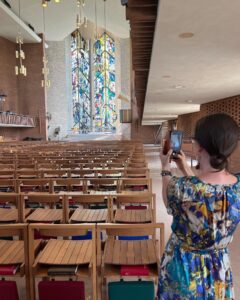
But as much as I love being back on a full campus that’s rich with community, the beginning of the year overwhelms me. I am conscious of all the things that I need to do. Right now. I am conscious of the desperate need to establish new (efficient!) rhythms as campus comes to life and our attendant work (whether we’re students, faculty, or staff) responds in kind. I am conscious of the hubbub–which can be invigorating in its smaller moments, but A LOT when all taken together–that seems to define August and early September.
Basically, I want a break. And we just “started.”
Based on my conversations with others, I don’t think I’m alone. I think it’s pretty normal to feel both excited and overwhelmed this time of year–that so much is calling for our attention and time, and that we want to be present for it but that we also have limits.
One reason I’m naming this start-of-the-school-year feeling is because it’s a potent reminder of the radical power of a pause.
Pastors Kate and Jim have already made a pretty compelling case for this in previous Wednesday newsletters, calling us to remember our human-ness and the ways in which we are made to rest and to Sabbath and “to be.” The Division of Calling and Spiritual Life is leaning in, embracing a collective initiative this year called Reset/Refresh.
In order to get to something like a “reset” or a “refresh,” we have to give ourselves true license to pause and slow down. With any luck, we hopefully encourage one another in the practice, granting each other that same license for rest and reflection so that it’s communally supported. Such support is critical because a thoughtful pause can be a countercultural act. After all, it’s taking time and space apart from the busy-ness that always beckons and seems to reward us in systems built on productivity and a hollow sort of value. (Even as I type these words, I’m blushing at my own hypocrisy and the ways I unthinkingly prop up these false systems of value and the worker-bee mentality they generate.) All that to say, I’m writing about the radical power of pausing and slowing down, not because I’m particularly good at it [see above] but because it’s too important to neglect.
Over the summer, I moved into a new position at the university as the Director of the Institute for Leadership and Service, which is part of the Division of Calling and Spiritual Life. While transitions are always bittersweet, I’m excited to help guide conversations and programs on our campus around value-laden words and accompanying practices: vocation; calling; leadership; service; purpose. There’s such rich possibility to plumb. How do we show up in the world, individually and collectively? How do we discern that, both on our own and in necessary conversation and reflection with others? How do we sort out the distinctive gifts and talents we bring to the world, in dialogue with the urgencies and needs of our neighbors and those we are lucky enough to walk alongside? These are generative questions, but that also means that they elude quick, pat answers and require our thoughtful, fuller attention.
In other words, they require space for reflection. They require pause and the permission “to be.”
As the beginning of the school year calls you into the gifts of a full and active community (which is wonderful and life-giving), I would invite you to participate whole-heartedly, while also giving yourself permission to pause and reflect (which is also wonderful and life-giving). This can be a productive tension, and one that opens you up to a deeper sense of your place on a still-unfolding journey.
As I’m often reminded, it’s a gift to have others accompanying you on the journey, and there are many of us walking alongside you across this campus. Here at the Institute for Leadership and Service (ILAS), we’re a relatively new team, and we’re looking forward to being thoughtful fellow-travelers with you. My colleague Kat Peters (who will write a reflection in this newsletter next month) now heads up our Calling and Purpose in Society (CAPS) fellowship program, among other initiatives, and many of you have already had the privilege of working with our colleague Rachel MacDonald, who now oversees the Christian Formation & Leadership program (including Allen Scholars). We’re eager to be part of the good and meaningful work already taking place on this campus, and to help guide programs that support our campus community members in discernment and reflection, leadership and service.
We look forward to getting to know you better, and to leaning into the invitation being extended by Calling and Spiritual Life this year to reset and refresh. To pause. To be.
Yours on the journey, always.
Dr. Stewart
Learn more about the Institute for Leadership and Service here.
As I go into my last week of my CAPS internship, I reflect on my time at The Bridge Teen Center. It brings a certain realization when I think about my internship ending and that is how my time as an undergrad is ending as well.
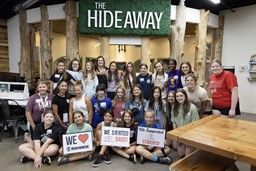
When looking back through the summer, my favorite parts have to be when I would spend time with the students. As the program intern, I get the opportunity to lead and help with programs that the students are in. I was able to lead a program which was a ‘Big Room Hangout & Karaoke’ program. This was a lively program since from start to finish students were singing a song. They went up alone, in pairs, and even groups of three. The students had a lot of fun and so did I! Another program I was able to be in charge of was a ‘Project Serve: Thrift Store’. Students signed up for this program and sorted clothes that were donated to the thrift store. When leading this program I was nervous since there were a lot of things I had to remember to say since I was explaining everything around them. From the clothes racks to what was on the table and even the roles they had to do. I became the person they mainly asked questions to and it made me feel more confident since I felt like they trusted me to know the answers to what they were asking. The best part for me is when they remember my name without looking at my name tag and I am able to do the same.
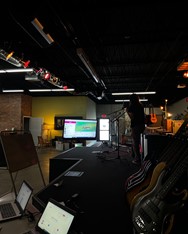
Another part I have enjoyed is receiving the project of comparing the Bridge Thrift Store to other thrifts in the area. I compared the prices, the departments, the setup, and even the guests inside the store. It was interesting to do this project because I love thrifting and this was a new perspective on thrift stores I never had before. I was looking at them with different eyes since this time I was not there as a customer but I was there as a ‘secret shopper’. The founder, Priscilla, gave me this secret shopper project and allowed me to do it as I wanted to. She gave me full freedom and I felt trustworthy since she was trusting me with this project. With Priscilla, she can be intimidating since she is the founder of the Bridge and is the executive director so the Bridge Teen Center is something she built from the ground up. Getting to know her through this project has shown me that she is not intimidating but she is respected. It has been such an experience to hear Priscilla speak about this project and about her time shaping the Bridge into what it is now and what it will continue growing to be.
As I look to the future, the Bridge Teen Center will be a turning point in what path I take. This has been such a rewarding experience and it is difficult to say goodbye to a place I spent so much time in. I will continue to foster the relationships I made here and hopefully in the future I will be able to volunteer here since it is a part of the community I live in and I want to join that community.
-Mikayla Flanagan, The Bridge Teen Center
My internship has now come to an end and I’m now able to reflect on my entire experience. I moved to Indianapolis at the end of May to begin my internship. When I first arrived I was very nervous and scared. But, I was also excited. The first few days I was a little shy and nervous. My first big surprise was that everybody worked out of a community house instead of a traditional office. But that quickly subsided.
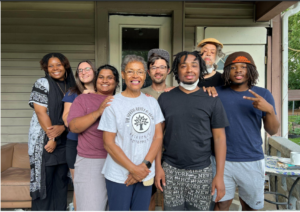
I built a great relationship with mentor and/or supervisor Rasul Muhammad. He really did a good job looking for me over the summer and my experience at Kheprw was so great. I also built such a good relationship with the rest of the staff at Kheprw as well. They cared and looked out for each other. Inside and outside of work. They were more of a family rather than just coworkers.
The internship just furthered my desire to build community in all areas of my life. Whether that be at Valparaiso University, in my hometown of Chicago, or any other place that I may visit and/or potentially move to. It is just amazing to see what Kheprw built and how all the individuals in the community loved them. It was fun to see various people stop by at the porch everyday to just talk to staff and interact with them. Or how people would just stop by if they had a problem and needed someone to talk to. The community was also lively and together. I haven’t seen anything like that before.
I worked on a variety of projects throughout my internship. I worked at a foodshare every other sunday. At the foodshare we passed out free healthy food and vegetables to members of the community. I also helped create a data gathering sentence to track attendance for events at various locations. This information is critical to an organization like Kheprw because they need this data when applying for grants and also this allows them to know who they are interacting with most at events and who is most visiting various locations. This allows them to know how they can further impact the community.
I also completed training on a data gathering tool called Salesforce. I participated in multiple meetings. Those meetings weren’t all about the data space, which was what I primarily worked in. Some of the meetings I sat in helped provide financial training to the community. Also, I learned about something very interesting. That is a community land trust that is being developed inside of Indianapolis. I did not know about community land trusts and was happy to gain knowledge about what they were and how they were created. My last thing that I will say. You will never find a place like the Kheprw Institute anywhere else. It is an unorthodox grassroots non for profit organization. But I’m glad to have found them and they are a very special organization and group of people.
-Chris Gatlin, Kheprw
As I am completing my last week with Heartland Alliance’s VELT Team, I am both excited for the upcoming school year and a little sad about having to say goodbye to such a wonderful team and group of students. I have had so much fun here and although it was a bit tough for me at first, I have grown so much and I am grateful for
that. I have asked for help more, realized the importance of a work-life balance, taken on new challenges and opportunities, and built relationships with so many different people. I don’t believe I would have grown so much this summer without this experience.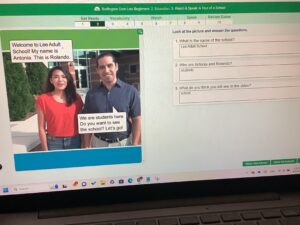
Asking for help and accepting that needed help hasn’t been easy for me. I am very independent and I try to do things on my own as much as possible. I have many different reasons for that but I think the biggest one is that I don’t want to be a burden to anyone and by asking for help I may be taking out of the few resources they have. However, when I got here to Heartland it wasn’t the same and I didn’t realize that until my supervisor commended me for always asking for help when I needed it. Looking back, that was one hundred percent the case during my internship. These students were taking the time out of their day to study and work hard at learning English. So I wanted to be able to support them the best way I could and that involved me asking teachers for help. I learned how to lesson plan, find resources that students needed, and even do administrative work because I asked for help.
Many of the things that I have learned to do will also be some of the things I will miss the most. For my final week I have had the chance to be a substitute teacher for a morning class I have been helping in. Both tutoring my students and teaching in the literacy class have helped me be able to do this. When I first led the class on Thursday I was super nervous because I had never run a two hour class before let alone by myself. I know that it wasn’t exactly like how it would be if their teacher was there and at first it was a bit disappointing. But if there is one thing I have picked up from this summer it will be that everything won’t go perfectly. There will be times when you make a mistake but they are all lessons. I know I made plenty of mistakes when I first started to tutor one- on-one with my students but I know I do way better with teaching them. These are some of things I will miss the most!
Saying goodbye to my students and letting them know that I wouldn’t be teaching them anymore was hard. I wasn’t sure what to expect but I am glad I was able to sit with my supervisor and offer them the chance to get a new tutor. While I won’t be able to keep all my students I am going to be working with a couple of students this Fall! Overall I am grateful for this experience, and every single thing I have learned. Without my coworkers, students, and all the others I have met I wouldn’t have had this great experience!
-Allison Howard, Heartland Alliance Vocational English Language Training
The “Urban Plunge”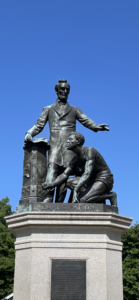
One of the activities that I lead with City Service Mission is called the Urban Plunge. This activity is centered around the general idea of food insecurity and the food deserts in not only Washington D.C. but also wherever in the country the visiting group is coming from. The plunge involves bringing the group to Lincoln Park in Capitol Hill and explaining to them the causes and effects of food deserts. After providing context to the activity’s purpose, the group is let loose to go and locate the nearest grocery stores and create a budget based on a hypothetical family who has a household income below the federal poverty line. This is an opportunity for the students to experience a small taste of what it is like to live with food insecurity and begin to think more about how they might play a role in influencing the larger conversation surrounding the issue.
Race and Servitude
During the plunge, a parallel lesson to that of food insecurity is on the matter of race in the district. Lincoln Park is a popular location for nannies to take their kids during the day to get out of the house. These nannies are almost always women of color and the children they look after are almost always white children. This is a great indicator of who lives in the neighborhood of Capitol Hill and who the servants of these residents are. I use the word “servant” intentionally. The town homes in this area are valued at 1.5 – 2.5 million dollars, and it is very obvious that it is a majority white neighborhood, with people of color coming in from surrounding areas to provide services like child-care, house-cleaning, construction, landscaping, etc. As the groups go out and participate in the simulation of the urban plunge, they also take note of the very real racial divide that is ever present in the city. Once they come back to the park after spending time on their own in the city, we have a discussion about it, ultimately identifying that segregation, both physically and socioeconomically, is still a thriving problem in the district as well as other places throughout the country.
Exclusive Inclusivity
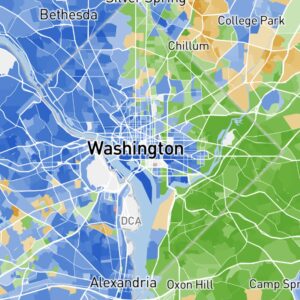
Washington D.C. is split almost perfectly down the middle in terms of where different races live throughout the city and in the neighborhoods surrounding it in Maryland and Virginia. While this is something I have been aware of for quite some time, leading groups in the urban plunge has brought this reality to the front of my mind. While the groups are out doing the activity, I get a couple hours to go around the neighborhood, usually to a coffee shop, and each time it has become more prevalent to me that I am often one of two people of color in the establishment, the other being behind the counter. The irony of this is that neighborhoods that have been gentrified in D.C. often wish to send a welcoming message to others by promoting images of inclusivity in their neighborhoods. This includes posting signs like “Black Lives Matter” “All Are Welcome” “LGBTQ Pride” etc. in their yards and windows, but the subliminal messages people, children, receive in these areas is that people of color are the ones who are meant to “do the work for us here but live with them over there.”
What do We Learn?
While this is personally challenging, aggravating, and discouraging, leading the urban plunge provides a great opportunity to talk about the issues of food insecurity, gentrification, segregation, and NIMBYism (Not-In-My-Back-Yard-ism) with kids and adults who otherwise may never have seen the reality of such things. It is always very encouraging to hear the students talk about how the experience has impacted them afterwards, and I hope to continue spreading that message as I continue in this line of work.
– Fox Wilmot, City. Service. Mission.
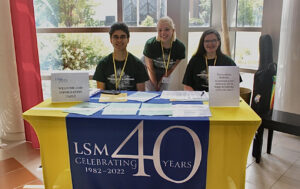
Stepping into the world of music as a social work major with an art minor at Lutheran Summer Music (LSM) was an intimidating yet transformative experience. Among the many incredible aspects of LSM, my involvement in the chapel choir stood out as a profound journey of self-discovery, connection, and spiritual growth. Reflecting on my time in the choir and the daily morning and evening prayer rituals, I am reminded of the transformative power of music and prayer within a supportive community.
The chapel choir at LSM became more than just a group of individuals singing together; it evolved into a supportive community that embraced me with open arms. Despite my initial insecurities about not having extensive musical knowledge or the ability to read music, the choir members and our dedicated choir director fostered an environment of acceptance, encouragement, and unity. Together, we created something beautiful through our collective voices, transcending our individual limitations. The chantor said in my first chapel choir rehearsal, “This is practice; you’re supposed to make mistakes. So make them loudly and make them proudly.” These words have resonated with me ever since, reminding me that the journey of learning and growth is meant to be embraced with enthusiasm and courage.
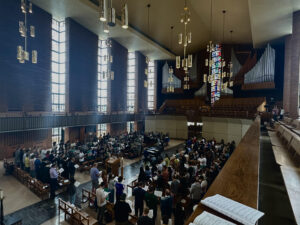
In the chapel choir, I discovered a safe space where my limited knowledge of music did not define my worth but rather served as an opportunity for growth and learning. The moments of shared devotion and love for God through music were incredibly powerful. As we sang hymns and joined our voices in harmony, the chapel became a sacred space where I experienced a deep connection to something greater than myself. The power of music intertwined with prayer and readings from the Bible created a profound sense of spirituality, evoking a range of emotions, and providing a channel for expressing reverence and gratitude to God.
Participating in morning and evening prayer sessions within the LSM community cultivated a unique sense of togetherness and shared devotion. Daily, individuals from diverse backgrounds and musical abilities united in a collective expression of faith. These moments of communal connection remind me that spirituality is not solely an individual pursuit but a shared journey of seeking connection with God and one another. The regularity of these prayer rituals created a consistent and intentional space for reflection, centering, and connecting with the divine. In the morning’s boosting of energy and the evening’s reflective serenity, I found solace, guidance, and grounding amidst the vibrant energy of LSM.
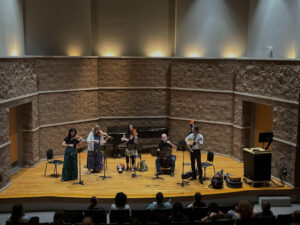
Morning and evening prayer became spaces for introspection, enabling me to quiet my mind, reflect on my experiences, and explore the depths of my spirituality. The contemplative silence, guided readings, and hymns allowed for moments of profound self-reflection and personal growth. These sacred pauses amidst the bustling program enabled me to delve deeper into the questions and yearnings that reside within my heart.
As my time at LSM ends, I carry the transformative experiences and lessons learned in the chapel choir and through morning and evening prayer. This journey has taught me the transformative potential of music and prayer in nurturing spirituality, the power of community and shared devotion, also the beauty of embracing vulnerability. The chapel choir and prayer sessions have become integral parts of my personal and spiritual growth, encouraging me to continue exploring the depths of my faith and embracing the transformative power of music and prayer in all aspects of my life.
– Erica Castillo, Lutheran Summer Music
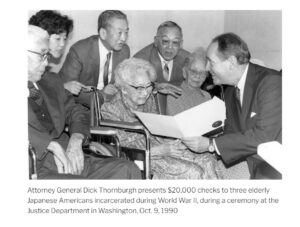
As I come to the conclusion of my time as a CAPS Fellow with Community Renewal Society, I find myself reflecting on how I have grown and developed through my experiences as a Communications and Development intern. While this summer has certainly gone by fast, it has been a delight to learn about various macro-level and policy approaches for tackling the connections between racism and poverty, participate in webinars on engaging members of a congregation and building a valued donor base, aid in launching the new CRS website, and celebrate the passage of the Pretrial Fairness Act in Illinois. Most notably, it has been incredibly educational and rewarding to witness the elimination of cash money bond, a crucial part of the prison industrial complex that furthers racial and economic disparities for individuals presumed to be innocent. Despite the time it has taken to recognize the value of eliminating this inequitable and unjust system, the hard work of the Coalition to End Money Bond, the Illinois Network for Pretrial Justice, and CRS’s own policy and organizing team remind me of the importance of celebrating the little wins in the larger pursuit for healing justice and social change.
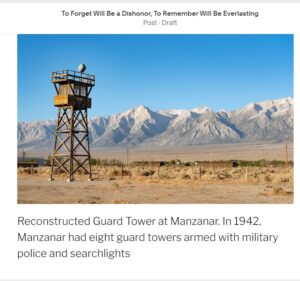
One of the most enjoyable and exciting things this summer has been the writing and publishing of a three-part series featured on CRS’s blog. In particular, I had the opportunity to share my experience as a facilitator for the 2023 Kansha Project through the Japanese American Citizen’s League (JACL) of Chicago. The Kansha Project is a program that was established in 2011 with the aim of connecting self-identified Japanese Americans aged between 18 and 25 from the Midwest to their identity, history, and community. Participants are given the opportunity to partake in an immersive educational trip to Los Angeles’ historic Little Tokyo neighborhood and Manzanar National Historic Site, where they engage in an in-depth examination of the WWII confinement site experience. Through this writing opportunity, I was able to reflect on the striking similarities between the modern-day movement for reparations towards descendants of slavery compared to the redress movement for survivors of the World War II Japanese American Concentration Camps. If interested, you can read all three parts of my blog article series here, on the new Community Renewal Society website!
In addition to writing about my time as a facilitator for the Kansha Project, I have had the joy of speaking on the sentiments of legacy, gratitude, and remembrance. In particular, it was incredibly moving to reflect on the experiences of my ancestors and compare them to the modern-day struggle against anti-Asian sentiment, unjust policing practices, and the need for economic restitution for other marginalized communities. Through this internship, I feel that I am now able to see myself as an advocate for social justice through my enhanced understanding of historical context and the effect it has on shaping public policy. Moving forward, I hope to bring with me the focus of building a Beloved Community where all of God’s children can flourish in my developing and evolving career as a social worker.
– Katie Hill, Community Renewal Society
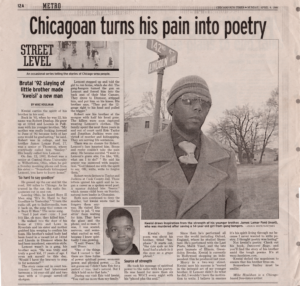
Through the Chicago Reporter, I had the chance to pursue my passion project on gun violence. Last week, I had a meaningful interview with Kweisi, who tragically lost his brother to gun violence years ago. Kweisi, a poet and advocate, strongly believes in healing through his poetry and the concept of forgiveness. He believes the only way to heal is to grow and forgive. When he shared his story with me, I was struck by the profound strength he possesses to navigate a world filled with cruelty, his determination to prevent similar situations and aid others in healing from their traumas is truly inspiring. My current aspiration is to bring Kweisi’s story to the forefront and shine a spotlight on the significant issue that the Chicago community and the entire country is grappling with. The issue is the absence of adequate checks and balances for gun control and the mishandling of trauma. Through sharing Kweisi’s experiences, I aim to raise awareness about the pressing need for comprehensive gun control measures and more robust mental health support systems. The story serves as a reminder of the devastating consequences of lax regulations and insufficient attention to mental health challenges. Through this project, I hope to ignite meaningful conversations and prompt action among policymakers, communities, and individuals mainly in the Chicago community. In the pursuit of a safer and healthier society, sharing these narratives is a crucial step in fostering empathy, understanding, and collective responsibility toward building a better future for everyone.
Listening to Kweisi’s story drove me to research additional similar experiences and to compare how each person dealt with their own struggles. For me, the most rewarding aspect of my work is engaging with diverse perspectives and listening to the profound and traumatic stories people share. This engagement enables me to provide comfort, respect, and genuine compassion, while also conveying their stories to the world, hoping to make a meaningful impact.
This fellowship experience has helped me practice my interviewing skills and allowed me to see that there is always room for further improvement, regardless of my proficiency in the English language. I have learned that language proficiency is an ongoing journey, and there is always room for growth. Another crucial lesson I discovered is that no matter where my future career path is headed, I must work twice as hard, push myself, and always expect challenges along the way because I am still learning. It is important to remember that the key is to remain diligent and committed to constant learning. As I move forward, I embrace the idea that continuous improvement is essential not only for professional development but also for personal growth. It is a mindset that encourages me to embrace new challenges and seek out opportunities that stretch my abilities. Moreover, I have come to realize the significance of acknowledging that I am still on a learning journey. Embracing this mindset allows me to approach every situation with a willingness to learn from others, no matter their background or expertise. The Chicago Reporter continues to expand my mind even though there is not much time left as I am stepping through the final last weeks’ I hope to maintain my work and use my passion through this project to bring something important that can influence others and assist this organization with the inspirational stories it delivers. This fellowship has been a transformative experience that has highlighted the importance of continuous improvement, hard work, and resilience for me.
– Nour Alhajjeh, The Chicago Reporter